

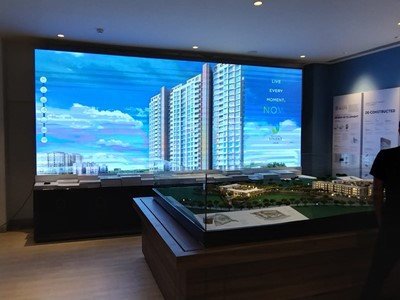
Indoor LED screens have become an integral part of modern environments, whether it’s for retail displays, corporate presentations, event stages, or entertainment venues. Choosing the right indoor LED screen involves careful consideration of various factors to ensure you get the best visual experience for your specific needs. In this blog post, we’ll explore the key factors to consider when selecting an indoor LED screen that meets your requirements.
1. Resolution & Pixel Pitch:
– Understanding resolution and pixel pitch is crucial. Higher resolution offers better image quality.
– Pixel pitch determines the distance between individual LED pixels. A smaller pixel pitch provides better clarity at closer viewing distances.
2. Screen Size and Aspect Ratio:
– Decide on the ideal screen size based on the available space and the intended viewing distance.
– Choose an aspect ratio that suits your content format.
3. Brightness and Viewing Conditions:
– Consider the ambient lighting conditions in the indoor environment. Higher brightness is essential for well-lit areas.
– Select a screen with adjustable brightness levels to adapt to various lighting scenarios.
4. Color Accuracy and Contrast:
– Look for screens that offer a wide color gamut and accurate color reproduction.
– High contrast ratios enhance image depth and detail.
5. Refresh Rate & Frame Rate:
– A higher refresh rate reduces motion blur, making the screen suitable for dynamic content such as videos and animations.
– Ensure that the LED screen supports the frame rate of your content source.
6. Installation and Maintenance:
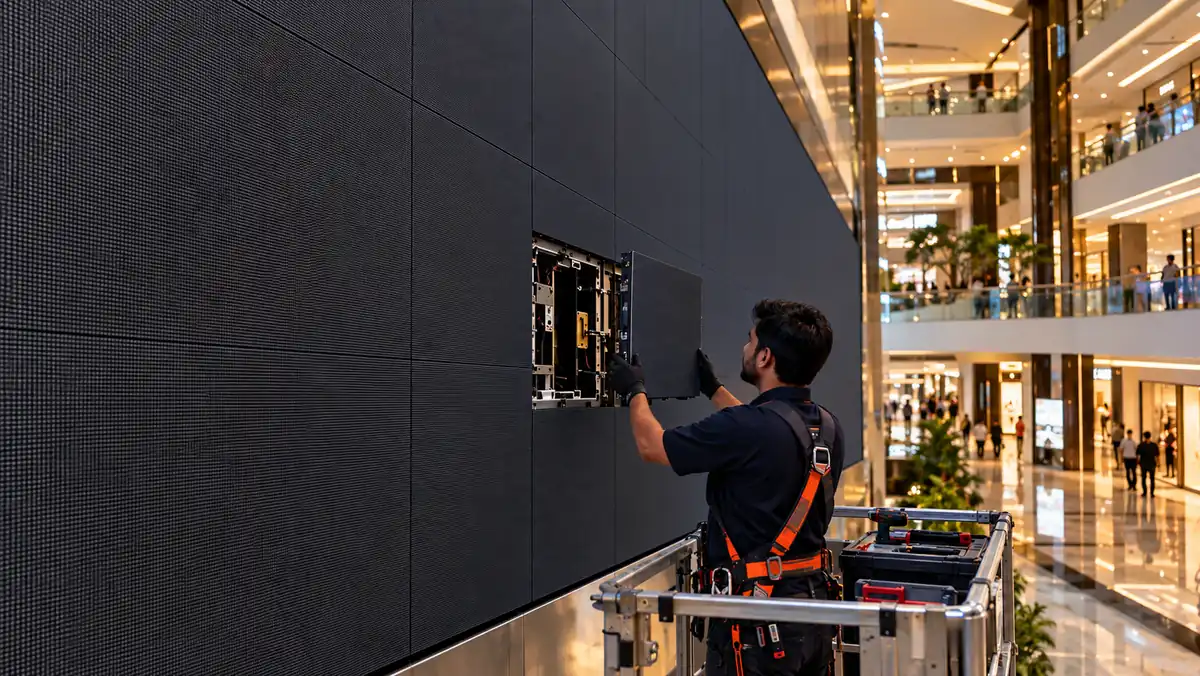
– Consider the installation process and whether the screen can be mounted as per your requirements.
– Opt for screens with easy maintenance features, such as front-access panels for quick repairs.
7. Content Management System (CMS):
– Evaluate the compatibility of the LED screen with different content management systems.
– A user-friendly CMS simplifies content scheduling, updates, and management.
8. Longevity & Reliability:
– Invest in reputable brands known for producing reliable LED screens with a longer lifespan.
– Check warranties and after-sales support offered by the manufacturer.
9. Integration and Connectivity:
– Ensure that the LED screen supports the necessary input sources (HDMI, DisplayPort, etc.)
10. Budget Considerations:
– Set a budget range and explore LED screen options that align with your financial constraints.
– Balance cost considerations with the desired features and quality.
Selecting the right indoor LED screen involves a careful evaluation of resolution, size, brightness, color accuracy, refresh rate, installation, maintenance, content management, reliability, integration, and budget considerations. By taking all these factors into account, you can make an informed decision that ensures a stunning visual experience for your indoor environment. Remember, investing time in research and choosing a reputable manufacturer will ultimately result in a high- quality LED screen that meets your specific needs.
520099.jpg)