
Shopping malls are no longer just retail destinations. They have evolved into lifestyle and entertainment hubs where customer experience plays a major role in driving footfall and sales. To keep visitors engaged and attract premium brands, malls are increasingly investing in digital LED advertising.
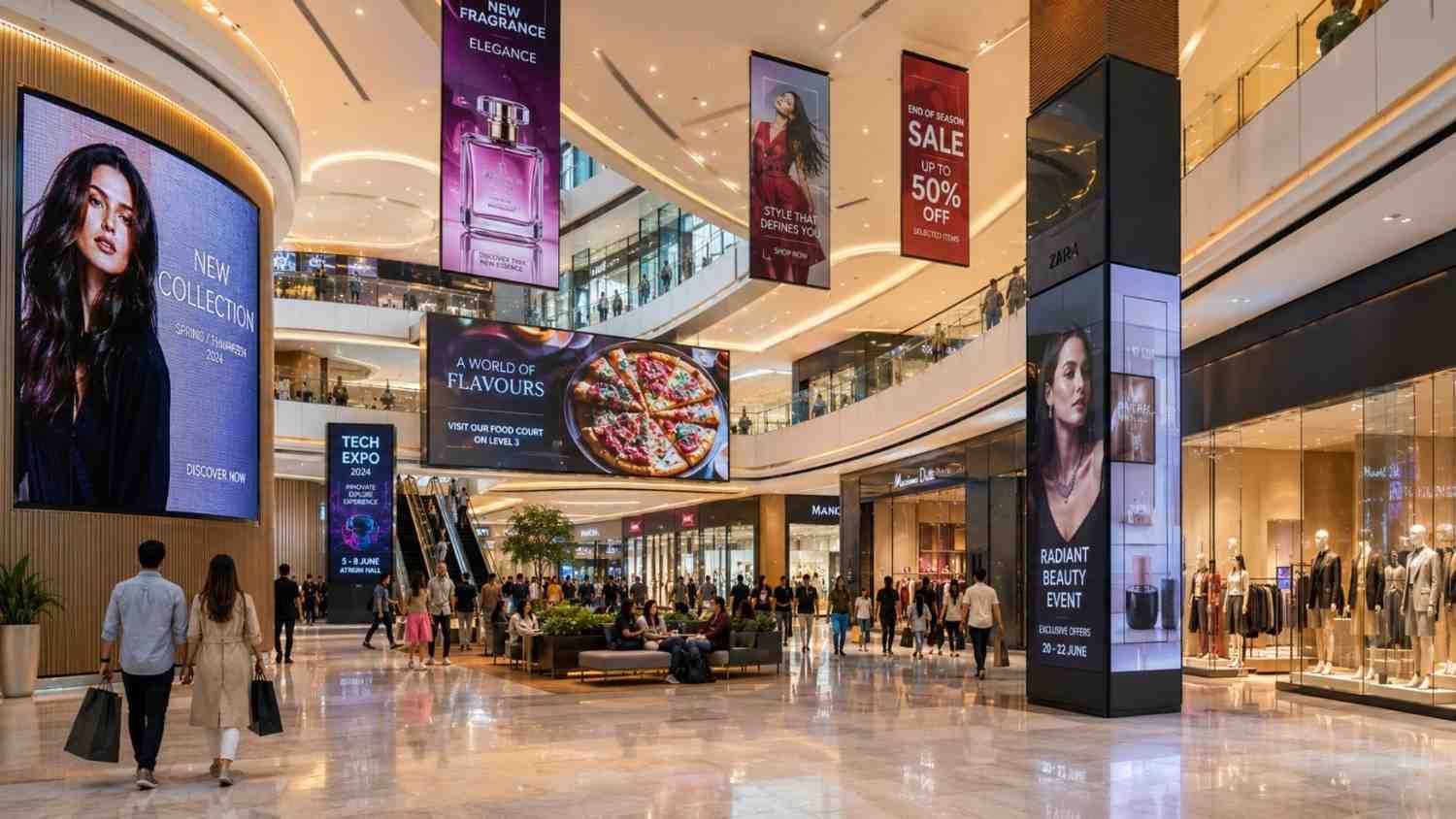
From large video walls in atriums to interactive displays near stores, LED screens are transforming how malls communicate with shoppers. These displays not only enhance the visual appeal of the space but also create new advertising and revenue opportunities.
In this blog, we explore why malls are rapidly adopting digital LED advertising and how it benefits both mall operators and retailers.
The Shift from Traditional to Digital Advertising
Traditional posters and static hoardings have limitations. They require frequent printing, manual replacement, and often fail to capture attention in a fast-moving retail environment.
Digital LED advertising solves these challenges by offering dynamic content and real-time updates, combined with high-impact visuals that drive better audience engagement. This flexibility makes LED displays a smarter and more effective advertising solution for modern malls.
Enhancing Customer Experience
One of the biggest reasons malls are investing in LED advertising is to improve the overall customer experience.
Bright, high-resolution displays create a modern and premium atmosphere. They help malls feel more interactive and visually engaging.
LED screens are commonly used to display:
- Promotions and discounts
- Event announcements
- Store launches
- Entertainment content
- Navigation and wayfinding information
This keeps shoppers informed while making their visit more enjoyable.
Increasing Brand Visibility for Retailers
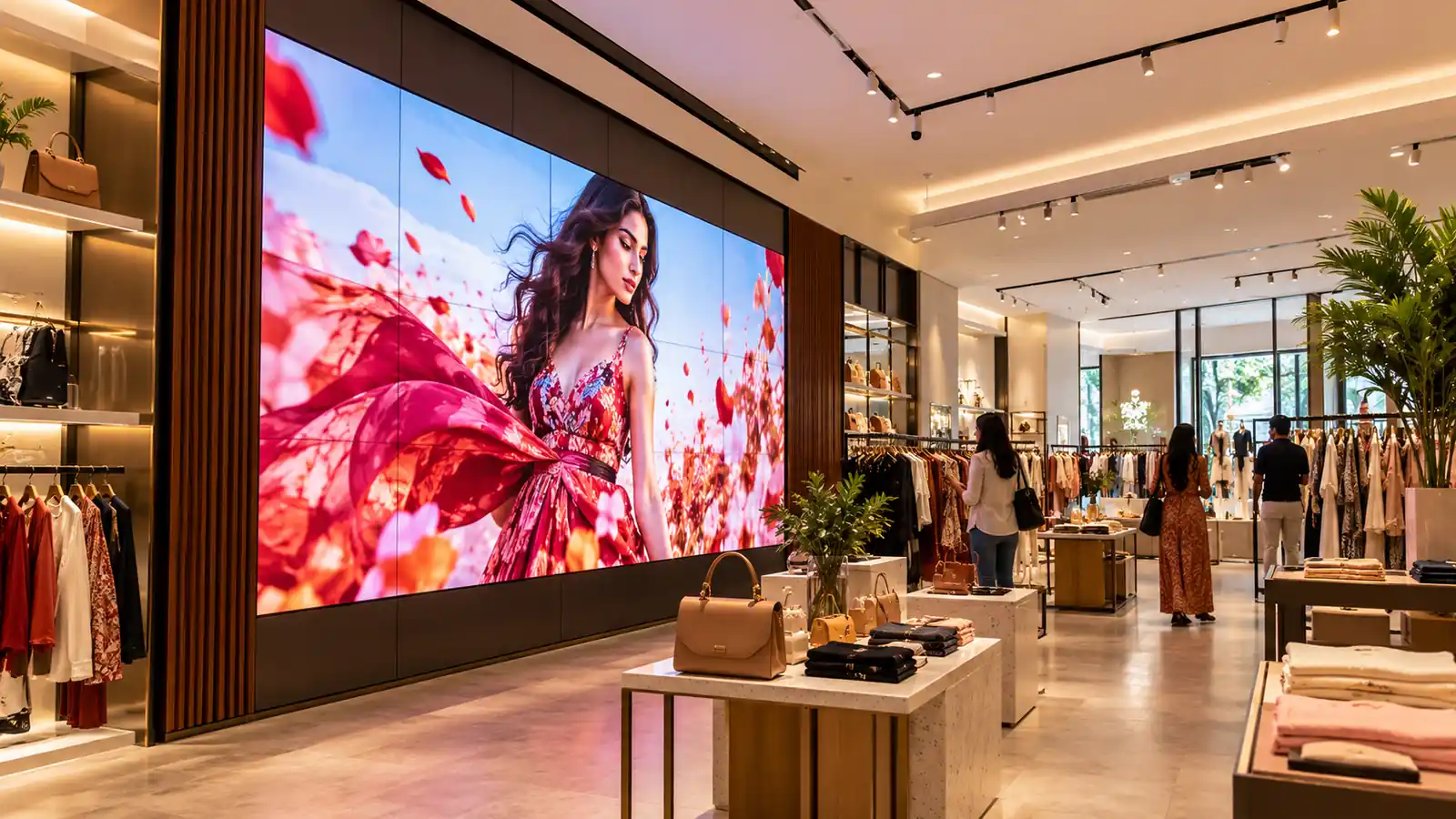
Retail stores inside malls compete for customer attention, and LED advertising helps brands stand out in crowded environments. Large digital displays can showcase product launches, seasonal campaigns, fashion collections, and video advertisements. Moving visuals naturally attract more attention than static banners, increasing the chances of customer interaction and store visits. For premium brands, LED displays also enhance brand perception and create a more immersive shopping experience.
Generating Additional Revenue for Malls
Digital LED advertising creates a strong revenue opportunity for mall operators.
Instead of allocating advertising space to just one brand, digital screens can rotate multiple ads throughout the day. This allows malls to:
- Sell advertising slots to multiple businesses
- Maximize revenue from a single screen
- Run targeted campaigns at specific times
For example:
- Restaurants can advertise during lunch hours
- Fashion brands can promote evening offers
- Entertainment zones can advertise during weekends
This flexibility increases advertising value and profitability.
Real-Time Content Management
One major advantage of LED advertising is the ability to update content instantly. Mall management teams can quickly change promotional campaigns, display emergency announcements, highlight live events, and promote flash sales, a level of control that is simply impossible with traditional printed advertising. Real-time updates ensure that content remains fresh, relevant, and engaging for visitors.
Creating Premium Visual Appeal
Modern consumers expect visually rich environments. LED displays help malls create a high-end, technologically advanced atmosphere.
Large LED video walls in mall atriums often become focal points that attract foot traffic, encourage social media sharing, and improve customer retention
A visually appealing mall environment can positively influence how long customers stay and how much they spend.
Supporting Events and Entertainment
Shopping malls regularly host product launches, fashion shows, seasonal events, and live performances. LED screens play a crucial role in enhancing these experiences by displaying live event coverage, sponsor advertisements, and interactive visuals. This creates a more immersive environment for visitors and increases engagement during events.
Better Targeting and Audience Engagement
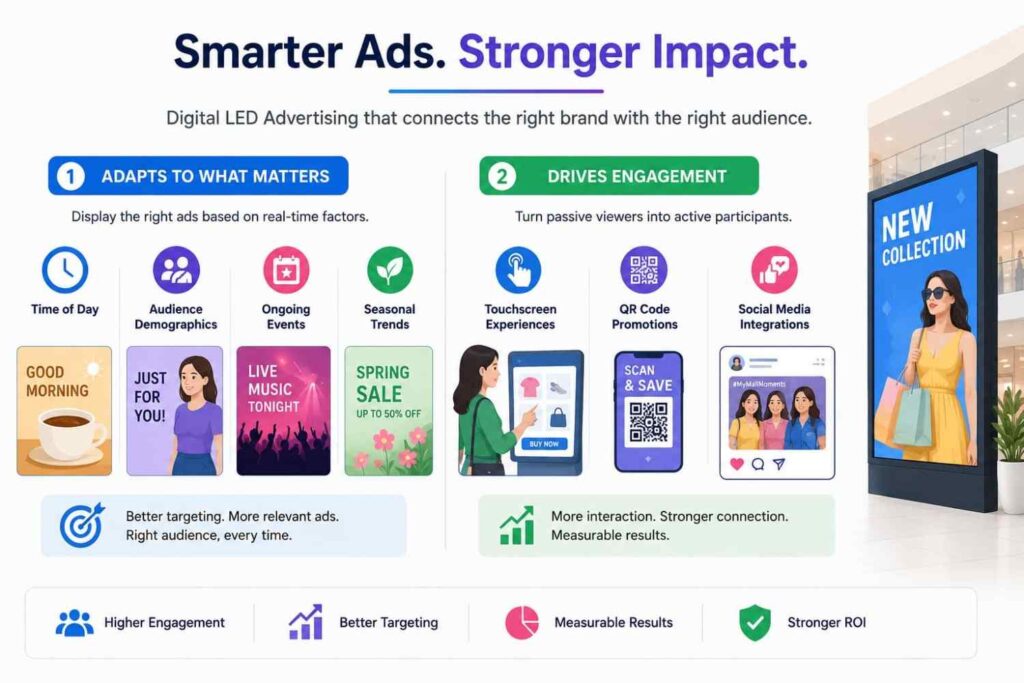
This targeted approach improves advertising effectiveness and ensures brands reach the right audience, and make advertising more engaging and measurable.
Long-Term Cost Efficiency
Although LED displays require an upfront investment, they are cost-effective over time.
Compared to traditional advertising, digital LED systems eliminate printing costs, frequent installation expenses, and material wastage
They also consume less energy and require lower maintenance compared to older display technologies.
This makes LED advertising a financially sustainable solution for malls.
Data and Analytics Advantages
Modern digital signage systems can collect valuable insights such as: Audience engagement, Ad performance, and Viewing patterns
This data helps mall operators and advertisers optimize campaigns and improve ROI.
Data-driven advertising is becoming increasingly important in the retail industry, making LED systems even more valuable.
Future of Mall Advertising
As retail environments become more technology-driven, digital LED advertising will continue to grow.
Future trends include:
- AI-powered personalized advertising
- Interactive and immersive displays
- 3D LED visuals
- Smart analytics integration
Malls that invest in digital advertising today are positioning themselves for the future of retail engagement.
Conclusion
Digital LED advertising is changing the way malls engage with customers and brands. By offering dynamic visuals, real-time flexibility, and new revenue opportunities, LED displays have become an essential part of modern retail environments.
For mall operators, they provide a powerful way to improve customer experience and maximize advertising revenue. For brands, they offer better visibility and stronger audience engagement.
As shopping malls continue evolving into experience-driven destinations, digital LED advertising will play an increasingly important role in shaping the future of retail spaces.