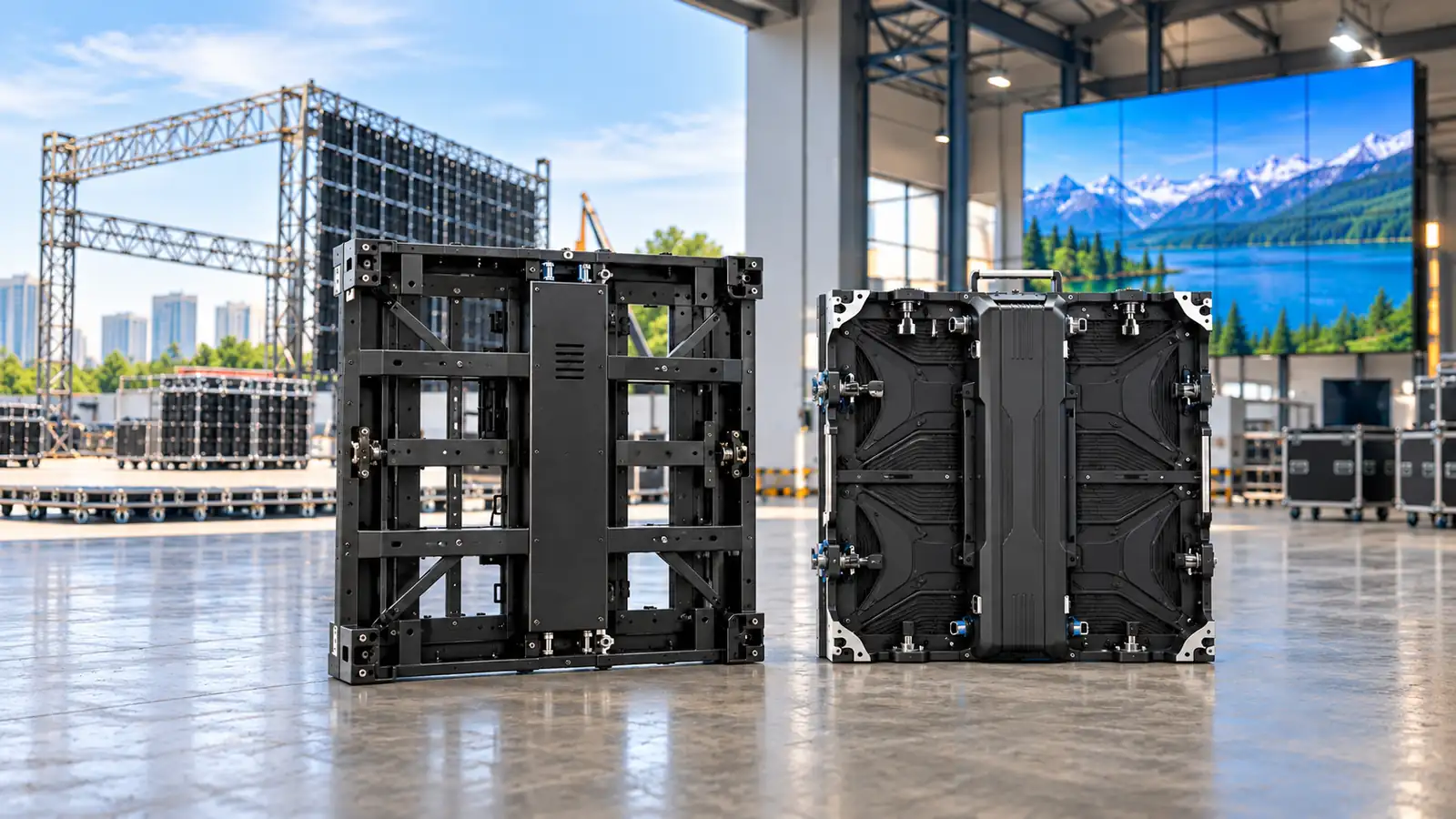
Most buyers planning an LED video wall start with pixel pitch and brightness. The cabinet, the frame that holds everything together, rarely gets the same attention. Yet it decides how heavy your screen is, how it handles heat and rain, how seamless the final wall looks, and how easy it is to service years later. As an LED video wall manufacturer in India, we offer two main cabinet types: mild steel and aluminium die-cast. Here is how to choose between them.
What does an LED cabinet actually do?
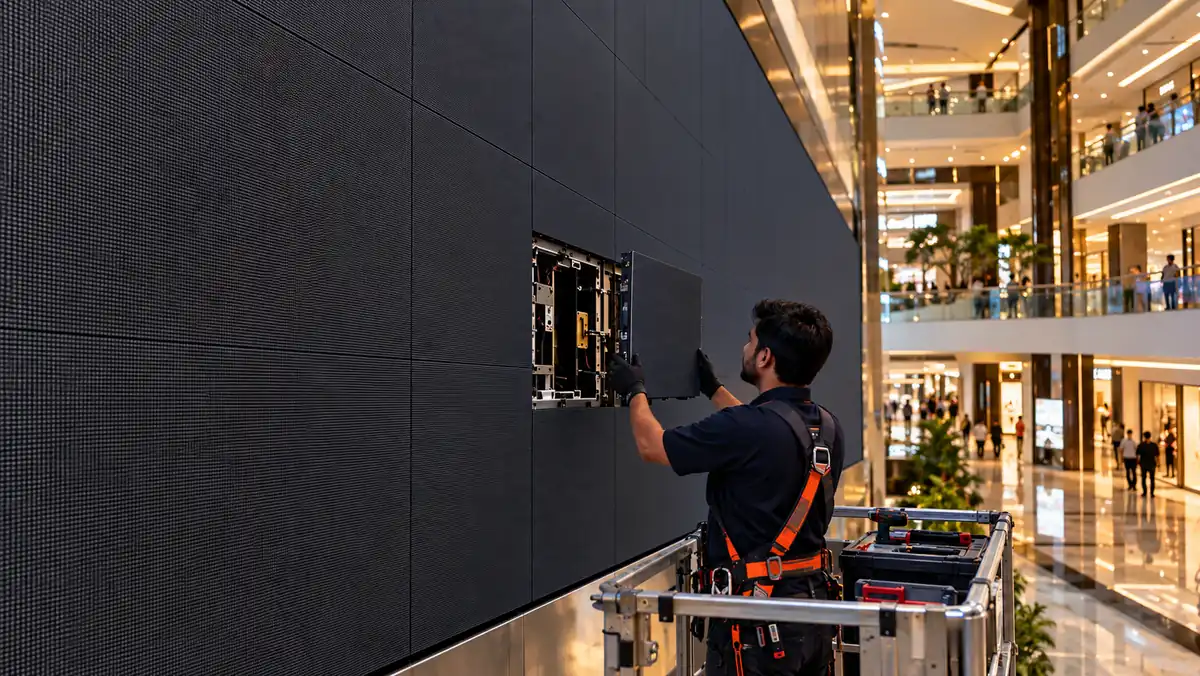
An LED cabinet is the structural housing of an LED video wall. It holds the modules, power supplies, receiving cards, and cabling, protects them from dust, moisture, and heat, and keeps every panel perfectly aligned. Even excellent LEDs can disappoint if the cabinet causes visible seams, overheating, or water damage.
Mild steel cabinets: built tough, built to budget
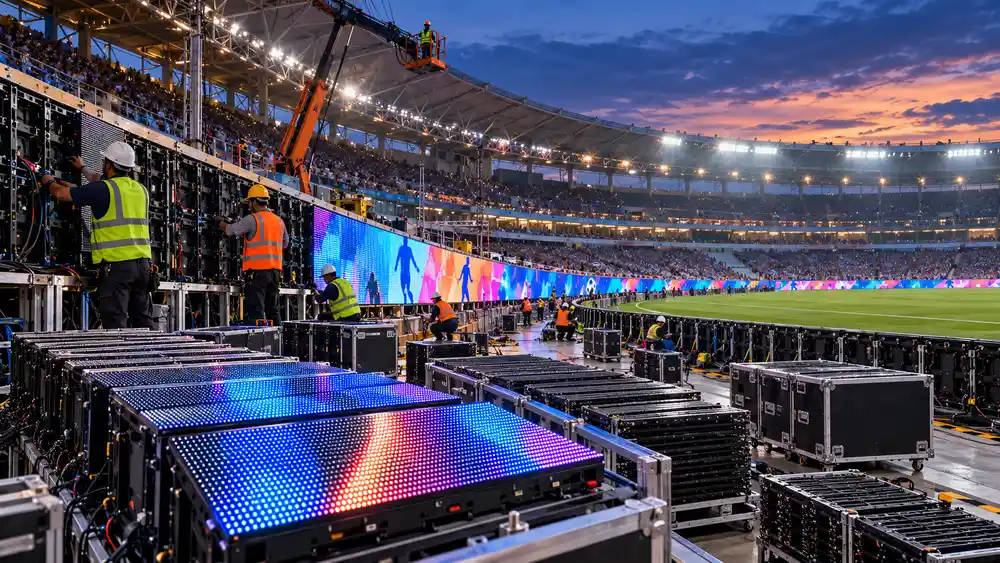
Our mild steel outdoor cabinets suit large, fixed installations where strength and cost control matter most.
- Strength – Rigid and forgiving during transport, handling, and installation.
- Cost – Generally more economical per cabinet, which adds up on big screens.
- Weight – Heavier, so the supporting structure must be planned carefully.
- Protection – Needs a quality surface treatment, such as powder coating, to resist rust over the years.
Best for: large outdoor hoardings, rooftop screens and building facades where a solid structure is already in place.
Aluminium die-cast cabinets: lighter, sharper, easier to handle
Aluminium die-cast cabinets are made by pressing molten aluminium into a precision mould, so every cabinet comes out with the same dimensions.
- Lightweight – Easier to lift, mount, and transport, and lighter on the structure.
- Precision – Tight tolerances mean cleaner joints and a more seamless picture.
- Heat dissipation – Aluminium carries heat away well, which supports long-term performance.
- Corrosion resistance – Naturally resistant to rust.
- Cost – Higher upfront, though often justified by faster installation and easier servicing.
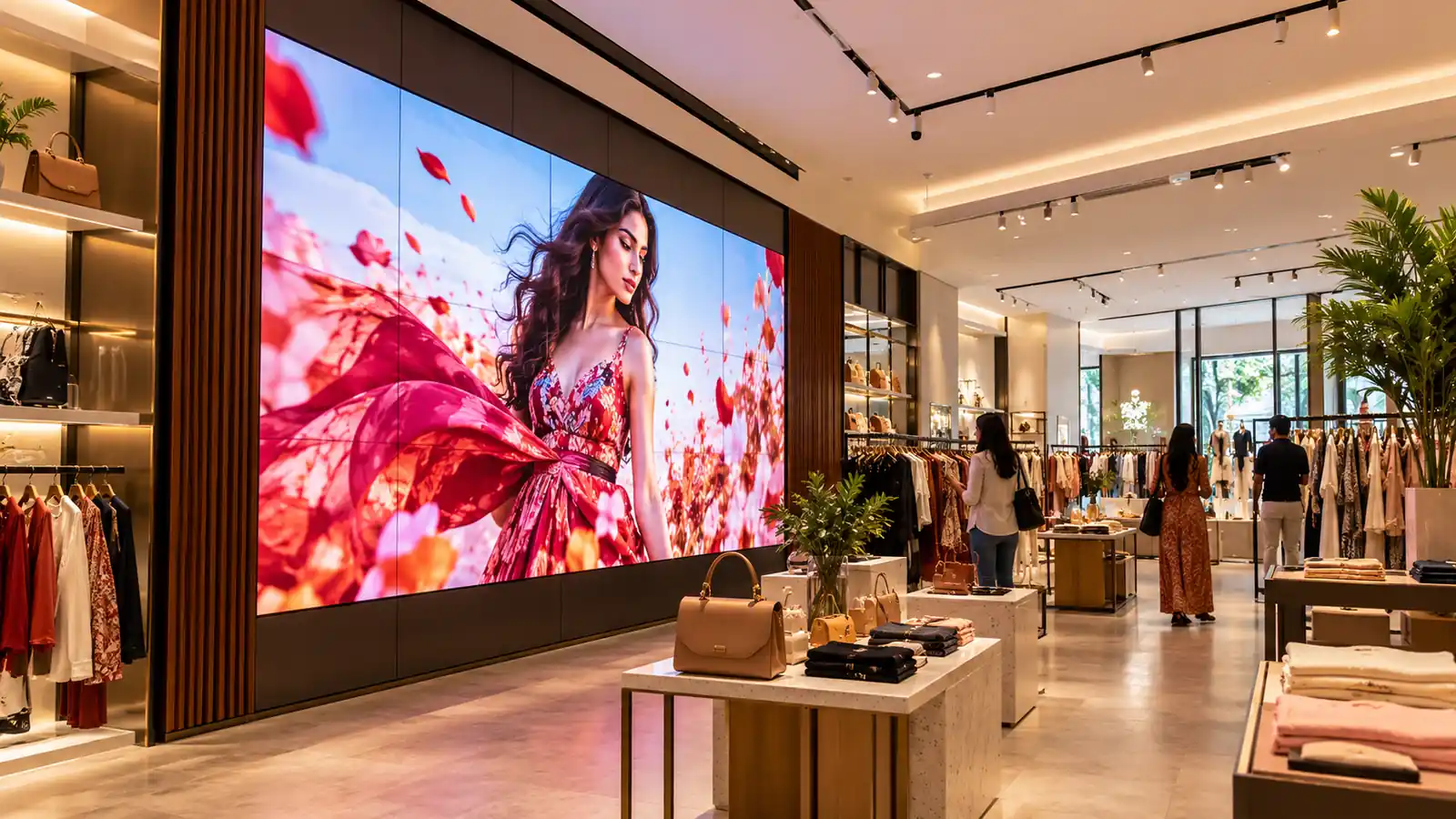
Best for: indoor video walls, fine-pitch displays, curved or creative layouts, rental setups and premium retail or corporate spaces.
Quick comparison
| Factor | Mild Steel | Aluminium Die-Cast |
|---|---|---|
| Weight | Heavier | Lighter |
| Upfront cost | Lower | Higher |
| Seam precision | Good | Excellent |
| Heat management | Adequate | Very good |
| Rust risk | Needs coating upkeep | Naturally resistant |
| Ideal use | Large fixed outdoor screens | Indoor, fine-pitch, curved, frequently serviced screens |
Three myths buyers believe about LED cabinets
Before you finalise a purchase, it helps to clear up a few common assumptions.
- “Steel is outdated.” Not at all. For large, fixed outdoor screens, a properly coated and sealed mild steel cabinet is still a proven, sensible choice.
- “Aluminium is always better.” Only where its strengths matter. On a big fixed hoarding, paying more for a lighter cabinet may add little real value.
- “The cabinet doesn’t affect picture quality.” It does. Poor alignment creates visible seams, and poor heat control shortens the life of the modules.
The takeaway is simple: neither material wins on its own. Fit to the project is what counts.
How to choose
Start with where the screen will live and who will maintain it.
Go with mild steel if the screen is large, outdoors and permanently fixed, the structure can take the extra weight, and you want to keep the project cost in check.
Go with aluminium die-cast if weight, appearance, and speed matter more. That usually means indoor installations, fine-pitch walls, curved designs, or screens that will be moved or serviced often.
Many businesses also mix the two across a project, using aluminium for a flagship indoor wall and steel for the large outdoor display. Neither is better in every case. The right choice is the one that matches your site, budget and maintenance plan.
Not sure which cabinet suits your project?
Choosing between mild steel and aluminium die-cast is easier with a second opinion. Vision Display’s team can look at your site, screen size, pixel pitch, and budget, and recommend a cabinet that fits. Explore our full range of LED cabinets, see our completed projects, or contact us for a customised quote.