
An LED video wall looks effortless once it’s running. Behind it sits a lot of planning: measurements, power loads, structural checks, content decisions, and a carefully managed installation. Businesses that skip this stage often pay for it later, with a wrong screen size, a wall that can’t take the weight, or a display nobody can update. As an LED video wall manufacturer in India, we’ve handled projects from compact meeting-room screens to very large mall displays. Here is the journey, step by step.
Why does planning matter so much?
An LED screen is a long-term asset, usually running for years. A few hours of careful planning up front prevents most of the common problems: wrong pixel pitch, power shortfalls, overheating, awkward service access, and delays on installation day.
Step 1: Site survey
Everything starts with a visit. A site survey covers the practical facts no drawing can show:
- Wall or structure – What it’s made of and how much load it can carry.
- Dimensions: The exact space available, including ceiling height and obstructions.
- Viewing distance and angle – Where people will actually stand or sit.
- Light conditions – Sunlight, glare, and ambient brightness, which decide how bright the screen must be.
- Power and access – Where the supply comes from and how equipment will reach the site.
Step 2: Choose the right size and pixel pitch
Once the space is clear, the next decision is screen size and pixel pitch, the distance between LED pixels. A finer pitch gives sharper images for viewers standing close, such as in a boardroom or a retail store. A wider pitch works well for distant audiences and costs less. The rule of thumb is to match the pitch to the nearest viewing distance, not to the biggest budget.
You also need to decide between indoor and outdoor. An indoor LED video wall puts picture detail first. An outdoor LED screen needs high brightness and weather protection, typically IP65 rated, to cope with sun, dust and rain.
Step 3: Plan structure, cabinets, power and cooling
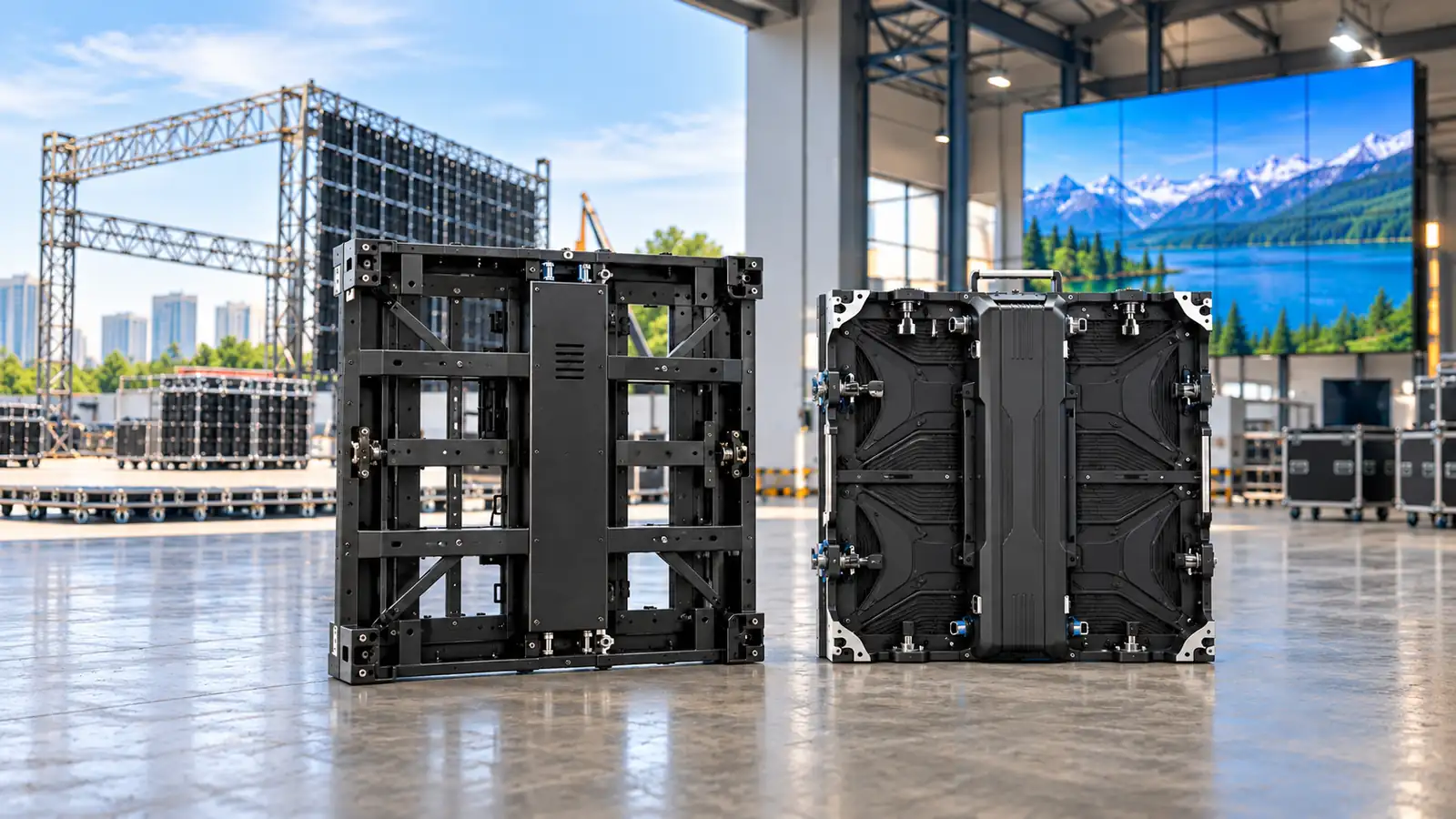
This is the step that gets overlooked most. Your cabinet choice affects weight, heat and service access. Our LED cabinets come in mild steel and aluminium die-cast options, each suited to different sites.
Power matters just as much. Consumption varies with pixel pitch and size, and averages roughly 250W to 800W per square metre. Your electrician needs that number early, along with proper earthing and a plan for ventilation or air conditioning where the installation is enclosed.
Step 4: Decide how content will be managed
A screen is only as useful as the content on it. Before installation, agree on who will update it, how often, and from where. Simple software that non-technical staff can use, and a clear plan for formats and aspect ratios, save a lot of frustration after launch.
Step 5: Installation, testing and training
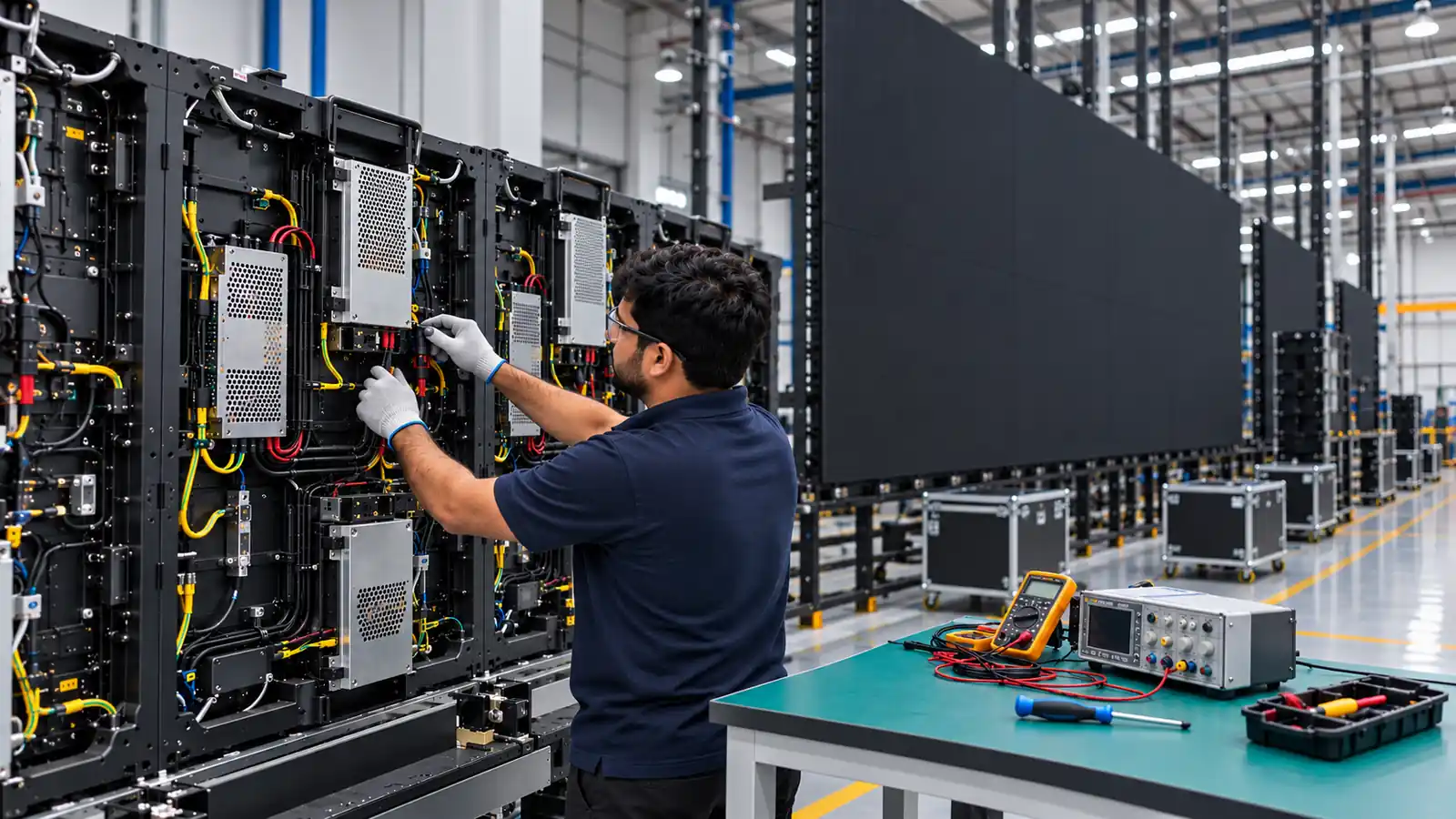
On installation day, the work moves in a clear order: mounting the structure, fixing the cabinets, connecting power and signal, then calibrating colour and brightness. Before handover, the screen should be tested with real content and run long enough to catch early issues. Good providers also train your team so you’re not dependent on a technician for everyday tasks.
Case Study: Planning a 60-Foot Indoor Screen at Growells 101, Kandivali
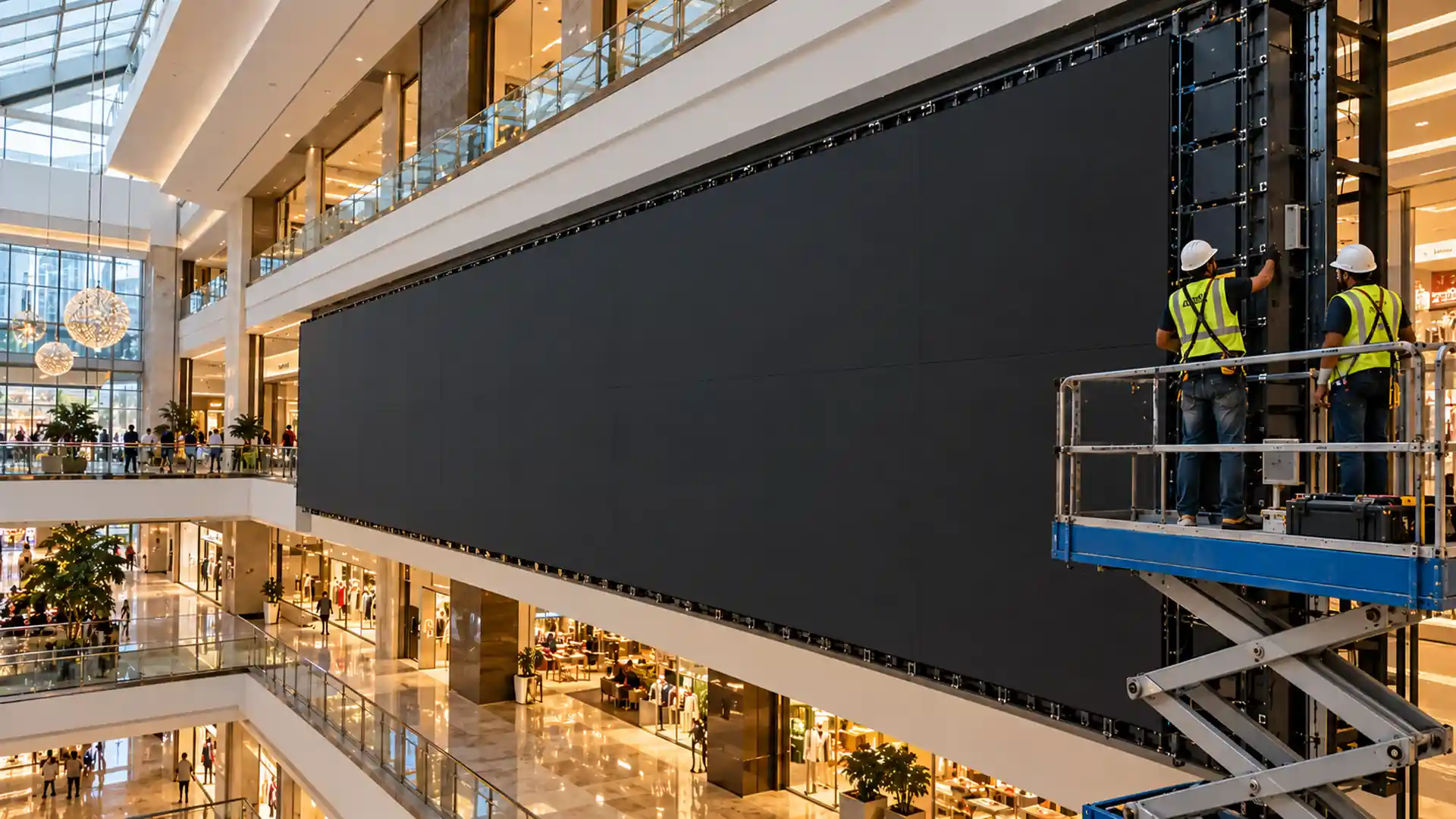
Scale shows why planning matters. Our installation at Growells 101 mall in Kandivali is an indoor display at P4 pixel pitch, measuring roughly 60 x 20.4 feet, completed in December 2023.
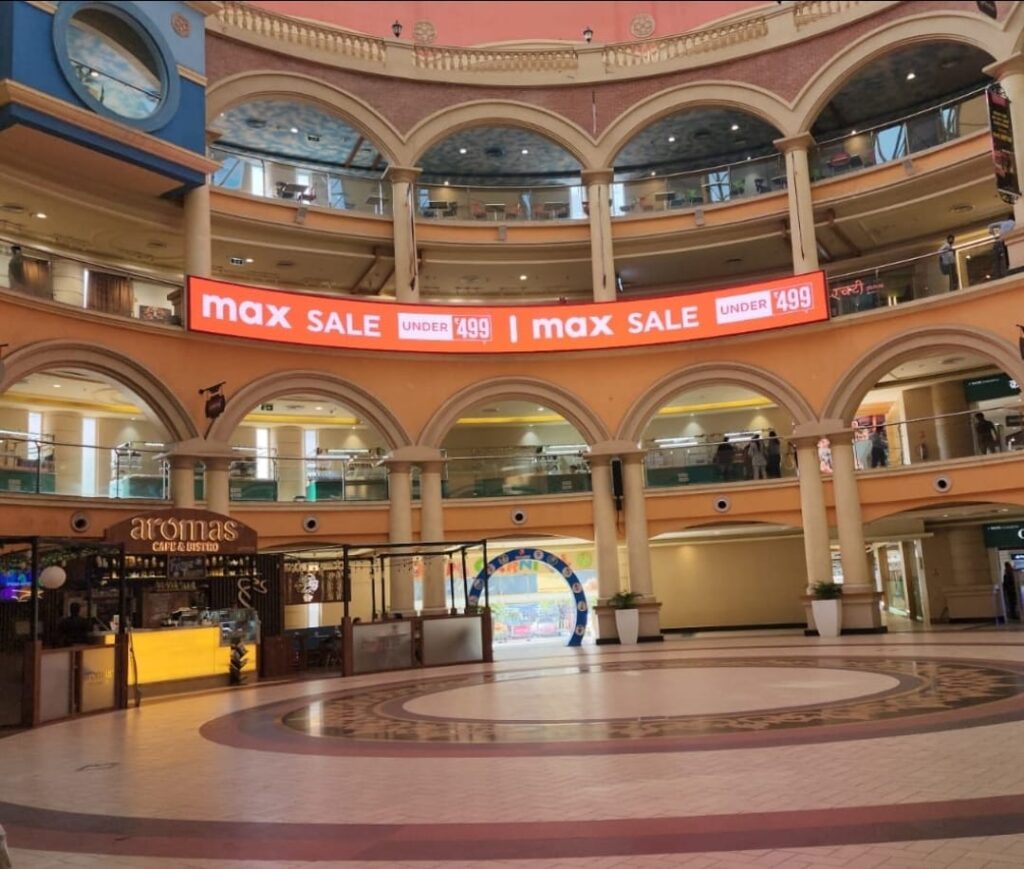
On a screen of this size, small oversights turn into high costs:
- Power – At the typical 250W to 800W per square metre range, a display covering roughly 113 square metres means a substantial electrical load that has to be planned in advance.
- Viewing distance – In a mall atrium, people watch from far away, which is the kind of setting where a wider pitch like P4 makes practical sense.
- Coordination – A display this large touches structure, electrical work and the mall’s own schedule, so timing needs to be agreed in advance.
The mall’s management also spoke highly of the after-sales support and training they received, which is the part of a project that begins after installation ends.
Frequently asked questions
How long does an LED display project take?
It varies with screen size, customisation and site readiness. Small indoor screens move quickly, while large or outdoor projects need more time for structure, power and approvals. A site survey gives a realistic timeline.
Do I need a site survey for a small screen?
Even for a small display, a quick survey helps confirm the wall, power point, and viewing distance, which avoids simple but costly mistakes.
Planning an LED display for your business?
A good project starts with a conversation. Vision Display’s team can visit your site, assess your space, and recommend the right size, pixel pitch and cabinet type, then guide you through installation and training. Share your requirements through our contact page, and we’ll prepare a customised proposal.