Picture this. Your team has chosen an LED video wall for a new showroom; the sample looks stunning, and the quote fits the budget. Then your procurement head asks for the BIS certificate, and the supplier goes quiet. It happens more often than you’d expect. As an LED video wall manufacturer in India, we know buyers can lose weeks over paperwork that could have been checked on day one. Here is what to verify, in plain language.
Why do certifications matter if the screen already looks great?
Because picture quality tells you nothing about safety. A screen can look perfect on a demo day and still carry weak power supplies, poor earthing, or untested materials. Certifications are how an independent process confirms what your eyes can’t. They also decide whether your project clears tenders, audits and insurance checks. For a business buyer, that matters twice over: once for safety, and once for the cost of reworking a screen that fails an inspection.
Which standards should an Indian buyer know about?
Requirements differ by project, so confirm what applies to yours. These come up most often:
- BIS registration (IS 13252, Part 1) – This is the safety standard for audio, video and similar electronic equipment, and tenders frequently ask for it.
- CE, RoHS and FC – These often appear next to BIS in bank tenders. CE and FCC cover safety and electromagnetic behaviour, and RoHS limits hazardous substances.
- IP rating – It shows how well the cabinet resists dust and water. Outdoor LED screens are typically rated IP65, so they cope with rain, dust, and temperature swings.
What Indian Tenders Actually Ask For
Published tenders are a useful cheat sheet, because they spell out what careful buyers check. A few patterns from tender documents:
- Certificates tied to the exact product. One tender required a BIS certificate for the offered model, issued for the OEM’s own brand and Indian manufacturing unit, and refused a certificate covering only the LED module.
- Proof of track record. The same tender wanted evidence of earlier large outdoor installations, several years of presence in India, and a service centre run by the OEM’s own engineers.
- Measured performance, not claims. Suppliers were asked to name the luminance meter they use to measure brightness, along with its calibration certificate.
- Detailed specifications. Bank tenders for indoor LED video wall projects spelled out pixel pitch, brightness in nits, refresh rates of 3840 Hz or higher, IP ratings and cabinet material, alongside CE, BIS and RoHS.
You don’t have to be a government body to borrow these questions. Asking for model-specific certificates, a service track record, and measurable specifications works for any business buyer. Treat them as a checklist you can adapt.
Beyond paperwork: what should you inspect on the product?
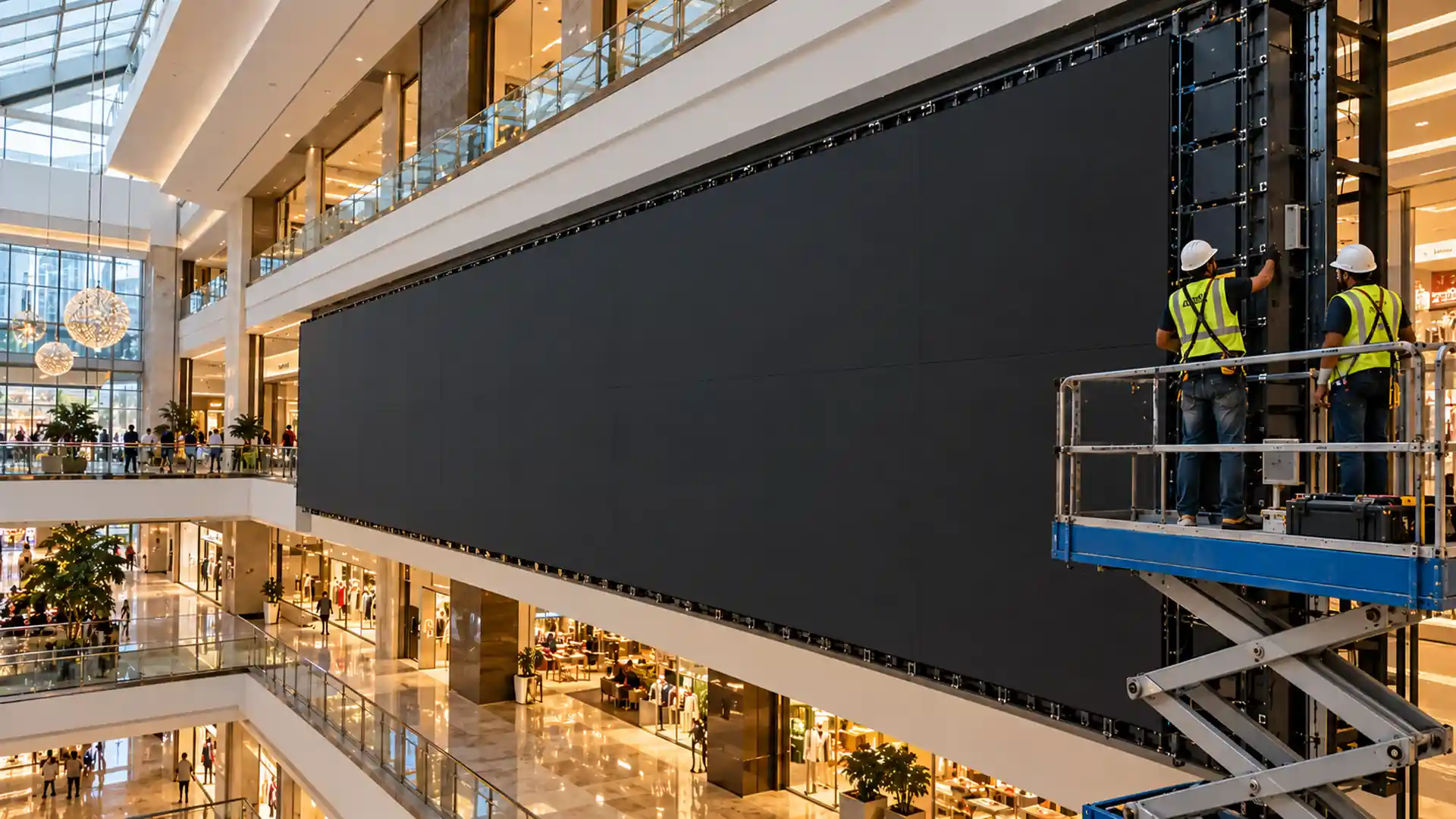
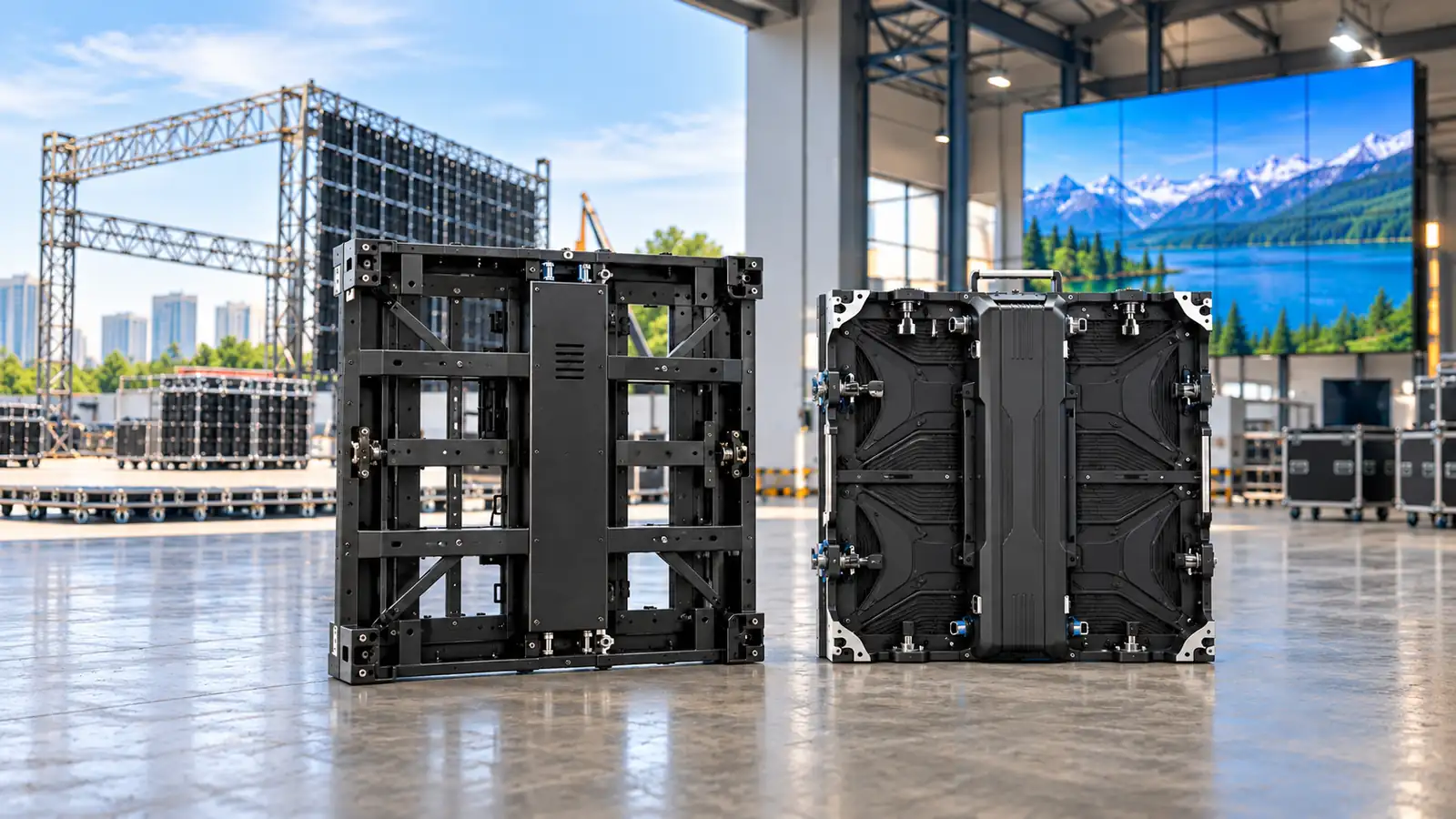
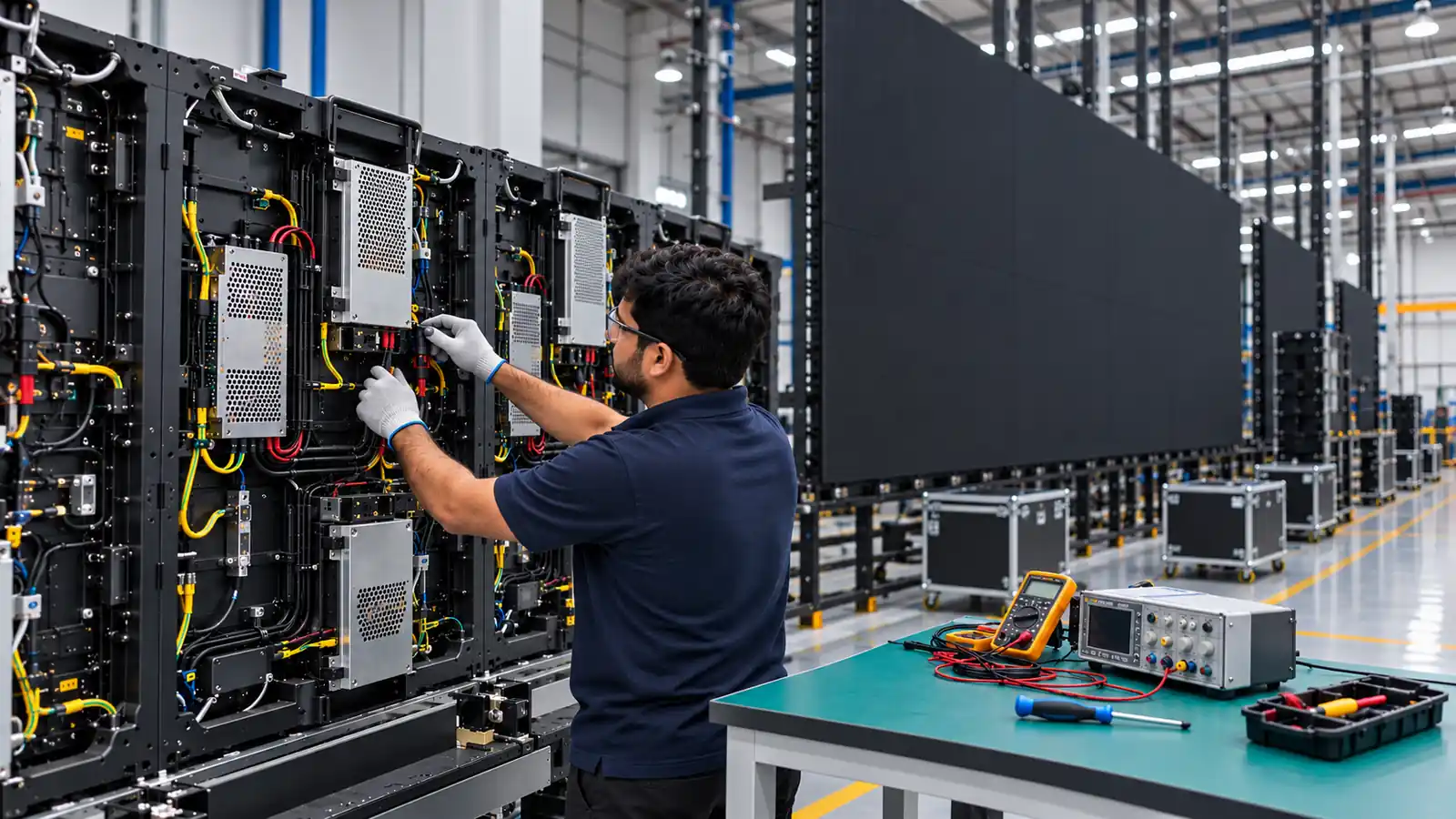
Certificates don’t replace a good look at the hardware. Ask to see the cabinet build, since the frame affects weight, heat, and how seamless the wall looks. Our mild steel outdoor and aluminium die-cast cabinets suit different sites, and the right one depends on your location and load. Ask for the brightness and refresh rate in writing too, since outdoor screens need high brightness for daylight. Check the power supplies and wiring, ask how the structure will handle wind and weight, and for outdoor installations, confirm whether local advertising approvals are needed in your city. Rules differ, so it’s best to ask early.
Five questions for your first supplier call
Keep the first call simple. Ask which certificates cover the exact model you’re buying, who issued them, what the warranty includes, who services your city and how quickly, and whether they can share similar completed projects. A confident supplier should be able to answer without much trouble. You can see examples of our work on the projects page.
Common mistakes buyers make
A common slip is treating a component certificate as proof for the whole screen. Another is comparing quotes on price and pixel pitch alone, then discovering missing warranty or service terms later. A third is leaving structure and power planning until installation week. None of these is hard to avoid, as long as the questions come early.
Want a second pair of eyes on your specifications?
Vision Display’s team can help you read through the specifications and documentation for your project, from pixel pitch and cabinet type to service support, so nothing surprises you after installation. Learn more about us, browse the LED display range, or contact our team for a customised quote.