
Digital signage has already transformed the way businesses communicate with customers, but the next major evolution is being driven by Artificial Intelligence (AI). As organizations seek smarter, more engaging, and data-driven communication solutions, AI-powered digital signage is rapidly emerging as the future of visual marketing and customer engagement.
Traditional digital signage delivers content based on predetermined schedules. AI-powered digital signage, however, can analyze data, adapt content in real time, and provide personalized experiences based on audience behavior and environmental conditions.
From retail stores and shopping malls to airports, corporate offices, and smart cities, AI is revolutionizing how digital displays interact with audiences. This blog explores what businesses can expect from AI-powered digital signage and why it is becoming a key part of modern communication strategies.
What Is AI-Powered Digital Signage?
AI-powered digital signage combines digital display technology with artificial intelligence to automate content delivery, analyze audience behavior, and optimize messaging in real time.
Unlike conventional displays that follow fixed schedules, AI-enabled systems can make intelligent decisions based on factors such as audience demographics, viewing patterns, location data, weather conditions, time of day, and customer interactions.
This allows businesses to deliver more relevant and effective content to their audiences.
Personalized Customer Experiences
One of the most significant advantages of AI-powered digital signage is its ability to personalize content.
Modern consumers expect brands to provide relevant and customized experiences. AI systems can analyze customer behavior and display content that is more likely to capture attention and drive engagement.
For example, a retail store may promote different products based on customer demographics, shopping patterns, or seasonal preferences. Instead of displaying the same advertisement to everyone, AI enables businesses to deliver targeted messaging that feels more relevant to individual viewers.
This level of personalization helps improve customer satisfaction and increase conversion rates.
Real-Time Content Optimization
Traditional digital signage requires manual scheduling and content updates. AI-powered systems can automatically adjust content based on real-time conditions.
For example:
- Restaurants can promote breakfast items in the morning and dinner specials in the evening.
- Retail stores can highlight weather-related products during rainy or hot conditions.
- Airports can instantly update travel information based on flight schedules.
This dynamic content management ensures that displays remain relevant and engaging throughout the day.
Audience Analytics and Insights
One of the most powerful capabilities of AI-driven signage is its ability to gather and analyze audience data.
Advanced systems can measure:
- Viewer engagement
- Audience demographics
- Dwell time
- Traffic patterns
- Content performance
These insights help businesses understand how customers interact with digital displays and identify which content generates the best results.
Data-driven decision-making enables continuous improvement in marketing campaigns and customer communication strategies.
Smarter Advertising Campaigns
AI is changing the way advertisers manage digital signage campaigns.
Instead of relying on assumptions, businesses can use AI-generated insights to determine:
- Which advertisements perform best
- When specific content should be displayed
- Which audience segments respond most effectively
This allows advertisers to optimize campaigns automatically and maximize return on investment.
As AI learns from viewer behavior over time, advertising effectiveness continues to improve.
Improved Customer Engagement
Capturing customer attention is becoming increasingly difficult in today’s information-rich environment.
AI-powered digital signage helps businesses stand out by delivering more engaging and relevant experiences.
Displays can respond to customer interactions, touchscreen inputs, mobile device integrations, and environmental changes.
These interactive capabilities encourage audiences to engage with content rather than simply viewing it passively.
Higher engagement often translates into stronger brand awareness and improved customer loyalty.
Voice and Gesture Recognition
Future AI-powered signage systems are expected to become even more interactive through voice and gesture recognition technologies.
Customers may be able to navigate menus using voice commands, access information through gestures, and interact without touching the screen.
These features create a more convenient and hygienic user experience while expanding accessibility.
As voice technology becomes more advanced, digital signage will become increasingly intuitive and user-friendly.
Predictive Content Management
AI systems are capable of identifying trends and predicting customer behavior.
Using historical data and machine learning algorithms, digital signage platforms can anticipate peak customer traffic periods, popular products, seasonal purchasing patterns, and audience preferences.
This predictive capability allows businesses to proactively deliver the most relevant content at the right time.
As a result, marketing efforts become more strategic and effective.
Integration with Smart Technologies
AI-powered digital signage is becoming an important part of connected business ecosystems.
Modern systems can integrate with customer relationship management (CRM) platforms, inventory management systems, point-of-sale software, IoT devices, and mobile applications.
This integration enables displays to respond automatically to real-time business data.
For example, a retail display can stop promoting a product once inventory runs low or highlight items that are currently trending.
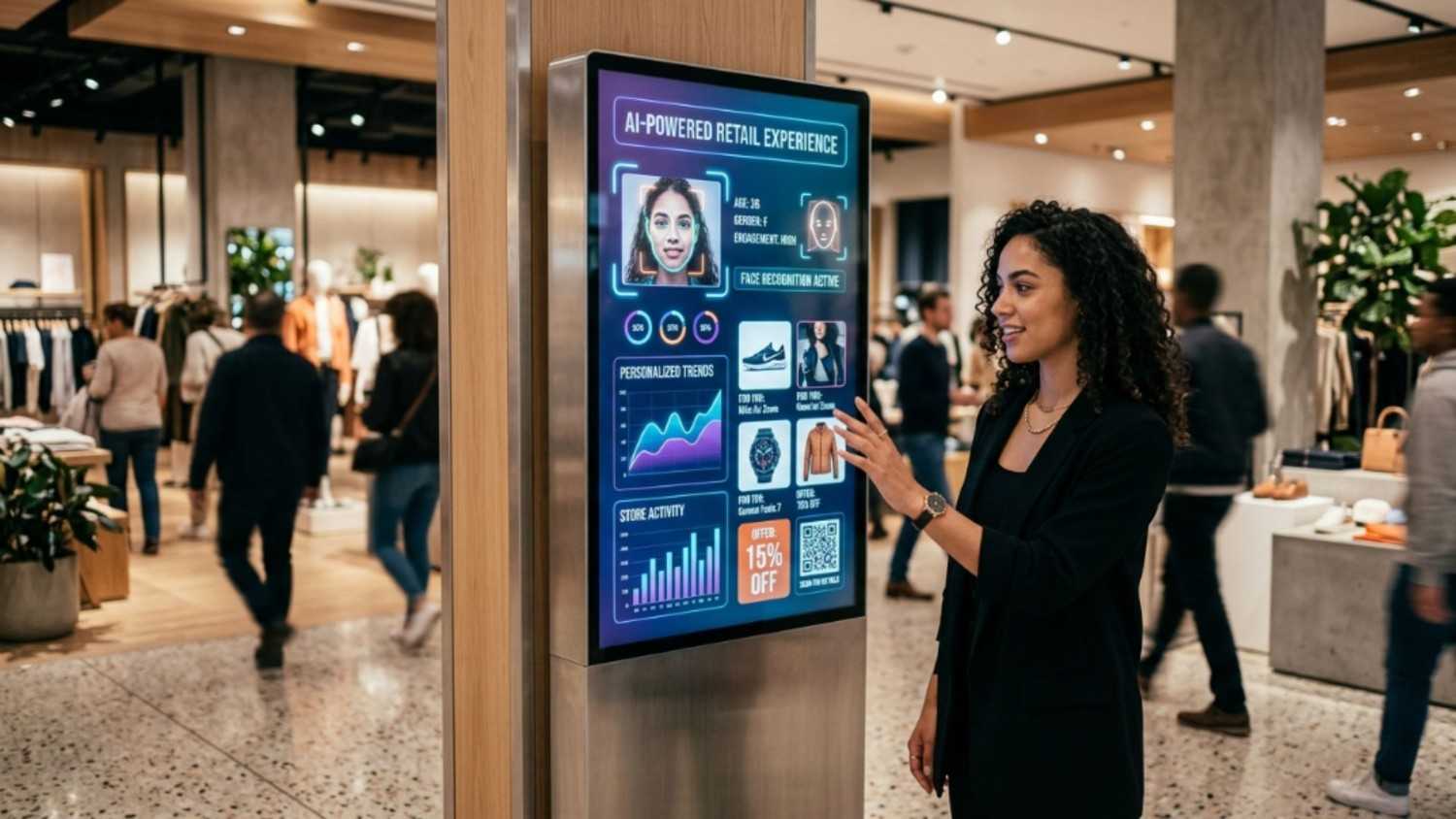
AI in Retail and Shopping Malls
Retail environments are among the earliest adopters of AI-powered signage.
Retailers use AI to recommend products, display personalized promotions, analyze shopper behavior, and improve store navigation.
Shopping malls can also leverage AI to provide targeted advertisements and intelligent wayfinding solutions.
These capabilities enhance customer experiences while increasing sales opportunities.
AI-Powered Signage for Corporate Environments
Corporate offices are increasingly using AI-enabled displays for internal communication and visitor engagement.
Applications include smart meeting room scheduling, personalized visitor information, real-time company announcements, and employee engagement displays.
AI helps organizations streamline communication and improve workplace efficiency.
Challenges and Considerations
While AI-powered digital signage offers significant benefits, businesses should also consider potential challenges.
These may include data privacy concerns, initial implementation costs, system integration requirements, and ongoing software management.
Choosing the right technology partner is essential for successful deployment and long-term performance.
Businesses should ensure their AI solutions comply with applicable privacy regulations and industry standards.
The Future of AI-Powered Digital Signage
The future of digital signage will be increasingly intelligent, automated, and personalized.
Emerging innovations may include:
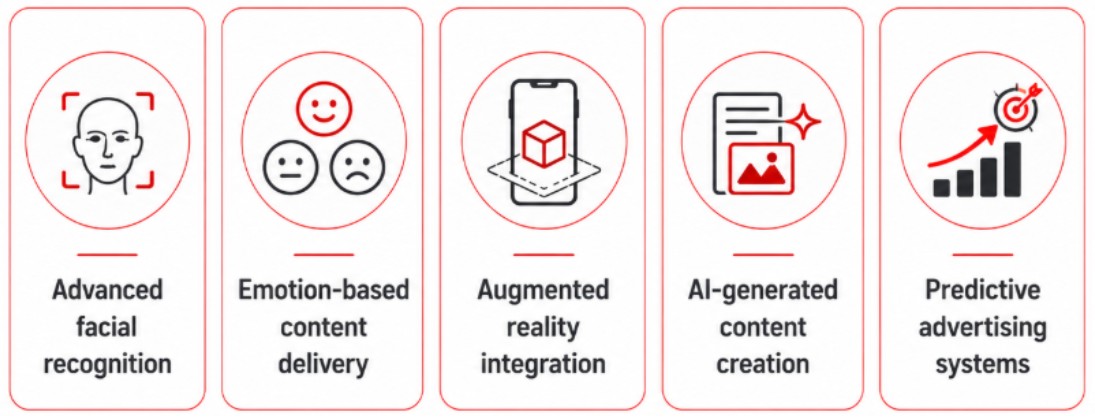
As artificial intelligence continues to evolve, digital signage will become more responsive, efficient, and impactful than ever before.
Organizations that adopt these technologies early will be better positioned to meet changing customer expectations and remain competitive in the digital age.
Conclusion
AI-powered digital signage is transforming the way businesses communicate with customers, employees, and visitors. By combining intelligent automation, real-time analytics, and personalized content delivery, AI enables organizations to create more meaningful and effective experiences.
From smarter advertising and customer engagement to predictive content management and data-driven insights, AI is shaping the future of digital displays. As technology continues to advance, AI-powered digital signage will become an essential tool for businesses seeking to improve communication, enhance customer experiences, and maximize return on investment.