
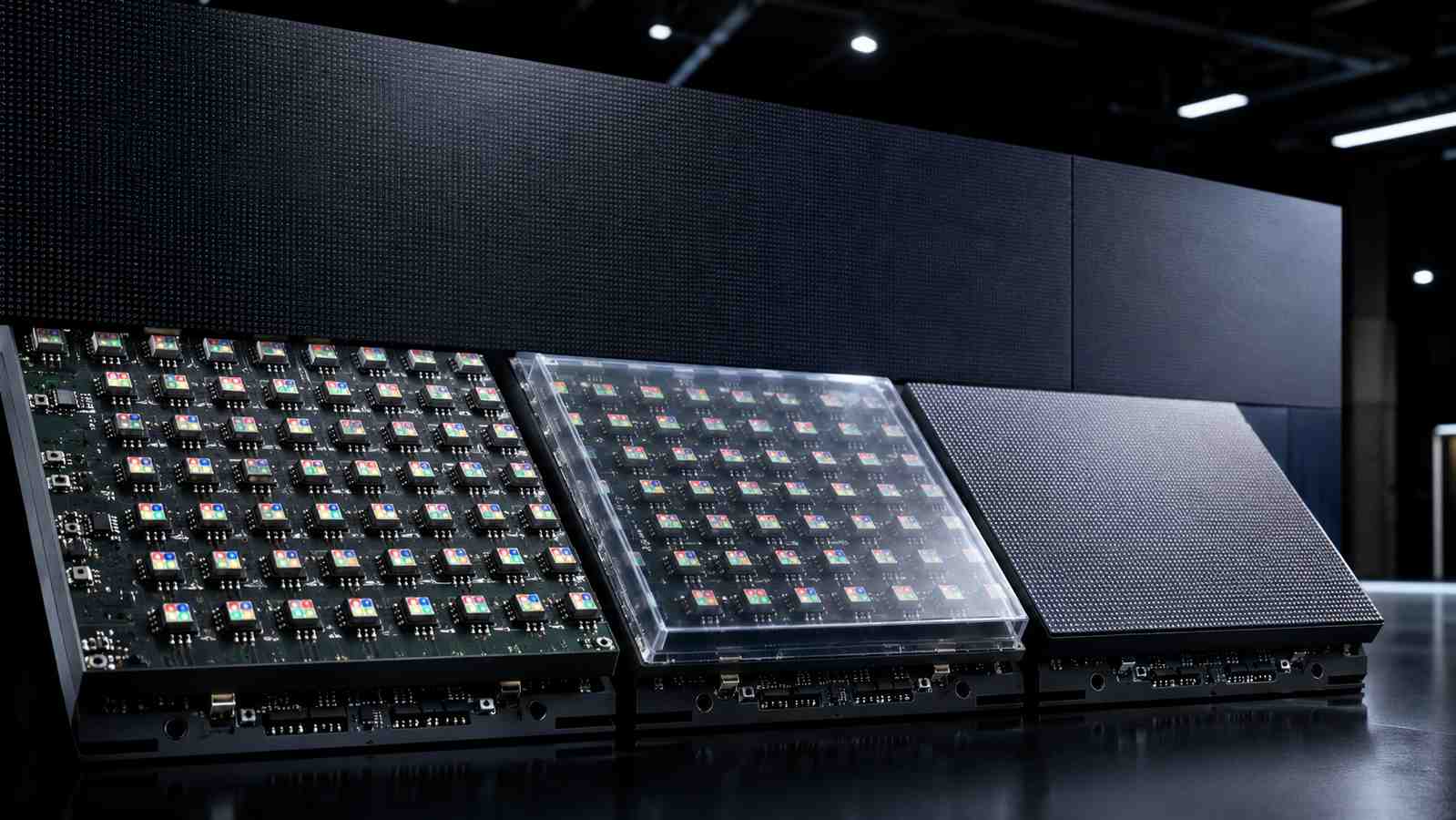
If your team has started evaluating LED video walls for an upcoming project, you’ve probably run into three letters that keep showing up everywhere: SMD, GOB, and COB. Most vendor spec sheets toss these terms around without explaining them, making it hard for a procurement or facilities team to compare options confidently.
Here’s the short version: these three terms describe how the LED chips are mounted onto the display module. That single manufacturing choice affects viewing distance, durability, maintenance needs, and total project cost, all things that matter when you’re signing off on a screen for a boardroom, a showroom, or a public-facing installation. Let’s break each one down.
SMD: The Reliable All-Rounder
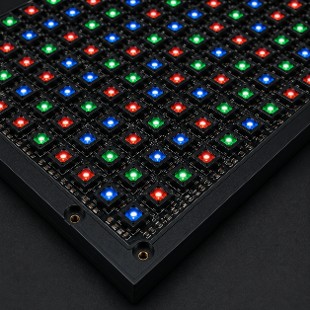
SMD (Surface Mounted Device) has been the industry workhorse for years, and for good reason. Individual red, green, and blue LED chips are packaged together and soldered onto the circuit board as one unit.
It’s mature, well-understood technology, which means wider availability, simpler repairs, and generally lower upfront costs, making it useful when a project has multiple screens to budget for. SMD works especially well when a display will be viewed from a reasonable distance, such as retail storefronts, event backdrops, corporate lobbies, or outdoor billboards.
The trade-off shows up at very fine pixel pitches. Push SMD too far into close-viewing territory and gaps between individual LEDs become visible, along with slightly more exposed components that can be vulnerable to knocks and moisture in high-traffic commercial spaces.
The trade-off shows up at very fine pixel pitches. Push SMD too far into close-viewing territory and gaps between individual LEDs become visible, along with slightly more exposed components that can be vulnerable to knocks and moisture in high-traffic commercial spaces.
GOB: SMD With a Protective Upgrade
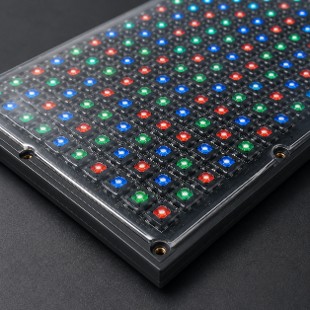
GOB (Glue on Board) isn’t really a separate technology; think of it as SMD reinforced for tougher environments. After the LEDs are mounted the usual way, a transparent resin layer is poured over the entire module surface.
That coating does a lot of quiet work for facilities that see heavy use:
- Shields LED beads from dust, moisture, and accidental impact
- Reduces glare and softens the visual texture slightly
- Makes the module far more forgiving in high-footfall or rental deployments
This is why GOB has become a common choice for malls, schools, transit hubs, and conference venues– environments where a screen might get bumped, touched, or exposed to humidity. Organizations get most of SMD’s cost efficiency with meaningfully better durability, which lowers long-term maintenance overhead.
COB: Built for Ultra-Close, Ultra-Fine Viewing
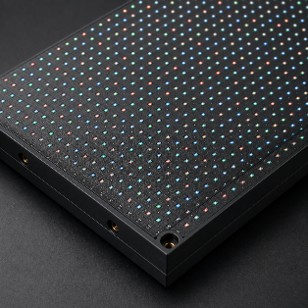
COB (Chip on Board) takes a different approach entirely. Instead of packaging LED chips individually and mounting them, the bare chips are mounted directly onto the board and then coated as a unit. There’s no visible “bead” at all, just a smooth, continuous surface.
The result is the smallest achievable pixel pitch, near-seamless image quality, and strong heat dissipation because there’s nothing sitting proud of the board to trap heat. COB is the natural fit for control rooms, executive boardrooms, broadcast studios, and any environment where staff or clients sit within a couple of metres of the screen and image smoothness is a priority.
The catch: COB modules cost more, and servicing is less straightforward since the chips aren’t individually replaceable the way SMD components sometimes are, a factor worth weighing against a project’s maintenance budget.
A Quick Way to Decide
Instead of comparing specs in isolation, it helps to ask three questions during project planning:
How close will people actually stand to the screen?
Under 2 metres, lean toward COB. Beyond 3 metres, SMD is often more than sufficient.
Will the screen face physical contact, dust, or moisture?
If yes, think retail floors, schools, semi-outdoor spaces, or shared facilities – GOB earns its extra cost through lower upkeep.
What does the budget allow now versus over the display’s lifespan?
SMD keeps upfront costs down and is easiest to source and repair at scale; COB is an investment in image quality that pays off in premium, close-viewing environments like boardrooms or flagship installations.
Most projects don’t need the “best” technology on paper; they need the one that matches how the screen will actually be used, day to day, across its operating life.
Quick Comparison
| Factor | SMD | GOB | COB |
|---|---|---|---|
| Best viewing distance | Medium to far | Medium, high-contact areas | Very close (under 2m) |
| Durability | Standard | Enhanced (protective coating) | High (sealed, no exposed beads) |
| Typical cost | Lowest | Mid-range | Premium |
| Best fit | Retail, outdoor, general commercial | Malls, schools, transit, rentals | Boardrooms, control rooms, studios |
Frequently Asked Questions
Is COB always better than SMD?
Not necessarily. COB delivers better image quality at ultra-fine pixel pitches, but for medium-to-long viewing distances, SMD often delivers a comparable visual experience at a lower project cost.
Can GOB modules be repaired like SMD ones?
Yes, largely. GOB is built on the same SMD foundation, so most repair processes remain similar; the added protective layer doesn’t significantly complicate servicing.
Which technology is best for outdoor installations?
SMD and GOB are the more common choices outdoors, since outdoor viewing distances are usually longer and don’t require COB’s ultra-fine pixel density.
Planning a Display Installation for Your Organization?
Every project brings its own mix of budget, viewing distance, and operating environment, and the right module technology depends on getting that mix right for your specific use case, not on picking whichever option sounds most advanced. At Vision Display, we work with businesses and institutions to match the technology to the deployment, backed by decades of manufacturing experience. Get in touch with our team for a recommendation based on your project’s actual requirements.