
Customer expectations have changed dramatically over the last few years. Today’s consumers want quick access to information, personalized experiences, and engaging interactions whenever they visit a retail store, shopping mall, hotel, corporate office, healthcare facility, or entertainment venue. Businesses that continue relying on static posters and traditional signage often struggle to capture attention in increasingly competitive environments.
Interactive indoor LED displays are transforming the way businesses communicate with customers. Unlike conventional displays that simply present information, interactive displays allow users to engage directly with content through touch, motion sensors, QR codes, or mobile integration. This creates a more immersive and convenient experience while helping businesses deliver relevant information at the right time.
Whether it’s helping customers find products, browse catalogs, navigate large spaces, or access personalized promotions, interactive indoor displays have become an essential tool for improving customer satisfaction and increasing business efficiency.
What Are Interactive Indoor Displays?
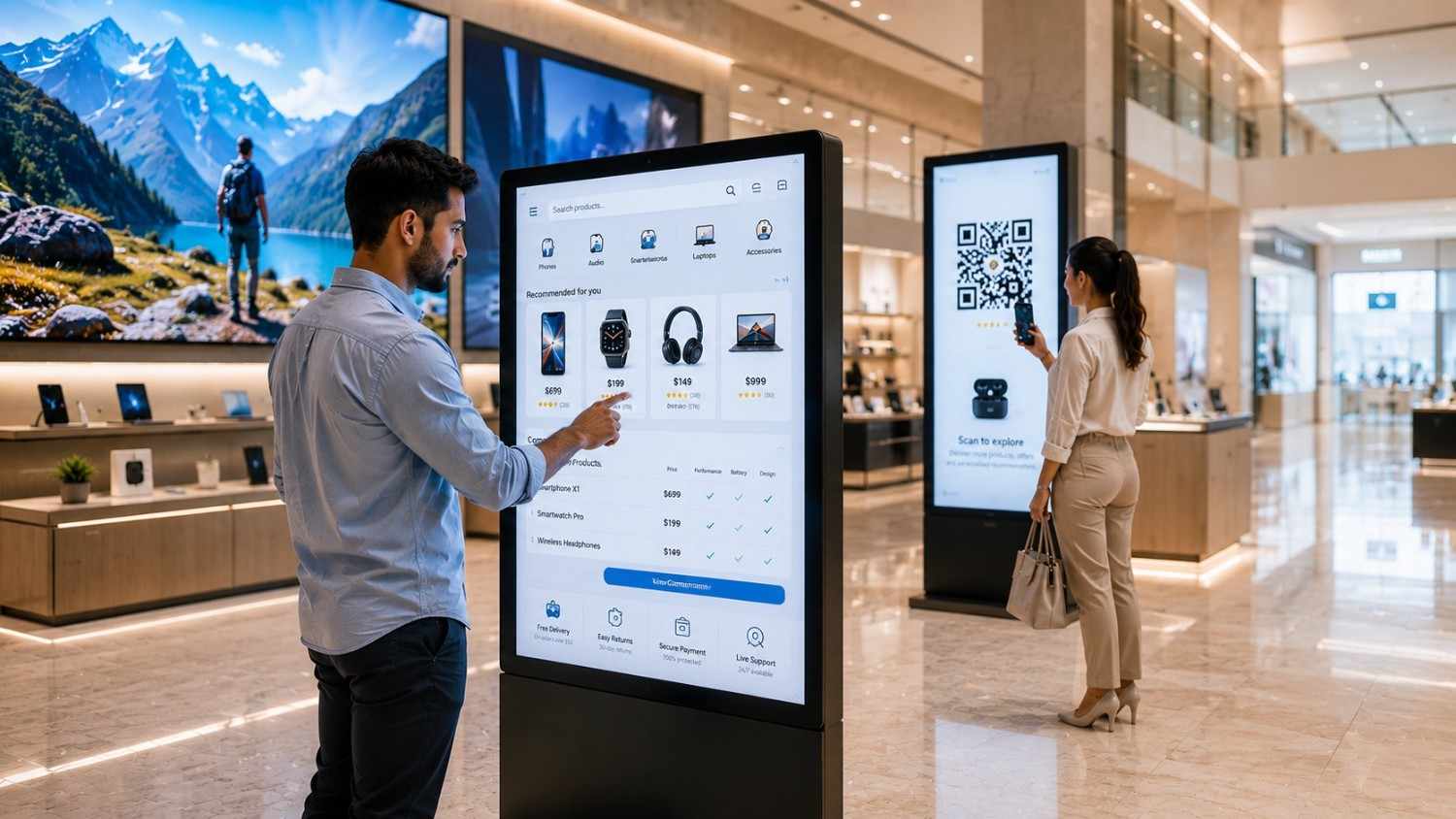
One of the biggest advantages of interactive displays is that customers can access information independently without waiting for assistance. Instead of searching for staff members, visitors can browse product details, compare specifications, check prices, or explore available services with just a few taps.
This self-service approach improves convenience while reducing waiting times. It also allows employees to focus on more complex customer needs rather than answering repetitive questions.
Provide Instant Access to Information
One of the biggest advantages of interactive displays is that customers can access information independently without waiting for assistance. Instead of searching for staff members, visitors can browse product details, compare specifications, check prices, or explore available services with just a few taps.
This self-service approach improves convenience while reducing waiting times. It also allows employees to focus on more complex customer needs rather than answering repetitive questions.
Improve Product Discovery
Finding the right product can be challenging, especially in large retail stores or showrooms. Interactive displays simplify this process by allowing customers to search products based on categories, brands, features, or pricing.
For example, an electronics showroom can let customers compare televisions, laptops, or smartphones side by side, while a furniture retailer can display different finishes, dimensions, and color options. By making product discovery easier, businesses create a more enjoyable shopping experience and increase the likelihood of purchase.
Create Personalized Shopping Experiences
Modern interactive displays can integrate with customer data, loyalty programs, or mobile applications to deliver personalized recommendations. Instead of displaying the same information to every visitor, businesses can tailor promotions, product suggestions, or service offerings based on customer preferences or purchase history.
Personalized experiences make customers feel valued and improve engagement. They also help businesses promote products that are most relevant to each visitor, increasing conversion rates and customer satisfaction.
Simplify Navigation in Large Spaces
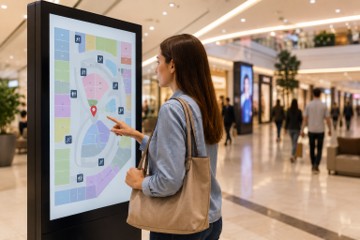
Large commercial spaces such as shopping malls, hospitals, airports, universities, and exhibition centers often require effective navigation systems. Interactive indoor displays can function as digital wayfinding kiosks, allowing visitors to search for stores, departments, meeting rooms, or facilities.
Users can enter their destination and receive step-by-step directions instantly. This reduces confusion, enhances visitor confidence, and creates a more organized experience, particularly in busy public spaces.
Increase Customer Engagement
Interactive content naturally attracts more attention than static advertisements. Customers are more likely to spend time exploring videos, product demonstrations, interactive catalogs, or promotional campaigns when they can actively participate.
Longer engagement times increase brand recall and provide businesses with more opportunities to communicate their products and services effectively. Interactive experiences also encourage customers to explore additional offerings that they may not have initially considered.
Reduce Waiting Time Frustration
Waiting areas in hospitals, banks, hotels, service centers, and government offices often lead to customer frustration. Interactive displays help make waiting periods more productive by providing useful information, entertainment, educational content, or self-service options.
Customers can browse services, complete registrations, view FAQs, or learn about special offers while waiting, making the overall experience feel shorter and more engaging.
Support Contactless Customer Interactions
Since the demand for contactless services has grown significantly, many businesses are incorporating QR codes and mobile integration into interactive displays. Customers can scan a code to access digital menus, brochures, product catalogs, payment options, or appointment booking systems directly on their smartphones.
This approach minimizes physical contact while providing a seamless digital experience. It also allows businesses to update information instantly without printing new materials.
Strengthen Brand Image
Interactive indoor displays present businesses as modern, innovative, and customer-focused. High-quality visuals, smooth navigation, and engaging digital experiences create a positive impression that reflects professionalism and technological advancement.
Whether in a luxury retail showroom, corporate reception, or premium hotel lobby, interactive displays enhance the overall environment and reinforce the brand’s commitment to delivering exceptional customer experiences.
Collect Valuable Customer Insights
Many interactive display systems include built-in analytics that help businesses understand how customers interact with digital content. Businesses can monitor which products receive the most attention, how long visitors engage with the display, and which sections are accessed most frequently.
These insights allow organizations to refine marketing strategies, optimize content, and improve future customer interactions based on real user behavior rather than assumptions.
Industries Benefiting from Interactive Indoor Displays
Interactive indoor displays are widely used across multiple industries due to their versatility and ability to enhance customer engagement.
Retail stores use them for product browsing and promotions, shopping malls implement digital directories, hotels provide guest information and self-check-in services, hospitals improve patient navigation, educational institutions display campus information, and corporate offices create engaging visitor experiences. Museums, entertainment venues, automobile showrooms, and exhibition centers also rely on interactive displays to deliver immersive experiences and communicate information effectively.
Tips for Implementing Interactive Indoor Displays
To maximize the effectiveness of interactive displays, businesses should focus on intuitive user interfaces, high-quality visuals, fast response times, and regularly updated content. The displays should be placed in high-traffic areas where customers naturally pause or seek information, such as entrances, reception areas, product zones, and waiting lounges.
Regular maintenance, software updates, and content optimization ensure that the displays continue delivering a smooth and engaging experience over time.
Conclusion
Interactive indoor displays have redefined how businesses engage with customers by combining digital technology with real-time interaction. They make information more accessible, simplify navigation, improve product discovery, and create personalized experiences that enhance customer satisfaction.
As businesses continue to embrace digital transformation, interactive LED displays are becoming an essential part of modern customer engagement strategies. By investing in interactive indoor displays, organizations can improve operational efficiency, strengthen brand perception, and create memorable experiences that encourage customers to return.