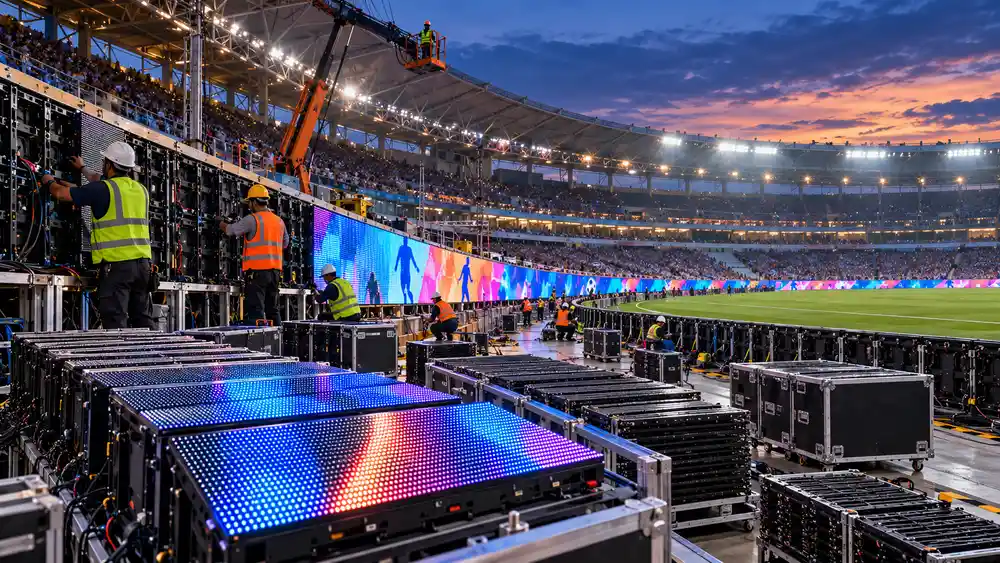

Outdoor LED screens have become a popular choice for digital billboards, stadiums, transportation hubs, retail advertising, and public information displays. Unlike indoor displays, these screens operate continuously in challenging environmental conditions, including intense sunlight, heavy rain, dust storms, humidity, and strong winds.
This often leads businesses to ask an important question: How weatherproof are outdoor LED screens?
The good news is that modern outdoor LED displays are specifically engineered to withstand harsh weather conditions while maintaining excellent performance and image quality. With advanced protective technologies and durable construction, outdoor LED screens can operate reliably throughout the year in a wide range of climates.
This blog explores how outdoor LED displays are protected from environmental factors and what businesses should know before investing in them.
Built for Outdoor Conditions
Outdoor LED screens are designed differently from indoor displays. Manufacturers use weather-resistant materials, sealed cabinets, and specialized components to protect sensitive electronics from environmental damage.
Unlike indoor screens that operate in controlled environments, outdoor displays must endure constant exposure to changing weather conditions. As a result, every component is engineered with durability and protection in mind.
These design features help ensure uninterrupted performance regardless of the season.
Understanding IP Ratings
One of the most important indicators of weather resistance is the IP rating, or Ingress Protection rating.
An IP rating measures a display’s ability to resist:
- Dust and solid particles
- Water penetration
Outdoor LED screens commonly feature ratings such as IP65, IP66, or higher.
For example, an IP65-rated display is protected against dust ingress and can withstand water jets from various directions. This level of protection makes it suitable for most outdoor advertising and public display applications.
Higher IP ratings provide even greater resistance against harsh environmental conditions.
Protection Against Rain and Moisture
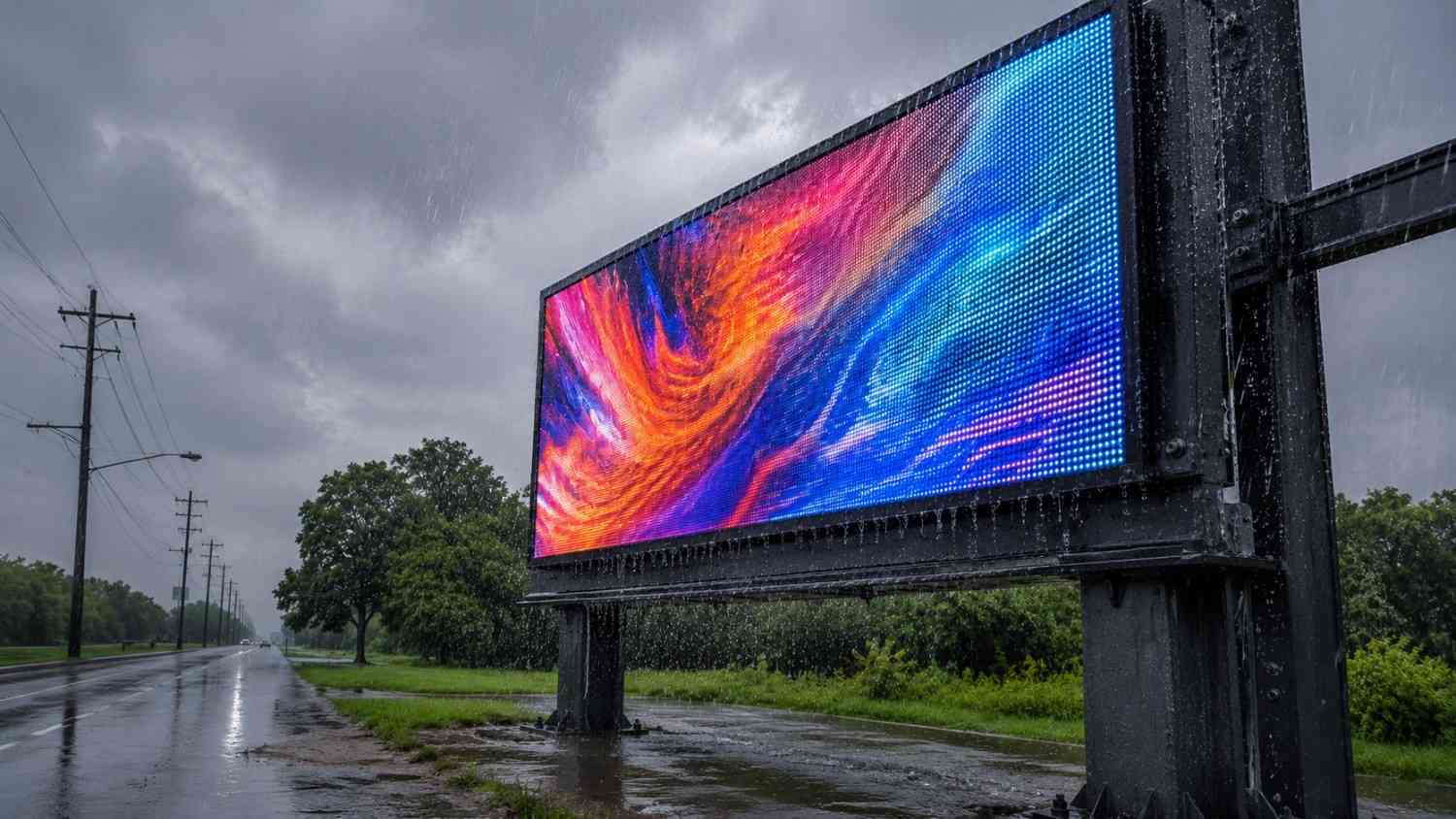
Rain is one of the biggest concerns for outdoor electronic equipment. Fortunately, outdoor LED screens are built with waterproof cabinet designs that prevent water from reaching internal components.
Sealed enclosures, weather-resistant connectors, and waterproof power systems help protect the display during heavy rainfall.
Modern outdoor LED displays can continue operating during rainstorms, high humidity, wet weather conditions.
Proper installation and maintenance further enhance water resistance and long-term reliability.
Resistance to Extreme Heat
Many outdoor LED screens operate in regions where temperatures can reach extremely high levels during summer months.
To handle heat effectively, manufacturers incorporate:
- Heat-dissipation systems
- Ventilation designs
- Temperature-resistant components
These features help maintain stable performance while preventing overheating.
Advanced LED displays also use intelligent temperature monitoring systems that automatically regulate internal conditions when temperatures rise.
As a result, outdoor screens can function efficiently even in hot climates with prolonged sun exposure.
Performance in Direct Sunlight
Visibility under direct sunlight is one of the most important requirements for outdoor LED displays.
Unlike conventional screens that become difficult to view outdoors, LED displays are designed with high brightness levels that typically range from 5,000 to 10,000 nits.
This allows content to remain visible even under bright daylight conditions.
Many outdoor LED screens also include automatic brightness adjustment systems that adapt screen brightness according to ambient lighting conditions. This improves visibility while reducing power consumption.
Dust and Pollution Protection
Outdoor displays are frequently exposed to dust, dirt, pollution, and airborne particles.
To address this challenge, outdoor LED cabinets are designed with sealed construction that prevents contaminants from entering sensitive electronic components.
This protection is particularly important in:
- Urban environments
- Industrial zones
- Construction areas
- Desert regions
Dust-resistant designs help maintain display performance while reducing maintenance requirements.
Wind Resistance and Structural Durability
Outdoor LED screens are often installed on building facades, highways, stadiums, and elevated structures where they are exposed to strong winds.
Manufacturers design mounting systems and cabinets to withstand significant wind loads.
Before installation, structural engineers typically evaluate:
- Wind pressure
- Mounting requirements
- Structural stability
- Local environmental conditions
Proper engineering ensures the display remains secure even during severe weather events.
Protection Against Humidity
High humidity levels can damage electronic equipment over time if not properly managed.
Outdoor LED displays use moisture-resistant materials and sealed internal components to prevent condensation and corrosion.
This protection is especially important in:
- Coastal regions
- Tropical climates
- Areas with frequent rainfall
Advanced waterproofing technology helps extend display lifespan in humid environments.
Cold Weather Performance
Outdoor LED displays are not only designed for hot climates but also perform well in cold temperatures.
Many modern systems are engineered to operate effectively in freezing conditions without affecting image quality or functionality.
Temperature-resistant electronics and weatherproof materials ensure reliable operation throughout winter seasons.
This makes outdoor LED screens suitable for a wide range of geographic locations.
The Importance of Regular Maintenance
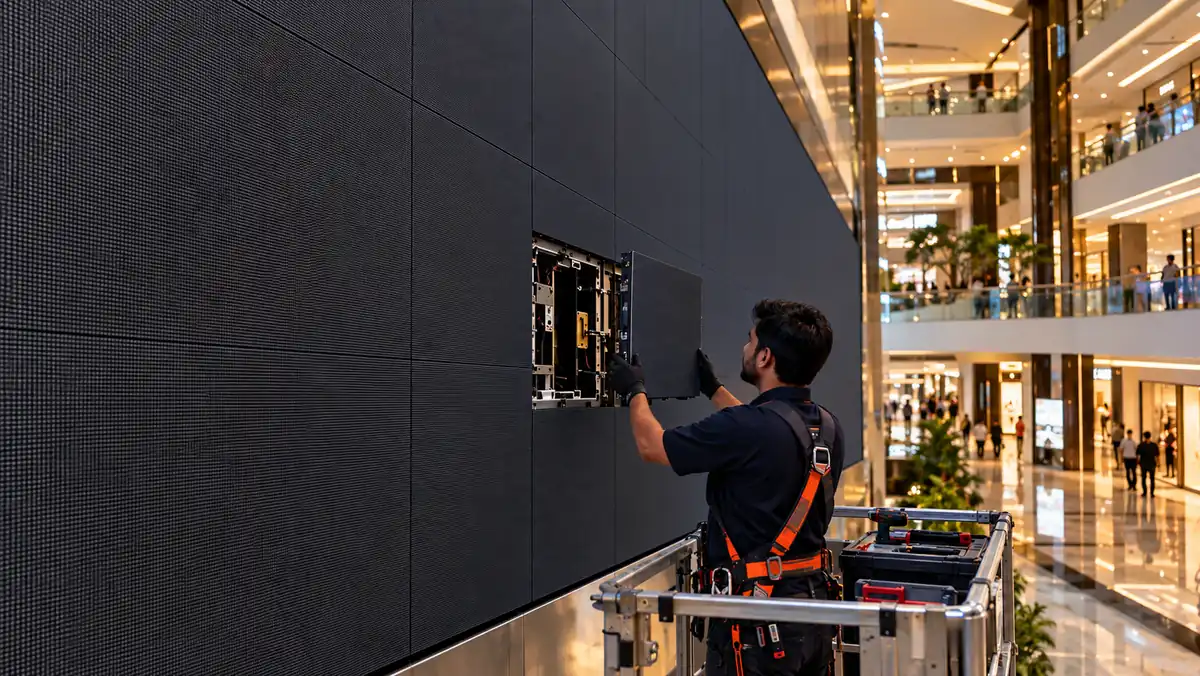
While outdoor LED screens are highly weatherproof, regular maintenance remains essential for long-term performance.
Routine inspections help identify:
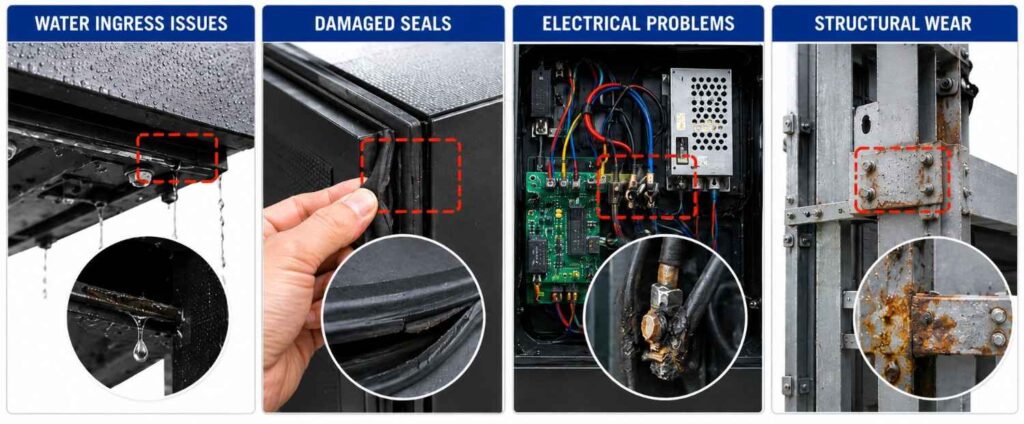
Cleaning the display surface and checking protective components can significantly extend system lifespan.
Preventive maintenance ensures maximum reliability and minimizes downtime.
How Long Can Outdoor LED Screens Last?
A high-quality outdoor LED display can typically operate for 50,000 to 100,000 hours depending on usage, environmental conditions, and maintenance practices.
Weatherproof construction plays a major role in achieving this lifespan by protecting internal components from environmental damage.
Businesses that invest in premium-quality LED screens often enjoy many years of reliable performance with minimal maintenance costs.
Choosing the Right Outdoor LED Screen
Not all outdoor LED displays offer the same level of weather protection.
When selecting a display, businesses should consider:
- IP rating
- Local climate conditions
- Installation location
- Brightness requirements
- Structural support needs
Working with an experienced LED display provider ensures the screen is properly specified for the intended environment.
Choosing the right solution from the beginning helps maximize performance and return on investment.
Conclusion
Outdoor LED screens are specifically engineered to withstand challenging weather conditions, including rain, heat, dust, humidity, wind, and direct sunlight. Through advanced waterproofing, durable construction, and intelligent environmental controls, these displays deliver reliable performance throughout the year.
Whether used for digital billboards, stadium displays, transportation systems, or commercial advertising, modern outdoor LED screens are built to operate effectively in demanding environments. By selecting a high-quality display and following proper maintenance practices, businesses can enjoy long-lasting performance and maximum value from their investment.