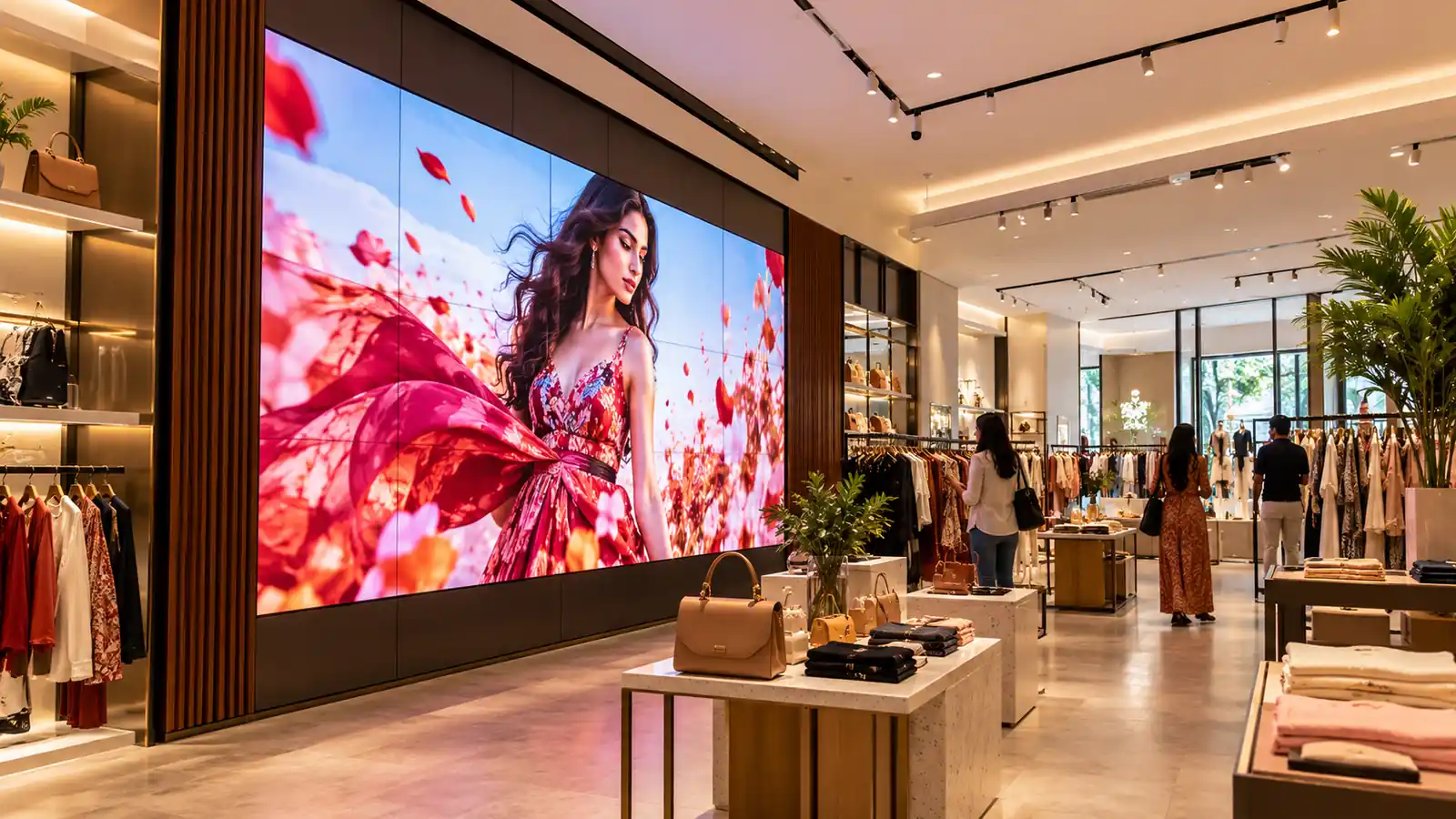
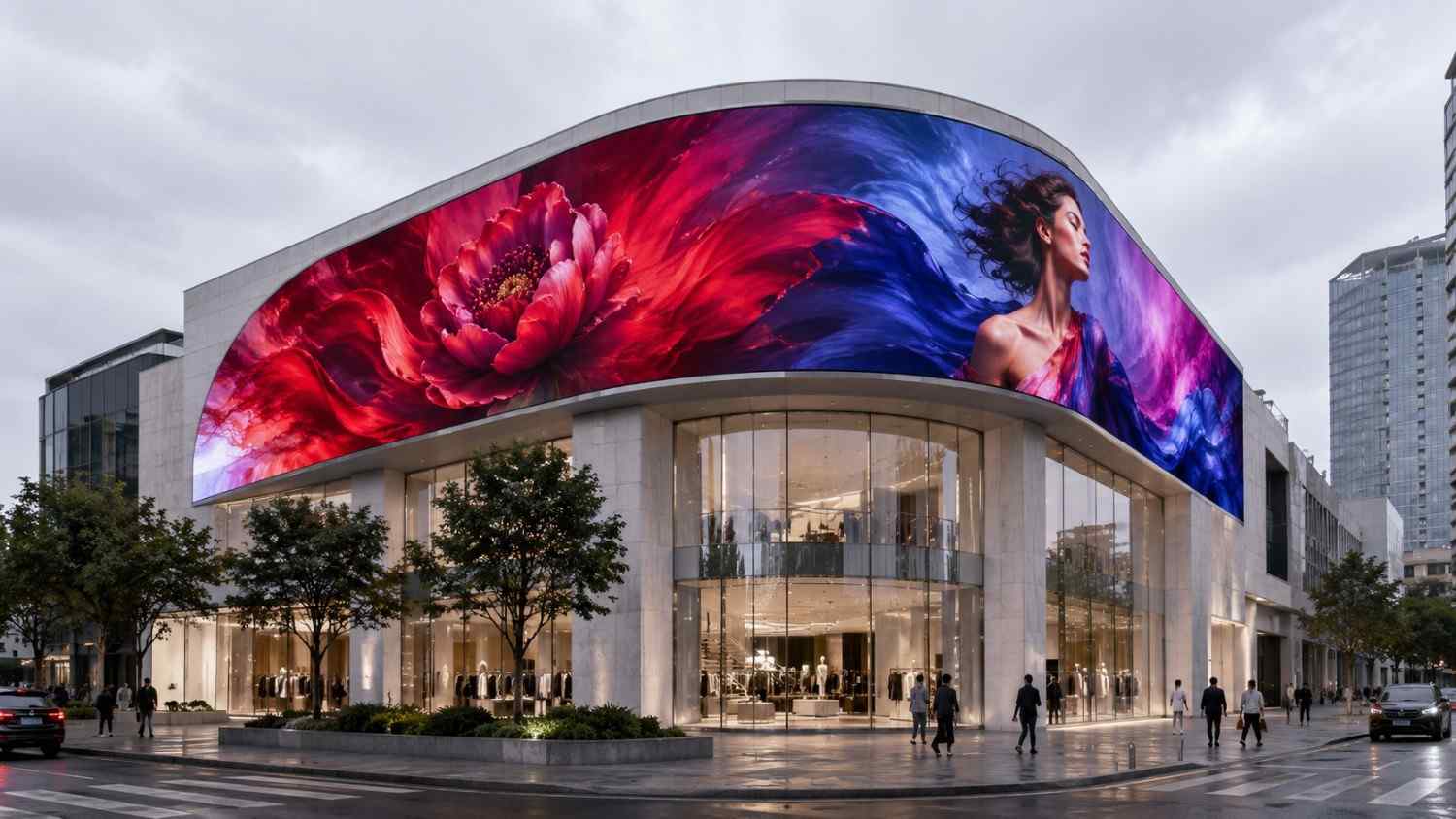
Walk into a flagship store today, and the last thing a brand wants is a flat black rectangle bolted to the wall. Luxury retail design has moved toward spaces where technology disappears into the architecture rather than interrupting it: curved counters, wraparound columns, sculpted ceiling features. Flat LED panels were never built for that. Curved and flexible LED displays were.
For architects, store designers, and brand teams planning a flagship or experience-led store, understanding how this technology works and where it fits makes the difference between a screen that looks bolted on and one that looks like it was always meant to be there.
Why Flat Panels Fall Short in Luxury Spaces?
Traditional LED walls are rigid, modular, and built for straight lines. That works fine in a control room, but luxury retail design rarely deals in straight lines; brand architecture leans on curved facades, cylindrical columns, and organic ceiling forms specifically because they feel considered rather than mass-produced.
A flat panel forced into that kind of space either breaks the design intent or sits awkwardly against it. That mismatch is exactly what curved and flexible LED technology was developed to solve.
How Flexible LED Modules Actually Work?
Unlike standard rigid panels, flexible LED modules are built on a bendable PCB base, letting individual panels curve along both concave and convex surfaces. Depending on pixel pitch and panel design, some can wrap tightly around columns; others suit gentler curves like domed ceilings or wave-shaped walls.
A few things make this possible in a way that still looks premium up close:
- Seamless visual continuity – modules are engineered so the image reads as one smooth arc rather than a series of visible flat segments
- Ultra-thin profiles – many flexible panels sit under 10mm thick, so they don’t eat into pedestrian space or disrupt sightlines
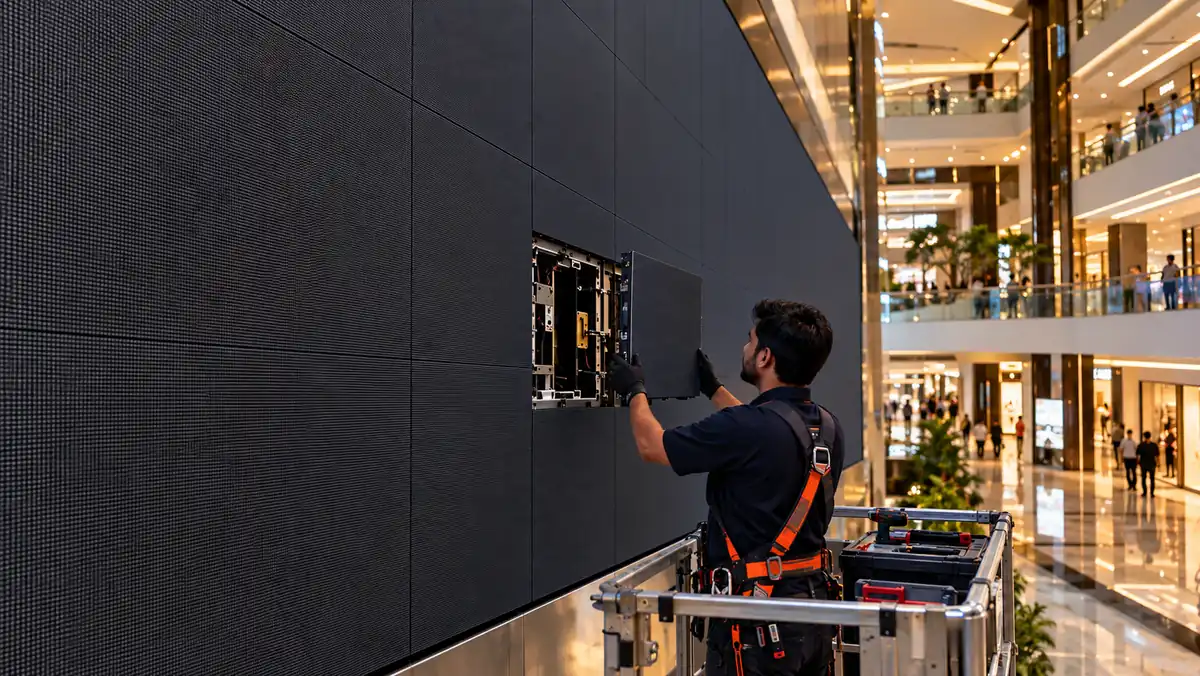
- Front-serviceable design – panels can often be accessed and maintained from the front, which matters when a display is recessed into a column or built-in feature
Where This Technology Shows Up in Luxury Retail
Flexible and curved displays tend to appear in a handful of recurring spots across flagship stores:
- Wraparound column displays that turn structural dead space into brand storytelling
- Curved storefront and window installations blending content with the glass architecture
- Sculpted ceiling or archway features used as an immersive backdrop
- Product showcase pods or curved display cases highlighting a single collection
In each case, the goal isn’t to draw attention to the screen; it’s to make the content feel inseparable from the space around it.
What Design and Facilities Teams Should Plan For?
A curved or flexible LED installation involves a few additional considerations beyond a standard flat video wall:
Pixel pitch and curve tightness are connected.
Tighter curves generally call for finer pixel pitch modules, since the bend radius affects how cleanly the image blends at close range.
Structural planning matters early.
Curved installations often need custom framing or CNC-cut mounting structures, easier to plan during the architectural design phase than to retrofit later.
Color consistency across the arc.
Viewers see different panels from different angles on a curved surface, so LEDs matched for consistent color output keep the arc looking uniform rather than patchy.
Content should be built for the format.
A flat rectangular video doesn’t always translate onto a wraparound column; content often needs designing specifically for the curve it will live on.
A Simple Way to Brief Your Vendor
Instead of starting the conversation with a pixel pitch number, it helps to walk in with three things: a rough sketch or reference of the architectural feature you want to wrap or curve around, the minimum viewing distance from the nearest customer position, and how the space will be lit throughout the day. Handing over these three details early lets a manufacturer recommend the right module type and curve radius before any structural work begins, rather than discovering a mismatch after the design is finalized.
Terms Worth Knowing
A few terms come up often in curved and flexible LED conversations, and knowing them upfront makes vendor discussions easier:
- Bend radius – the tightest curve a flexible module can physically achieve without distorting the image or damaging the panel
- Front-serviceable – a design where panels can be accessed and maintained from the front, useful for displays recessed into columns or built-in features
- PCB base – the flexible circuit board that flexible LED modules are built on, allowing them to bend along a curve
- Pixel binning – sorting LEDs by matched color output so the display looks visually consistent across an arc, rather than patchy from different viewing angles
Designing a Flagship Space That Needs This?
Curved and flexible LED integration works best when it’s planned alongside the architecture, not added after the fact. Vision Display works with design teams and brand owners to figure out the right module, curve, and pixel pitch for a space before construction locks those decisions in. Connect with our team to discuss your next retail or brand experience project.