
Digital signage has evolved far beyond static advertisements and promotional displays. Today, businesses are embracing interactive digital signage to create personalized, engaging, and memorable customer experiences. As consumers increasingly expect convenience, instant access to information, and immersive interactions, interactive displays are becoming a powerful tool for brands looking to stand out in competitive markets.
From shopping malls and retail stores to airports, restaurants, and corporate environments, interactive digital signage is transforming the way businesses communicate with their audiences. By allowing customers to actively engage with content rather than simply viewing it, these displays help build stronger connections and improve overall satisfaction.
What is Interactive Digital Signage?
Interactive digital signage refers to digital displays that allow users to interact with content through touchscreens, motion sensors, QR codes, mobile integrations, or gesture-based controls. Unlike traditional signage that delivers one-way communication, interactive displays create a two-way experience between businesses and customers.
These systems can provide product information, navigation assistance, personalized recommendations, surveys, and interactive promotions, making them valuable tools for customer engagement.
As technology continues to advance, businesses are finding new ways to use interactive displays to create more meaningful and dynamic experiences.
Why Customer Engagement Matters More Than Ever
Modern consumers are exposed to thousands of advertisements every day. Capturing attention has become increasingly difficult, especially in crowded retail and commercial environments.
Interactive digital signage helps overcome this challenge by encouraging active participation. When customers engage directly with content, they are more likely to remember the message, spend more time interacting with the brand, and develop a stronger connection with the business.
Higher engagement often leads to improved customer satisfaction, increased brand awareness, and ultimately, better sales performance.
Creating Personalized Customer Experiences
One of the biggest advantages of interactive digital signage is its ability to deliver personalized experiences.
Customers can browse products, explore services, and access information based on their interests and preferences. In retail environments, interactive displays can recommend products, showcase promotions, or help customers locate items within the store.
This level of personalization makes the customer journey more convenient and enjoyable while increasing the likelihood of purchase decisions.
As consumers continue to seek personalized experiences, interactive signage provides businesses with a competitive advantage.
Enhancing Retail Environments
Retail stores are among the biggest adopters of interactive digital signage technology.
Interactive displays allow customers to:
- Explore product catalogs
- Check inventory availability
- Compare products
- Access reviews and recommendations
- Discover special offers
These features reduce reliance on staff while providing customers with instant access to information.
Retailers also benefit from improved customer engagement, increased dwell time, and higher conversion rates.
Improving Navigation and Wayfinding
Large venues such as shopping malls, airports, hospitals, and corporate campuses often use interactive digital signage for navigation purposes.
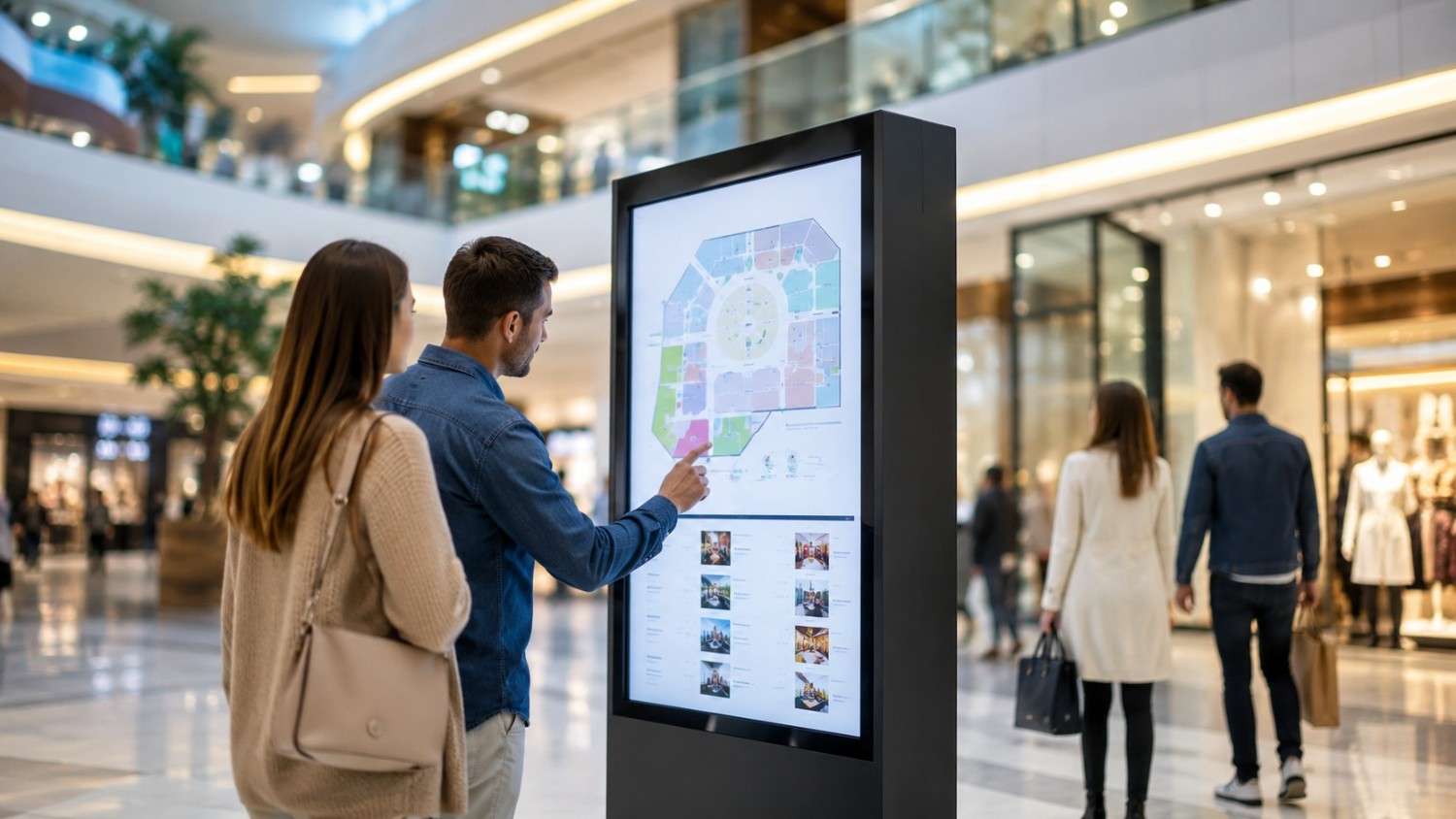
Interactive wayfinding displays help visitors find destinations quickly and efficiently. Instead of searching for directories or asking for assistance, users can interact with a touchscreen map to locate stores, departments, meeting rooms, or services.
This improves visitor experience while reducing confusion and frustration.
Increasing Customer Participation
Traditional advertising often relies on passive viewing, whereas interactive digital signage encourages direct participation.
Businesses can use interactive displays to conduct surveys, run contests, collect customer feedback, offer loyalty program registrations, and promote social media engagement.
These activities create stronger interactions between brands and consumers while providing valuable customer insights.
The more involved customers become, the more likely they are to engage with the brand in the future.
Supporting Contactless Interactions
The demand for contactless experiences has increased significantly in recent years. Interactive digital signage can integrate with smartphones through QR codes, NFC technology, and mobile applications.
Customers can scan a code to:
- Access menus
- View product information
- Download promotional offers
- Complete purchases
This creates a seamless and hygienic user experience while maintaining engagement.
Contactless functionality has become particularly important in hospitality, healthcare, and retail environments.
Real-Time Content Updates
One of the key strengths of digital signage is the ability to update content instantly.
Businesses can modify promotions, announcements, and campaigns in real time based on:
- Customer behavior
- Time of day
- Seasonal events
- Inventory availability
This flexibility allows organizations to keep content relevant and engaging at all times.
Interactive displays become even more effective when combined with dynamic content strategies.
Data Collection and Analytics
Interactive digital signage not only engages customers but also provides valuable data.
Businesses can analyze user interactions, popular content, engagement duration and customer preferences.
These insights help companies understand audience behavior and optimize future marketing efforts.
Data-driven decision-making enables businesses to improve customer experiences while maximizing return on investment.
Applications Across Multiple Industries
Interactive digital signage is being adopted across a wide range of industries.
Retail stores use it for product discovery and promotions. Shopping malls use it for wayfinding and advertising. Restaurants implement digital kiosks for ordering and menu browsing. Corporate offices use interactive displays for visitor management and internal communication.
Educational institutions, hospitals, airports, and entertainment venues are also embracing this technology to improve user experiences and operational efficiency.
Its versatility makes interactive signage suitable for almost any environment.
The Future of Interactive Digital Signage
The future of interactive digital signage will be driven by emerging technologies such as artificial intelligence, augmented reality, and advanced analytics.
Future systems may provide:
- AI-powered recommendations
- Voice-controlled interactions
- Augmented reality experiences
- Personalized content delivery
- Real-time behavioral analysis
As these technologies become more accessible, businesses will be able to create even more immersive and engaging customer experiences.
Interactive signage is expected to play a major role in the future of digital communication.
Conclusion
Interactive digital signage is transforming the way businesses engage with customers. By creating personalized, immersive, and data-driven experiences, these displays go beyond traditional advertising to build stronger customer relationships.
Whether used for retail promotions, navigation, customer feedback, or contactless interactions, interactive digital signage offers significant benefits for both businesses and consumers.
As customer expectations continue to evolve, organizations that invest in interactive digital signage will be better positioned to deliver exceptional experiences and stay ahead in an increasingly competitive marketplace.