
Brightness is one of the most important factors that determines the performance and visibility of an LED screen. No matter how advanced a display may be, poor brightness settings can reduce image quality, impact viewer experience, and even affect advertising effectiveness.
Different environments require different brightness levels. A screen installed inside a corporate office does not need the same brightness as a digital billboard placed beside a highway. Similarly, retail stores, shopping malls, stadiums, and outdoor advertising spaces all demand unique display settings to ensure optimal visibility.
Understanding LED screen brightness helps businesses choose the right display solution while improving performance, energy efficiency, and long-term durability. In this guide, we explain how brightness works and the recommended brightness levels for various environments.
What is LED Screen Brightness?
LED screen brightness refers to the intensity of light emitted from the display surface. It is measured in “nits,” which indicate how bright a screen appears to viewers.
Higher nit values mean brighter displays. For example, an indoor LED screen may operate at around 800 to 1500 nits, while outdoor billboards can exceed 6000 nits to remain visible in direct sunlight.
Choosing the correct brightness level is essential because excessive brightness can cause discomfort and waste energy, while insufficient brightness can make content difficult to see.
Why Brightness Matters in LED Displays?
Brightness directly affects the visibility and readability of an LED screen. In bright environments such as highways or open outdoor spaces, displays need high luminance to compete with sunlight. In darker indoor spaces, lower brightness levels create a more comfortable viewing experience.
Proper brightness also improves image quality, color accuracy, and audience engagement. Businesses that use LED displays for advertising rely heavily on brightness to capture attention and maximize impact.
Another important factor is energy consumption. Extremely high brightness settings consume more electricity, which increases operational costs. Modern LED displays often include automatic brightness adjustment systems to optimize performance based on surrounding lighting conditions.
Indoor LED Screen Brightness
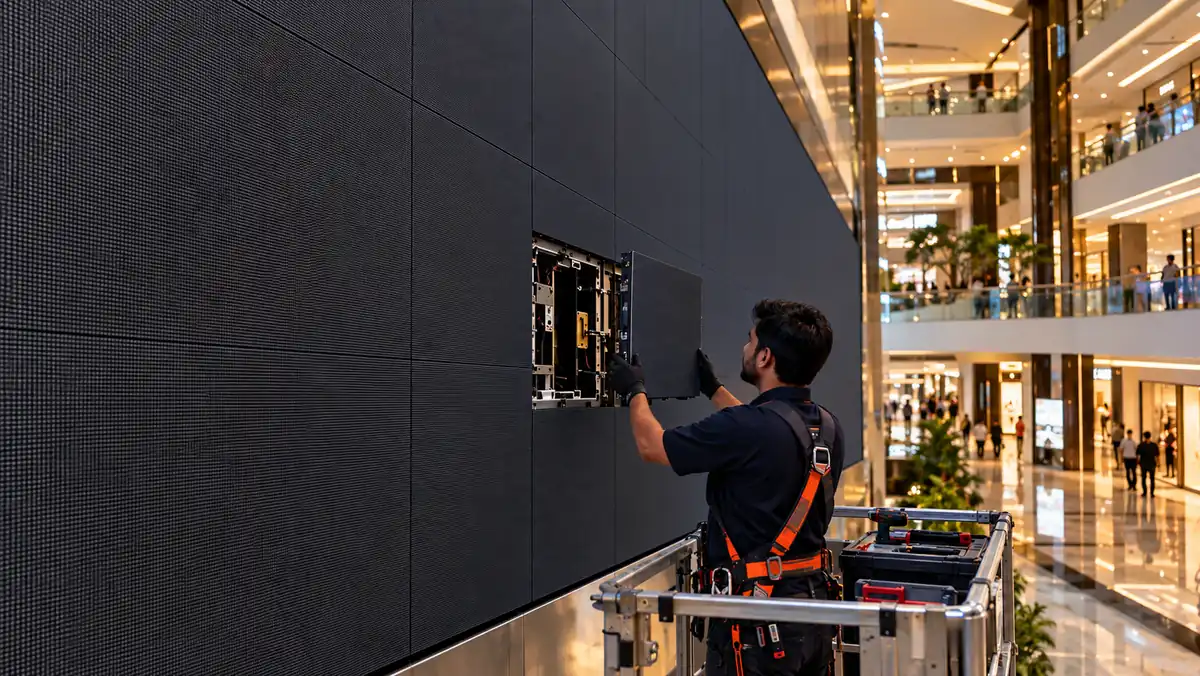
Indoor environments generally require moderate brightness levels because there is limited exposure to direct sunlight. Corporate offices, conference rooms, retail stores, shopping malls, and exhibition spaces typically use indoor LED displays with brightness ranging between 800 and 1500 nits.
In office environments, lower brightness levels create a comfortable viewing experience for employees and visitors. Excessively bright screens inside meeting rooms can strain the eyes and reduce presentation clarity.
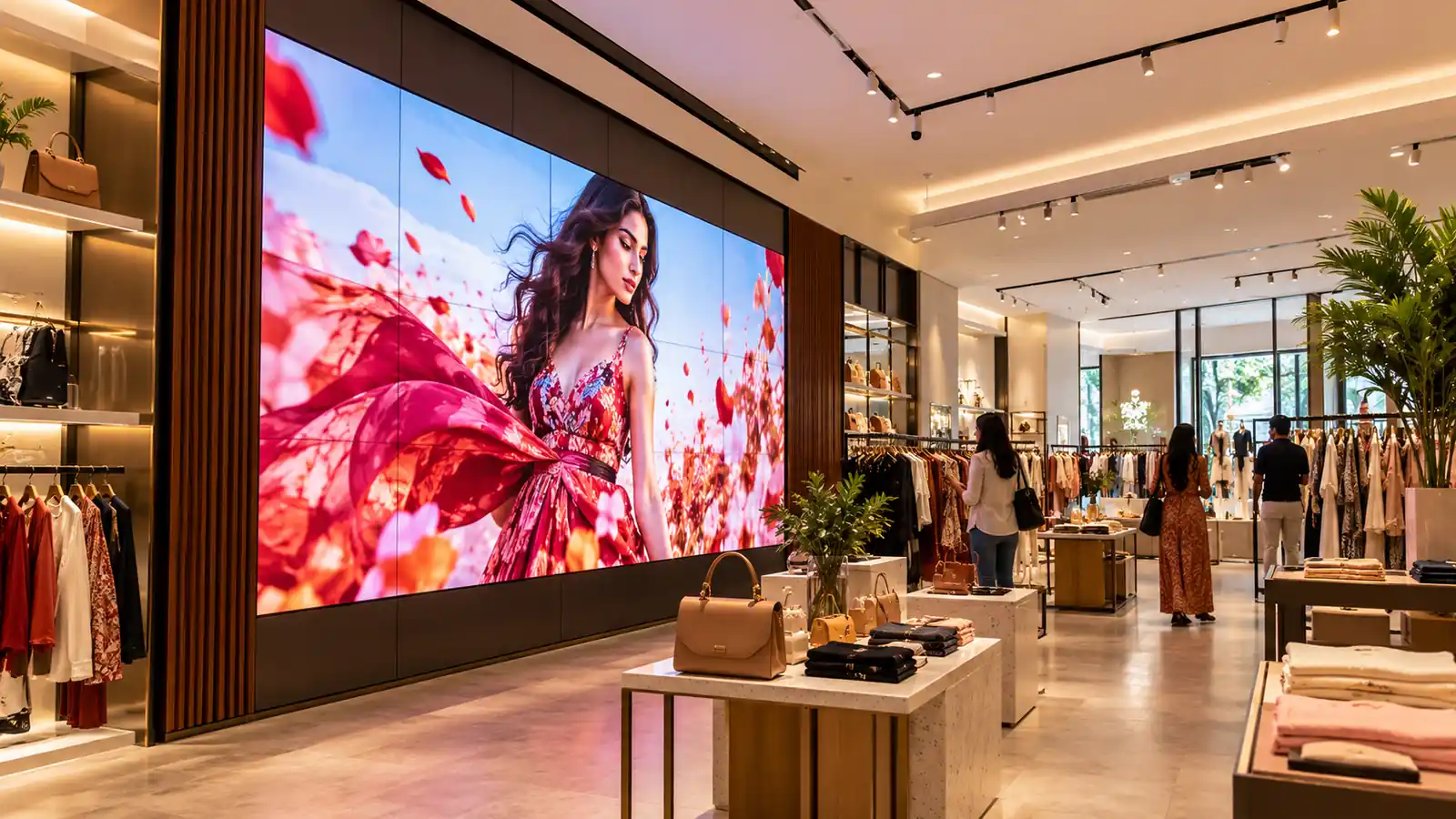
Shopping malls and retail stores may require slightly higher brightness levels because of ambient lighting and decorative illumination. Bright, vibrant visuals help attract customer attention and improve engagement within commercial spaces. Indoor LED screens should maintain balanced brightness to ensure clear visuals without overpowering the environment.
Outdoor LED Screen Brightness
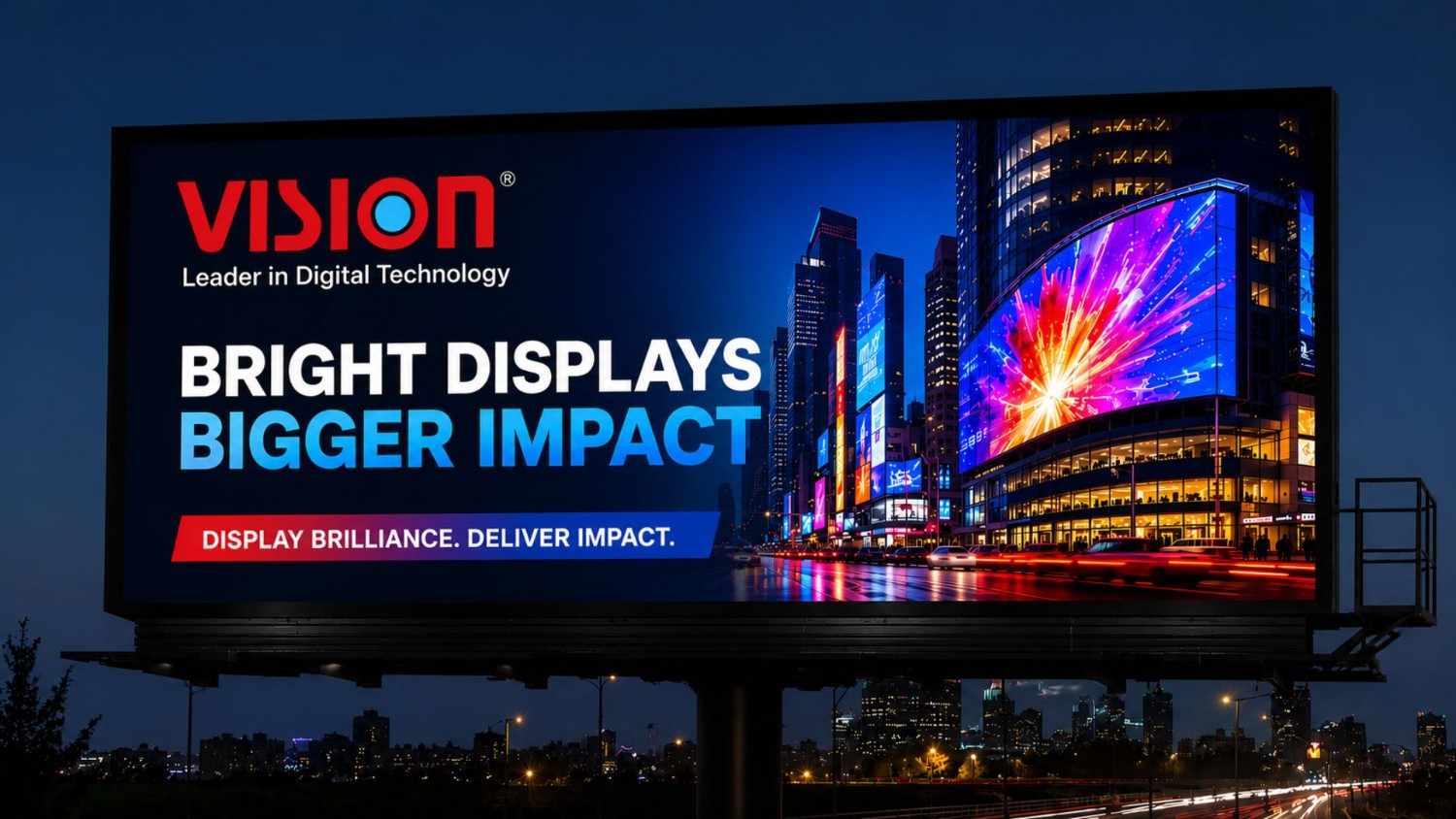
Outdoor LED screens face much more challenging lighting conditions. Direct sunlight, weather exposure, and long viewing distances require significantly higher brightness levels. Outdoor billboards and digital signage usually operate between 5000 and 8000 nits depending on location and environmental conditions.
Highway LED billboards require extremely bright displays to remain visible during daytime driving conditions. Brightness is especially important in areas with strong sunlight exposure.
However, outdoor screens must also control brightness at night. Excessively bright displays can distract drivers and create safety concerns. Many municipalities regulate nighttime brightness levels for outdoor advertising.
Modern outdoor LED displays use smart brightness sensors that automatically adjust brightness based on ambient light conditions. This improves visibility while reducing power consumption.
LED Brightness for Retail Environments
Retail environments use LED screens to attract customers and promote products. In these settings, brightness plays a major role in customer engagement.
Retail LED displays are commonly installed in:
- Shopfront windows
- Showrooms
- Shopping mall corridors
- Product display areas
These screens generally perform best between 1200 and 2500 nits depending on surrounding lighting conditions.
Window-facing displays often require higher brightness because they compete with natural daylight. Interior promotional screens may operate at lower brightness for a more balanced visual experience.
The goal in retail environments is to create visually appealing content without causing glare or discomfort.
LED Brightness for Corporate Offices
Corporate offices use LED video walls for presentations, dashboards, branding, and internal communication.
These environments usually require brightness levels between 800 and 1500 nits. Lower brightness improves readability and reduces eye strain during long viewing periods.
Conference rooms, reception areas, and boardrooms benefit from displays that provide clear visuals while maintaining professional aesthetics.
Corporate displays should prioritize image clarity and color consistency rather than extreme brightness.
LED Brightness for Stadiums and Large Venues
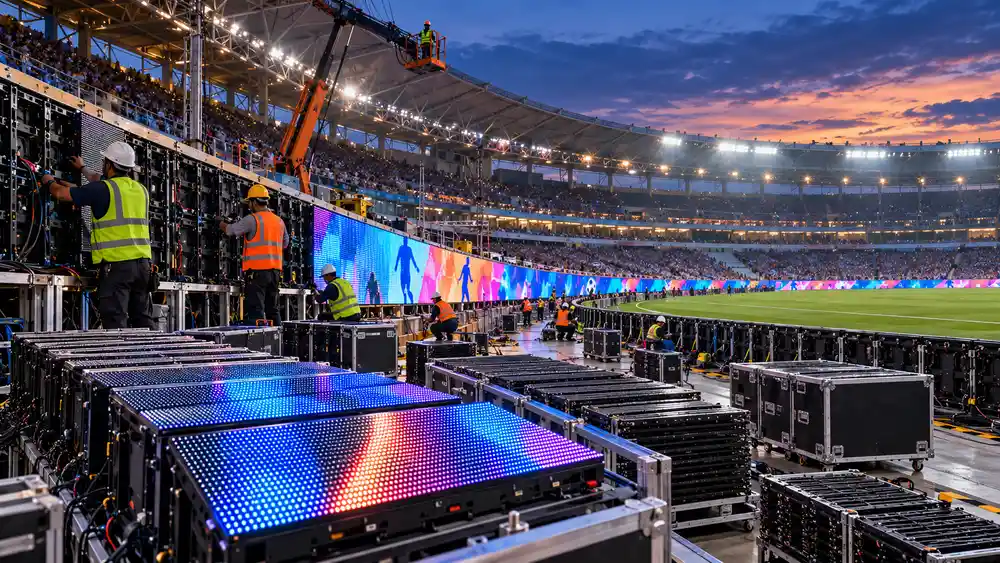
Large venues such as stadiums and event spaces require very bright LED screens because audiences view displays from long distances.
Brightness levels in these environments often range between 5000 and 7000 nits for outdoor stadiums and around 2500 to 4000 nits for indoor arenas.
These displays must remain visible under changing lighting conditions while delivering clear visuals to large audiences.
Importance of Automatic Brightness Adjustment
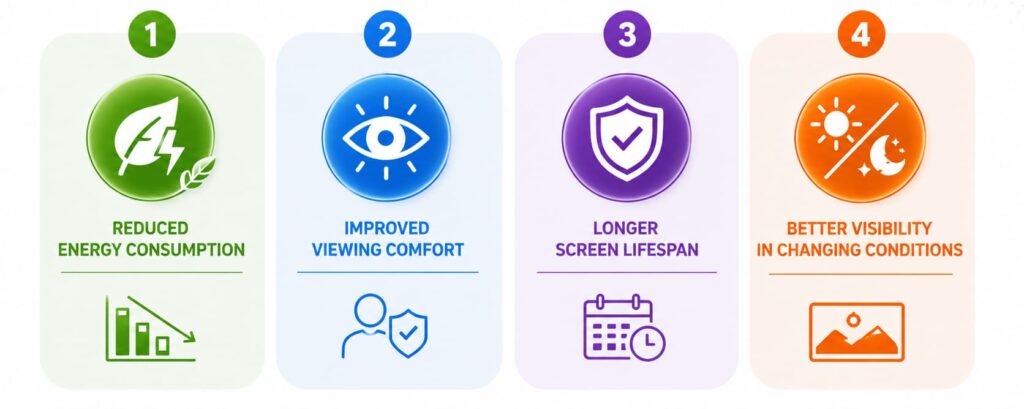
Modern LED displays use ambient light sensors to automatically adjust brightness for the best performance in every environment.
Here’s why automatic brightness adjustment is a game-changer for modern LED displays:
How Excessive Brightness Can Be a Problem?
Many businesses assume brighter screens are always better, but excessive brightness can create several issues.
Overly bright displays may:
- Cause viewer discomfort
- Reduce image quality
- Increase energy costs
- Create glare problems
- Violate municipal regulations
Finding the correct balance is essential for optimal performance.
Choosing the Right Brightness for Your LED Screen
The ideal brightness level depends on:
- Installation environment
- Viewing distance
- Ambient lighting
- Screen size
- Purpose of the display
Working with an experienced LED display provider helps businesses select the right brightness specifications for their needs.
Professional consultation ensures better performance, energy efficiency, and long-term value.
Conclusion
LED screen brightness plays a critical role in display performance, visibility, and viewer experience. Different environments require different brightness levels to ensure optimal results.
Indoor spaces benefit from balanced brightness that enhances comfort and clarity, while outdoor environments demand high luminance for visibility under sunlight. Retail stores, corporate offices, stadiums, and highways all have unique brightness requirements based on usage and lighting conditions.
Choosing the correct LED brightness not only improves visual impact but also reduces energy consumption and extends display lifespan. As LED technology continues to evolve, smart brightness management will become even more important for creating efficient and effective digital display solutions.