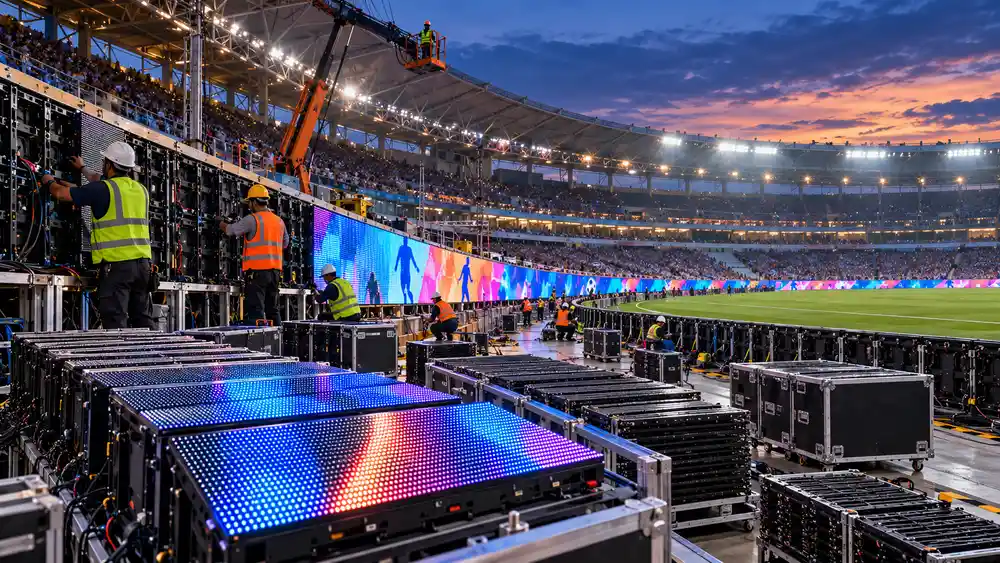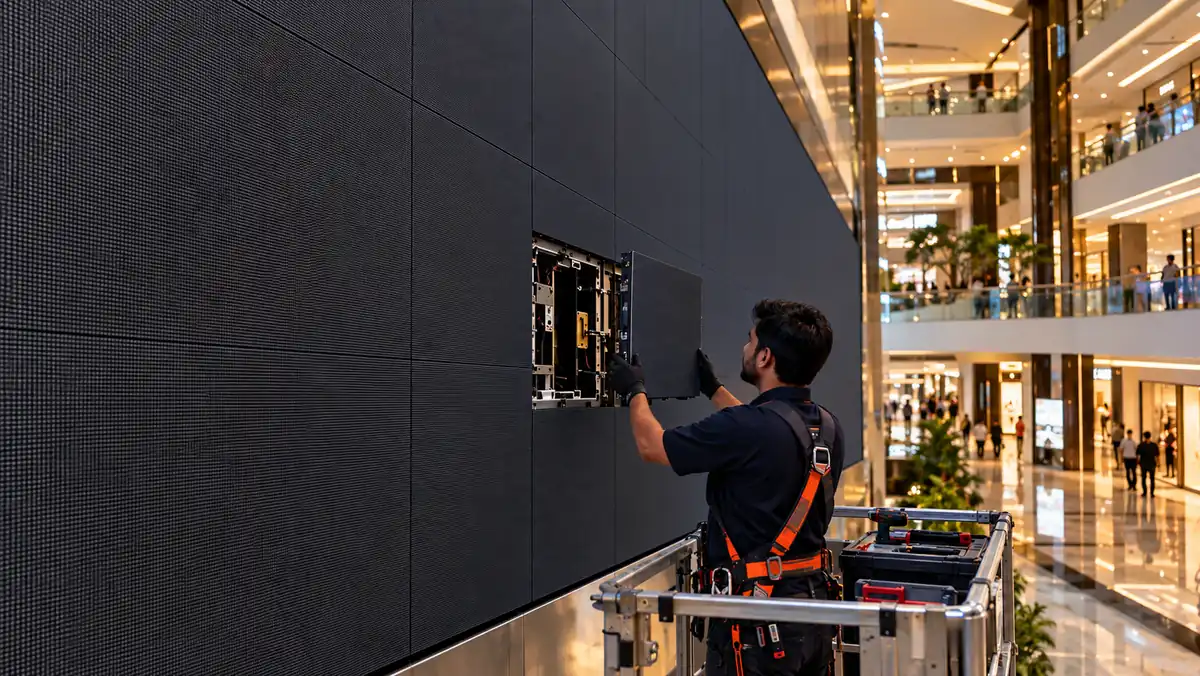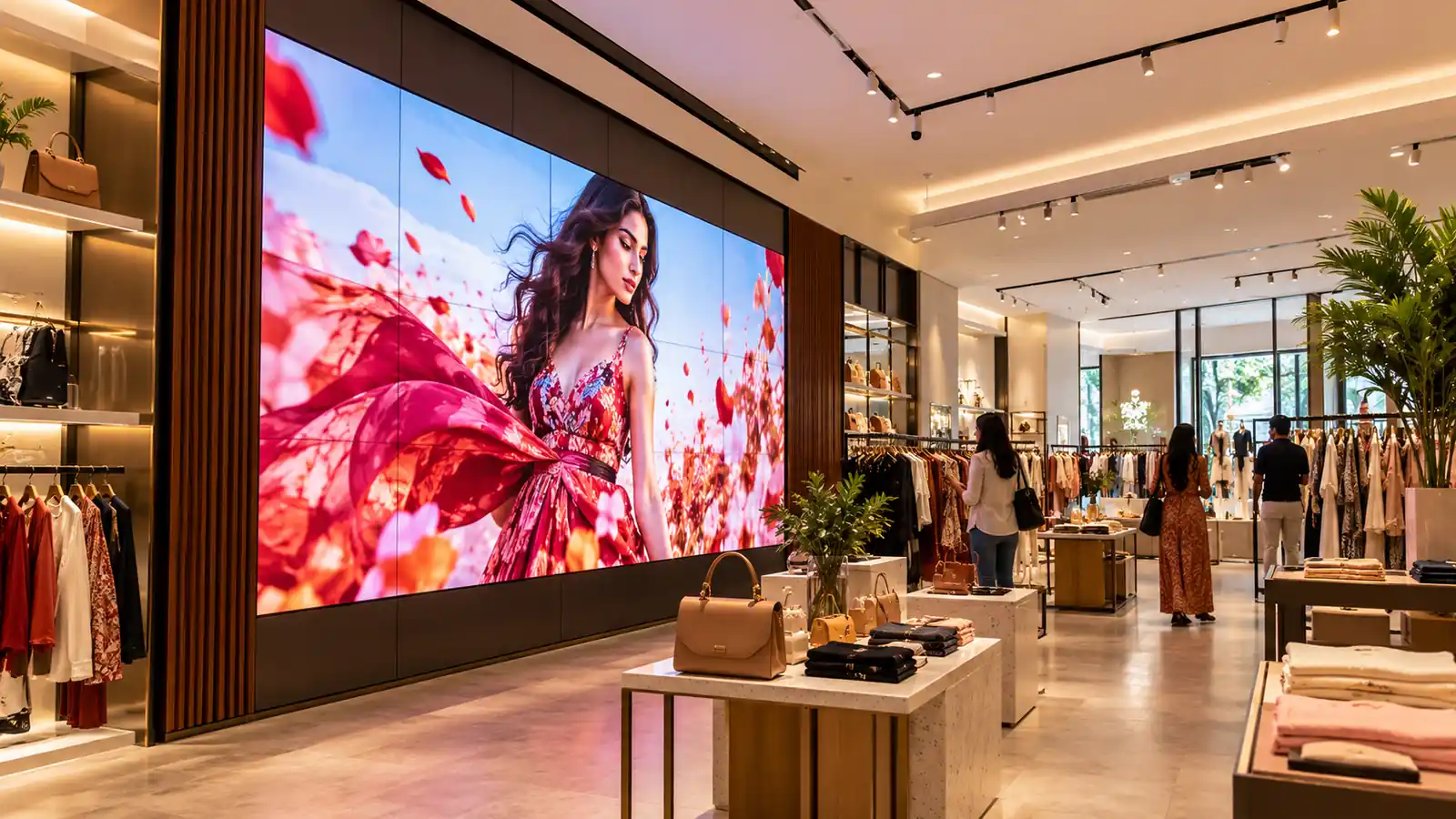

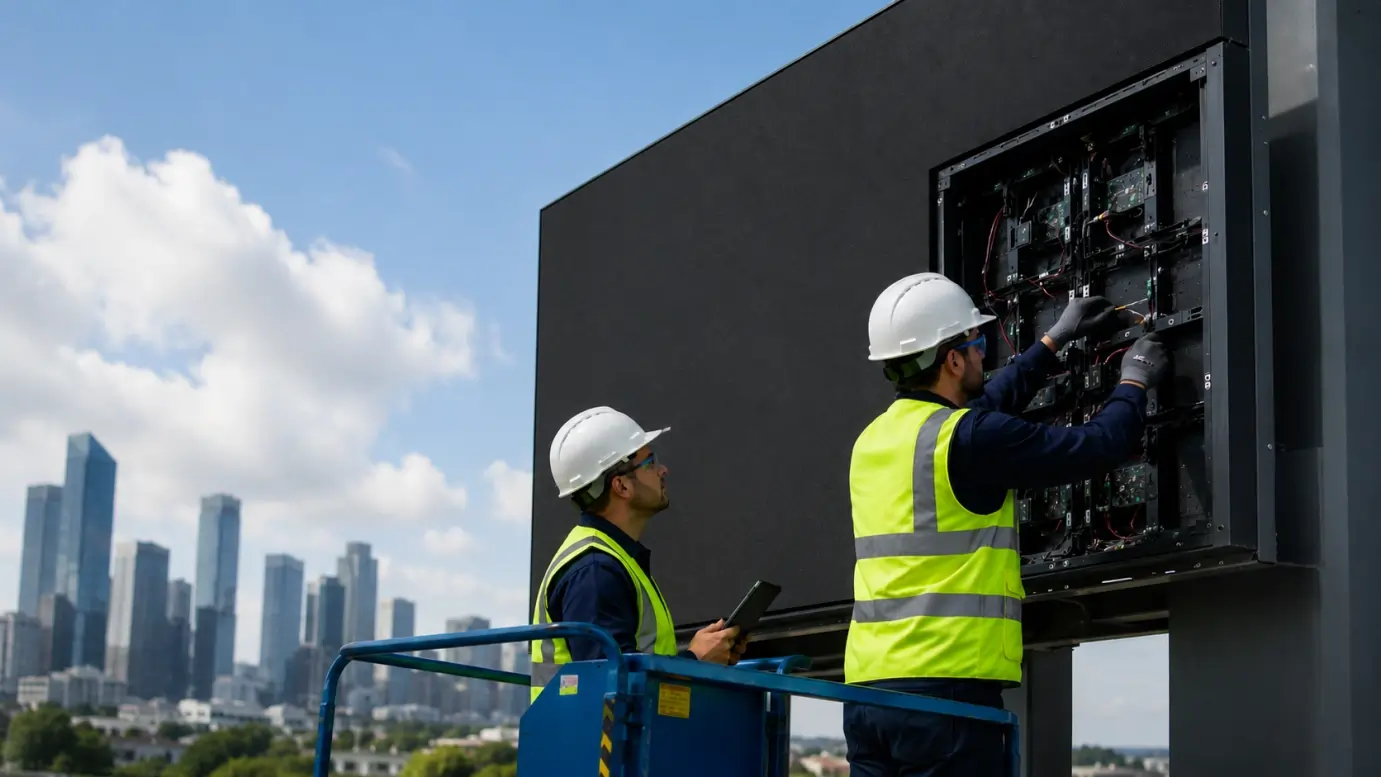
LED video walls have become an essential part of modern advertising, corporate communication, retail displays, stadiums, control rooms, and entertainment venues. Their ability to deliver vibrant visuals, seamless content, and exceptional brightness makes them a valuable long-term investment for businesses.
However, like any advanced technology, LED video walls require regular maintenance to ensure optimal performance and longevity. Even the highest-quality LED displays can experience reduced efficiency, image quality issues, or premature component failure if maintenance is neglected.
A well-maintained LED video wall can operate efficiently for 50,000 to 100,000 hours or more. This guide explains the most important maintenance practices that help maximize lifespan, reduce downtime, and protect your investment.
Why LED Video Wall Maintenance Matters
Many businesses assume that LED video walls are completely maintenance-free. While LED technology is highly durable, continuous operation exposes displays to dust, moisture, temperature fluctuations, electrical stress, and environmental wear.
Regular maintenance helps businesses maintain image quality, prevent unexpected failures, extend display lifespan, reduce repair costs, improve energy efficiency, and minimize operational downtime.
Routine inspections allow potential issues to be identified and corrected before they become major problems.
Common Warning Signs That Require Immediate Attention
Businesses should never ignore signs that indicate potential display problems.
Common warning signs include:
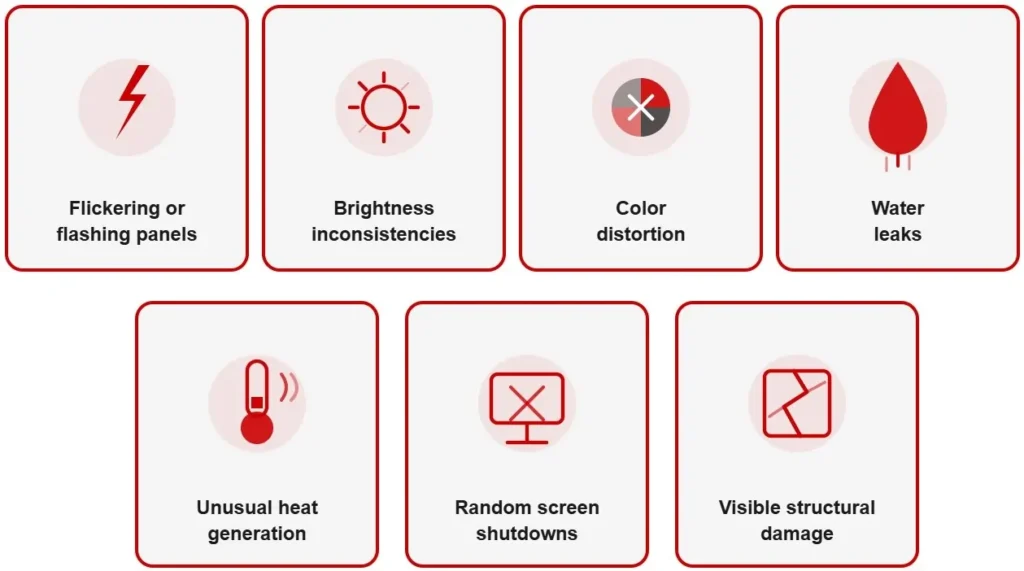
Addressing these issues quickly helps prevent more extensive damage and expensive repairs.
Keep the Display Clean
Dust and dirt accumulation is one of the most common issues affecting LED video walls. Over time, airborne particles can settle on the display surface and internal components.
A dirty display may experience reduced brightness, poor image clarity, increased heat buildup, reduced airflow.
Cleaning should be performed using soft microfiber cloths and manufacturer-approved cleaning solutions. Harsh chemicals and abrasive materials should always be avoided as they can damage the LED modules.
For outdoor installations, cleaning schedules should be more frequent due to exposure to pollution, dust, and weather conditions.
Monitor Temperature and Ventilation
Heat is one of the biggest factors affecting LED display lifespan.
LED video walls generate heat during operation, and excessive temperatures can reduce component performance and accelerate wear.
Businesses should regularly inspect cooling systems, ventilation pathways, air circulation, internal temperature readings.
Blocked airflow or malfunctioning cooling systems can lead to overheating, which may shorten the lifespan of power supplies, control systems, and LED modules.
Maintaining proper ventilation helps ensure stable performance and energy efficiency.
Inspect Power Connections Regularly
Electrical issues are among the leading causes of LED display failures.
Routine inspections should include checking power cables, connectors, distribution units, grounding systems.
Loose or damaged connections can result in flickering screens, power interruptions, module failures and safety risks.
Electrical inspections should be carried out by qualified technicians to ensure all components operate safely and efficiently.
Check for Dead Pixels and Module Issues
Over time, individual LEDs may fail, resulting in dead pixels or dark spots on the display.
While a few isolated pixel failures may not significantly affect performance, widespread module issues can impact image quality and viewer experience.
Regular visual inspections help identify dead pixels, color inconsistencies, brightness variations, module damage.
Replacing affected modules early prevents larger display issues and maintains consistent visual quality.
Protect Against Moisture and Water Ingress
Moisture is a significant concern for outdoor LED video walls.
Even weatherproof displays can develop vulnerabilities if seals become damaged or maintenance is neglected. Routine inspections should include a thorough evaluation of cabinet seals, waterproof gaskets, drainage systems, and moisture protection barriers. These components play a critical role in preventing water and humidity from entering the LED display enclosure.
Damaged seals or compromised waterproofing can allow moisture to reach sensitive electronic components, leading to corrosion, electrical faults, and performance issues. Regularly checking and maintaining these protective elements helps ensure the display remains weather-resistant, reliable, and capable of operating efficiently in outdoor environments.
Early detection of water ingress prevents corrosion, electrical damage, and costly repairs.
For coastal and humid environments, moisture inspections are particularly important.
Inspect Structural Components
The display structure is just as important as the screen itself.
Large LED video walls are often installed on:
- Building facades
- Stadium structures
- Outdoor billboards
- Freestanding support systems
Routine structural inspections help identify:
- Loose fasteners
- Corrosion
- Metal fatigue
- Frame deformation
Structural maintenance ensures long-term safety and compliance with engineering standards.
Update Software and Control Systems
Modern LED video walls rely on sophisticated control software and content management systems to deliver seamless performance and efficient content delivery. Manufacturers regularly release software updates that enhance system performance, strengthen security, improve compatibility with newer technologies, and increase overall reliability.
Keeping the software updated helps prevent operational issues, ensures smoother functionality, and provides access to the latest features and optimizations. Additionally, regular system backups are essential to protect content, settings, and configurations from accidental loss, hardware failures, or software-related issues, helping businesses maintain uninterrupted display operations.
Use Automatic Brightness Control
Operating a display at maximum brightness continuously can reduce LED lifespan and increase power consumption.
Many modern LED video walls include automatic brightness adjustment systems that respond to ambient lighting conditions.
These systems help reduce energy usage, improve viewing comfort, lower heat generation and extend component lifespan.
Smart brightness management is particularly beneficial for outdoor installations operating 24/7.
Schedule Professional Maintenance
While basic inspections can be performed internally, professional maintenance is recommended at regular intervals.
Certified technicians can conduct detailed evaluations of electrical systems, LED modules, cooling systems, structural integrity, software performance.
Professional servicing helps identify hidden issues that may not be visible during routine inspections.
Many manufacturers also recommend annual preventive maintenance programs to protect warranty coverage.
Creating a Maintenance Schedule
An organized maintenance plan improves reliability and reduces operational disruptions.
A typical schedule may include:
Weekly Checks
- Surface cleaning
- Visual inspection
- Brightness verification
Monthly Checks
- Electrical inspection
- Ventilation review
- Software monitoring
Quarterly Checks
- Module testing
- Structural inspection
- Waterproofing assessment
Annual Maintenance
- Complete professional servicing
- Calibration and optimization
- Safety compliance review
A structured maintenance program ensures consistent display performance throughout the year.
Conclusion
LED video walls are designed for long-term reliability, but regular maintenance remains essential for maximizing lifespan and protecting performance. Routine cleaning, electrical inspections, moisture protection, structural assessments, and software updates all play an important role in keeping displays operating at peak efficiency.
By implementing a proactive maintenance strategy, businesses can reduce downtime, avoid costly repairs, improve image quality, and extend the life of their investment. Whether installed indoors or outdoors, a properly maintained LED video wall will continue delivering exceptional visual performance for many years to come.