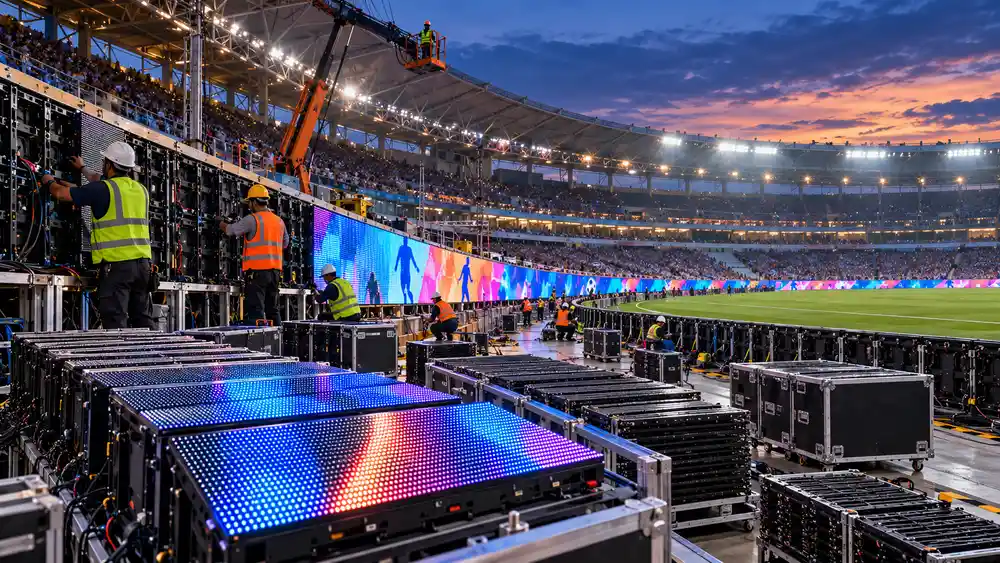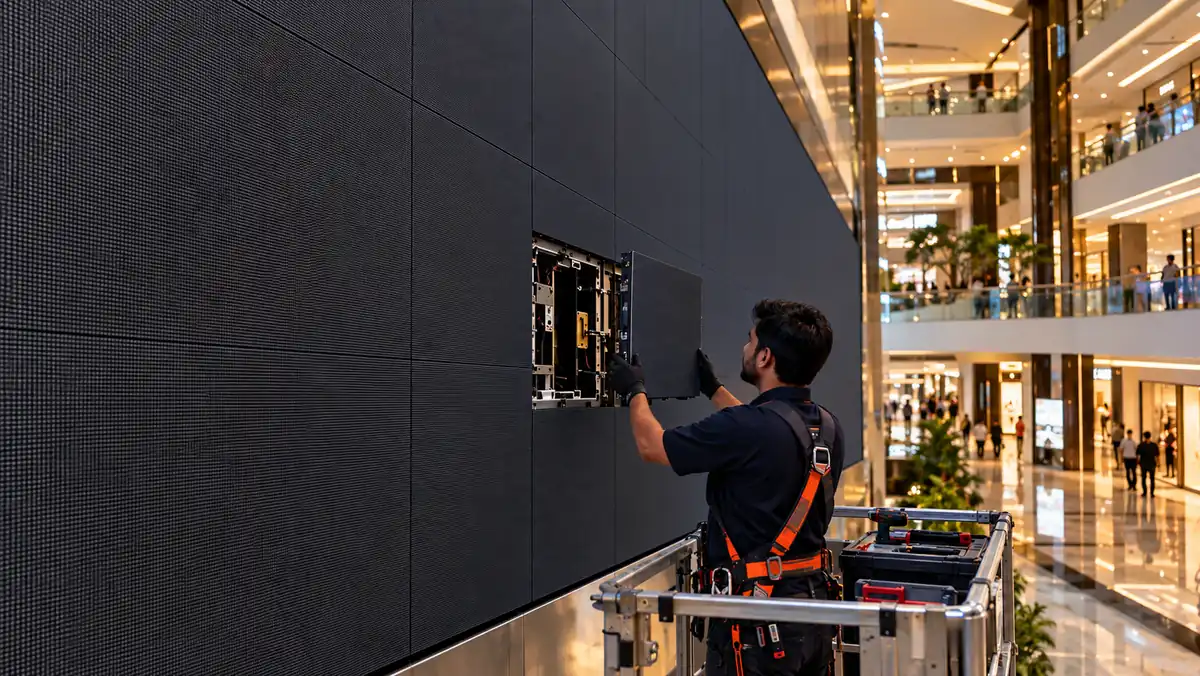

LED displays are built to deliver years of reliable performance, but like any electronic component, LED modules eventually wear out. Whether your display is installed in a retail store, shopping mall, stadium, corporate office, or outdoor advertising location, individual LED modules can fail over time due to continuous operation, environmental conditions, power fluctuations, or physical damage.
Ignoring the early warning signs of a failing LED module can lead to reduced display quality, higher maintenance costs, and an inconsistent viewing experience. Fortunately, because LED displays are modular, businesses can replace only the affected modules instead of replacing the entire screen.
In this guide, we’ll discuss the most common signs that indicate it’s time to replace your LED module and why timely replacement is essential for maintaining display performance.
What Is an LED Module?
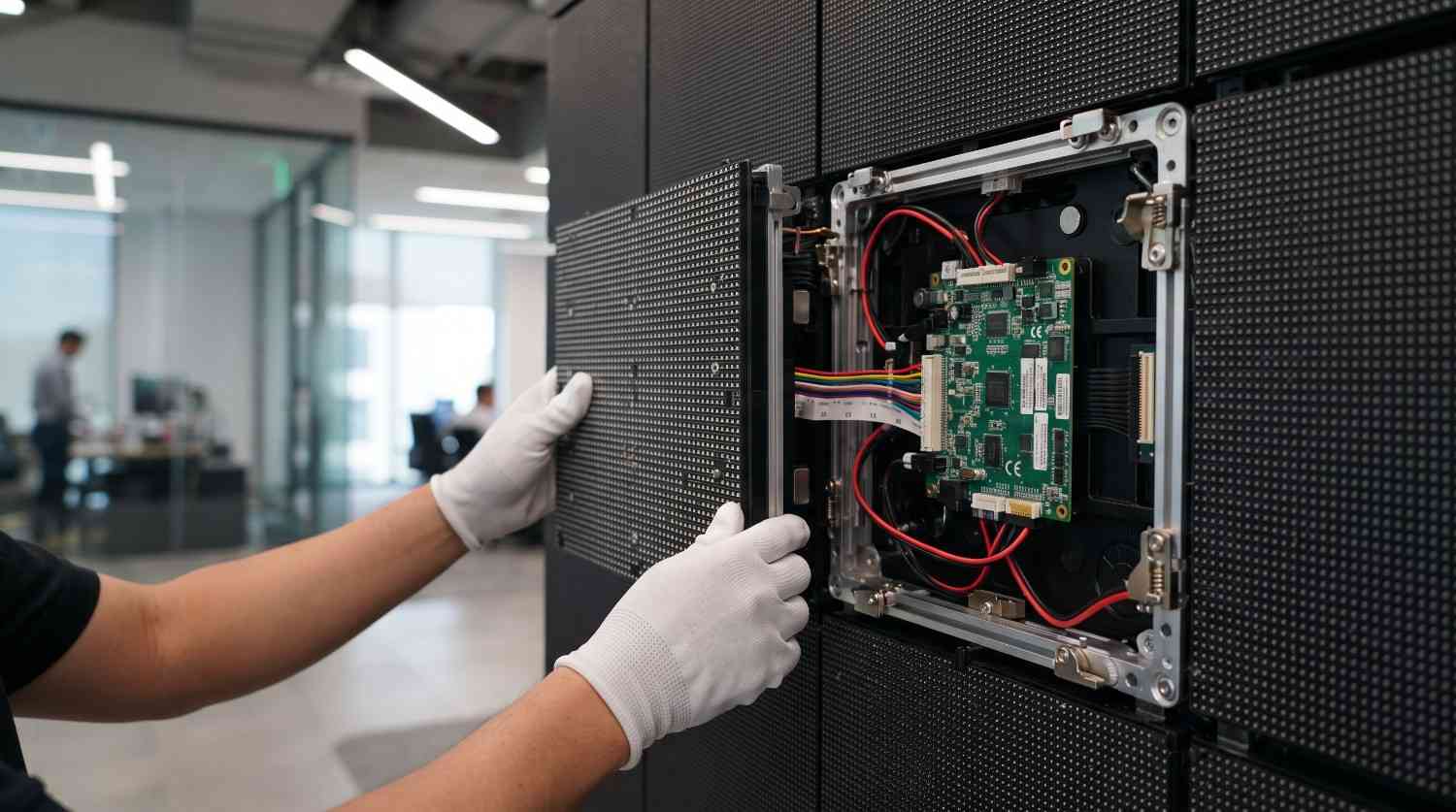
An LED module is the building block of an LED display. Each module contains hundreds or thousands of LEDs, driver ICs, circuit boards, and connectors that work together to create seamless images and videos.
Multiple LED modules are assembled to form a complete LED video wall or digital display. If one module begins to fail, it can affect the appearance and performance of the entire screen.
Dead or Black Pixels
One of the earliest signs of module failure is the appearance of dead pixels. Individual LEDs may stop illuminating, creating tiny black dots on the screen.
While a few dead pixels may not be immediately noticeable, clusters of failed LEDs gradually reduce image quality and become distracting, especially on high-resolution displays.
When dead pixels continue increasing despite repairs, replacing the module is usually the most effective solution.
Uneven Brightness
If one section of the display appears brighter or dimmer than the surrounding areas, the LED module may be nearing the end of its lifespan.
Brightness inconsistencies can occur due to aging LEDs, driver IC failures, power supply issues, component degradation.
Uneven brightness reduces the professional appearance of the display and makes content look inconsistent.
Color Mismatch
Healthy LED modules produce consistent colors across the entire display.
A failing module may begin showing:
- Yellowish tones
- Bluish tint
- Green color shifts
- Washed-out colors
If color calibration no longer restores uniformity, replacing the affected module is often necessary.
Flickering Display
Frequent flickering is another common indicator of LED module problems.
Flickering may be caused by faulty driver ICs, loose internal connections, aging components, electrical instability.
Persistent flickering not only affects image quality but can also shorten the lifespan of neighboring components if left unresolved.
Horizontal or Vertical Lines
Visible lines running across the display often indicate communication problems within an LED module.
These lines may appear intermittently or remain permanently visible during operation.
Damaged circuit boards, connector failures, or defective receiving cards can contribute to this issue, but if diagnostics confirm the module itself is faulty, replacement is recommended.
Water or Moisture Damage
Outdoor LED displays are constantly exposed to rain, humidity, and environmental conditions.
If moisture enters the module, you may notice:
- Corrosion
- Flickering LEDs
- Short circuits
- Discolored sections
- Complete module failure
Water-damaged modules should be replaced immediately to prevent further damage to surrounding components.
Physical Damage
Accidental impacts, transportation damage, vandalism, or severe weather can crack or damage an LED module.
Visible damage may include:
- Broken LEDs
- Cracked PCB
- Bent frame
- Damaged connectors
- Loose components
Even if the module continues functioning temporarily, physical damage often leads to future failures and should not be ignored.
Frequent Module Failures
If the same module repeatedly develops issues despite repairs, it usually indicates internal component wear.
Instead of repeatedly servicing the module, replacing it is often more cost-effective and reliable.
New modules restore display performance while reducing future maintenance expenses.
Overheating
LED modules naturally generate heat during operation, but excessive heat is a warning sign.
Possible causes include aging driver ICs, poor ventilation, power supply issues, internal circuit failure.
Overheating accelerates component degradation and may eventually cause complete module failure.
Replacing overheating modules protects both the display and nearby components.
Reduced Image Quality
When images appear blurry, distorted, or lose their original sharpness despite proper calibration, the module may no longer perform correctly.
Common symptoms include:
- Poor contrast
- Pixel distortion
- Image ghosting
- Inconsistent refresh rates
Replacing the affected module restores image clarity and ensures a seamless viewing experience.
Increased Maintenance Frequency
If technicians are frequently repairing the same LED module, replacement becomes the smarter long-term investment.
Repeated repairs increase labor costs, create downtime, and may only provide temporary solutions.
Installing a new module improves reliability while minimizing ongoing maintenance.
Benefits of Replacing a Faulty LED Module
Replacing damaged modules promptly offers several advantages. It restores uniform brightness and accurate color reproduction, ensuring your display maintains a professional appearance. New modules also improve energy efficiency, reduce maintenance costs, and help prevent failures from spreading to adjacent modules. Since only the affected module is replaced, businesses can extend the lifespan of the entire LED display without the expense of replacing the complete screen.
Tips to Extend LED Module Lifespan
Regular maintenance plays a significant role in maximizing the life of LED modules. Keep the display clean to prevent dust accumulation, inspect power connections periodically, and ensure adequate ventilation around the installation. Outdoor displays should be checked for damaged seals or signs of water ingress, while indoor displays should be protected from excessive heat and electrical fluctuations. Routine inspections allow minor issues to be addressed before they develop into costly failures.
Conclusion
LED modules are designed for long-term performance, but they eventually experience wear due to continuous operation and environmental exposure. Recognizing early warning signs such as dead pixels, uneven brightness, color inconsistencies, flickering, overheating, or physical damage allows businesses to replace faulty modules before they affect the entire display.
Because LED displays use a modular design, replacing individual modules is a cost-effective way to restore image quality, reduce maintenance, and extend the life of your investment. Regular inspections and timely replacements ensure your LED display continues to deliver bright, vibrant, and reliable performance for years to come.