
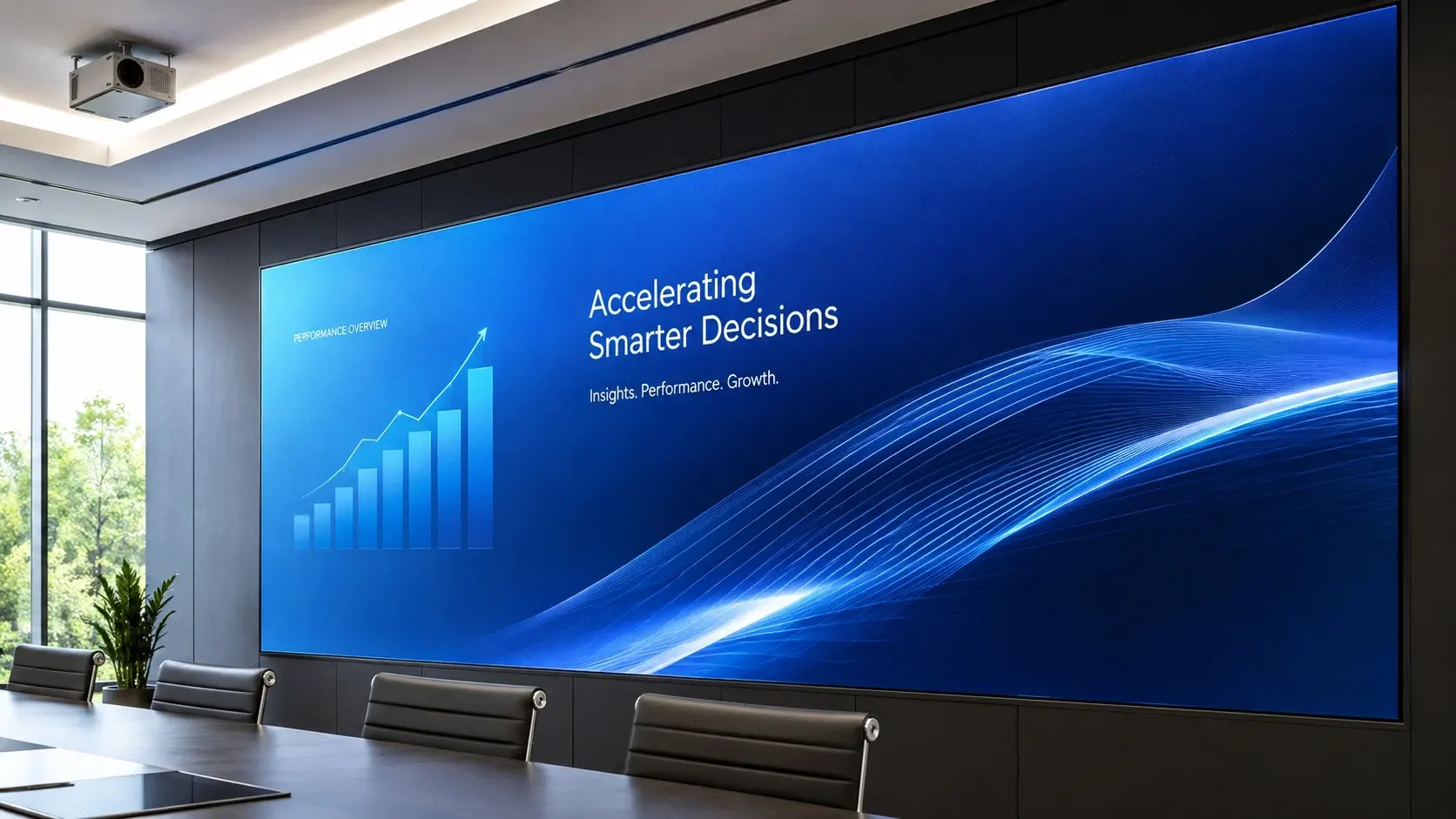
Walk into a boardroom that’s still running a projector, and you can usually spot the problems before the meeting even starts: someone dimming the lights, a washed-out slide in one corner, a cable that won’t connect to the new laptop. None of this is new, but fewer companies are willing to put up with it anymore. Indoor LED video walls have quietly become the default upgrade path for boardrooms, and the reasons go well beyond “it looks nicer.”
The Projector Problem Hasn’t Really Changed
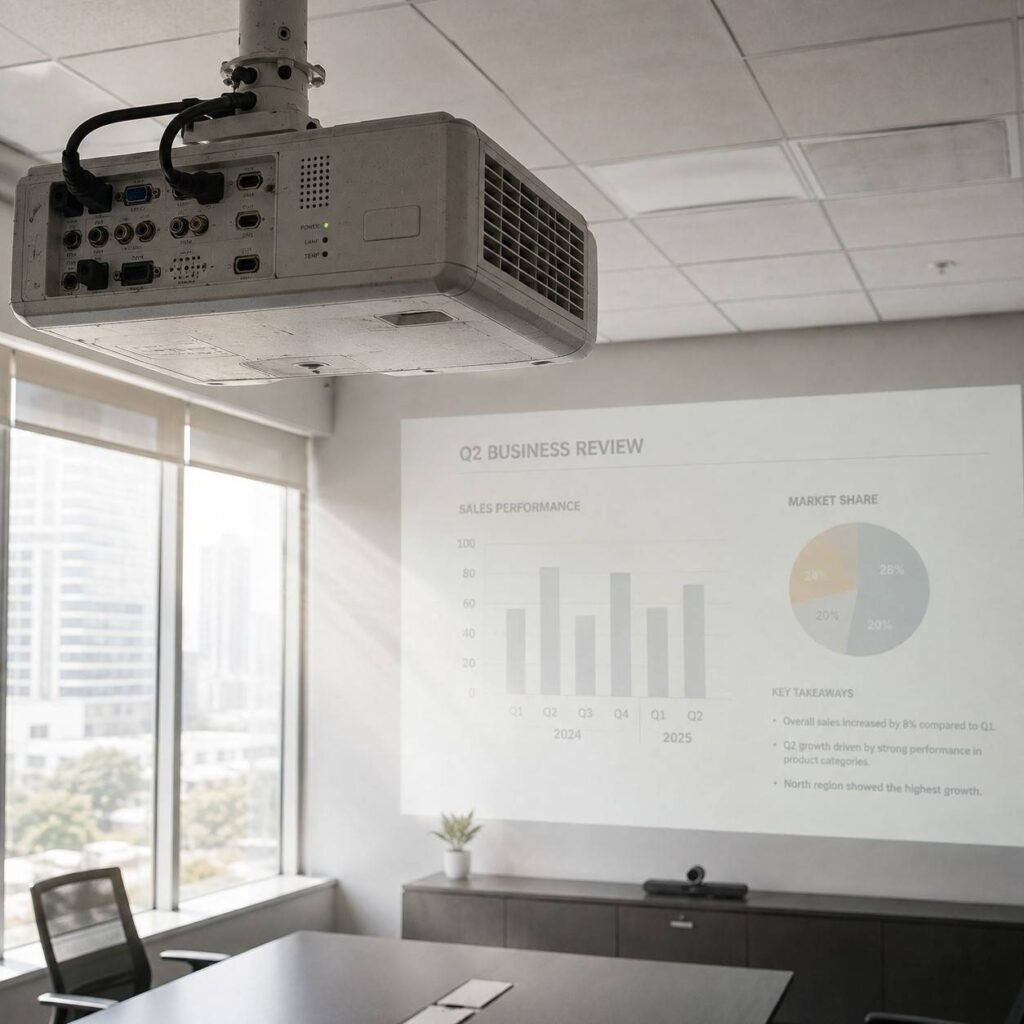
Projectors have been the default meeting room display for decades, and their core limitations haven’t gone away. They lose brightness the moment a room isn’t dimmed, bulbs need periodic replacement, image quality softens over the unit’s lifespan, and picture size is capped by throw distance and wall space. None of that was a dealbreaker when there wasn’t a better option. Now there is.
What Changed to Make LED the Practical Choice?
A few shifts pushed LED video walls from “nice to have” to genuinely practical for corporate boardrooms:
- Fine pixel pitch got affordable.
Sub-2mm pixel pitch, once reserved for high-end broadcast studios, is now common in boardroom-scale installations, delivering sharp text and data even at close viewing distances. - All-in-one conference displays simplified installation.
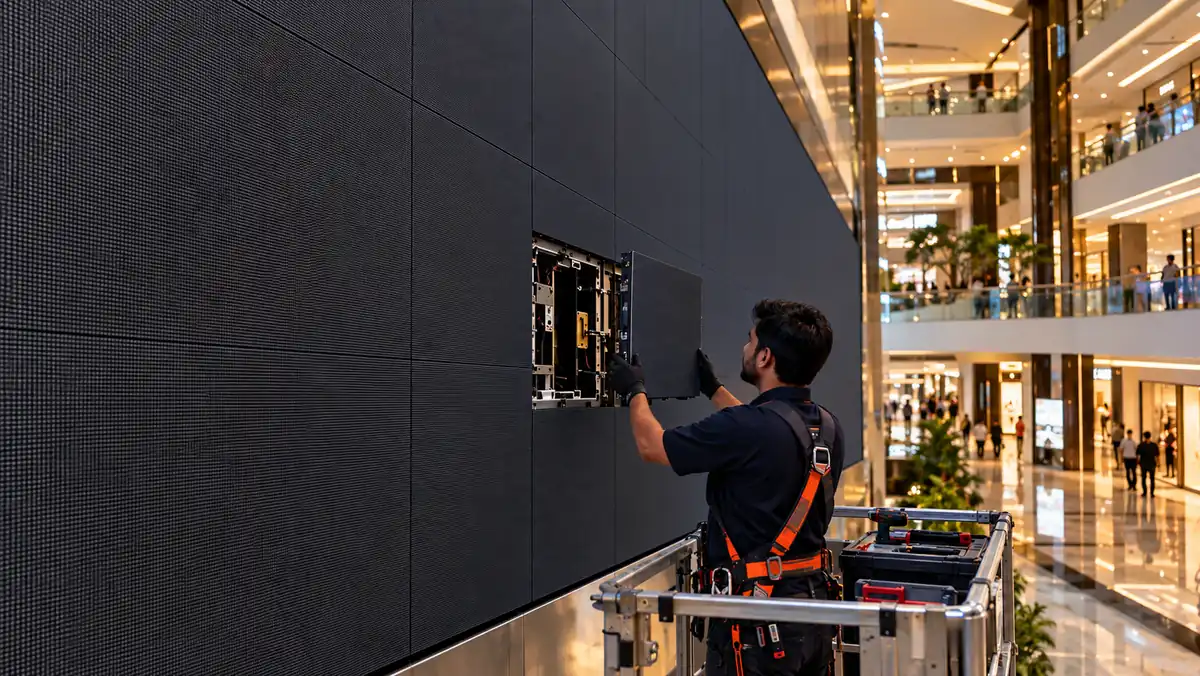
Many modern LED units now bundle the screen, processor, and connectivity into a single unit, cutting down the setup complexity that used to require a full AV integration project. - Hybrid meetings raised the bar.
With video calls now a daily fixture, companies need displays that stay clear and legible under normal room lighting, not displays that require the room to be dimmed first.
Where LED Actually Outperforms Projectors?
The comparison isn’t close on the factors that matter day-to-day in a working boardroom:
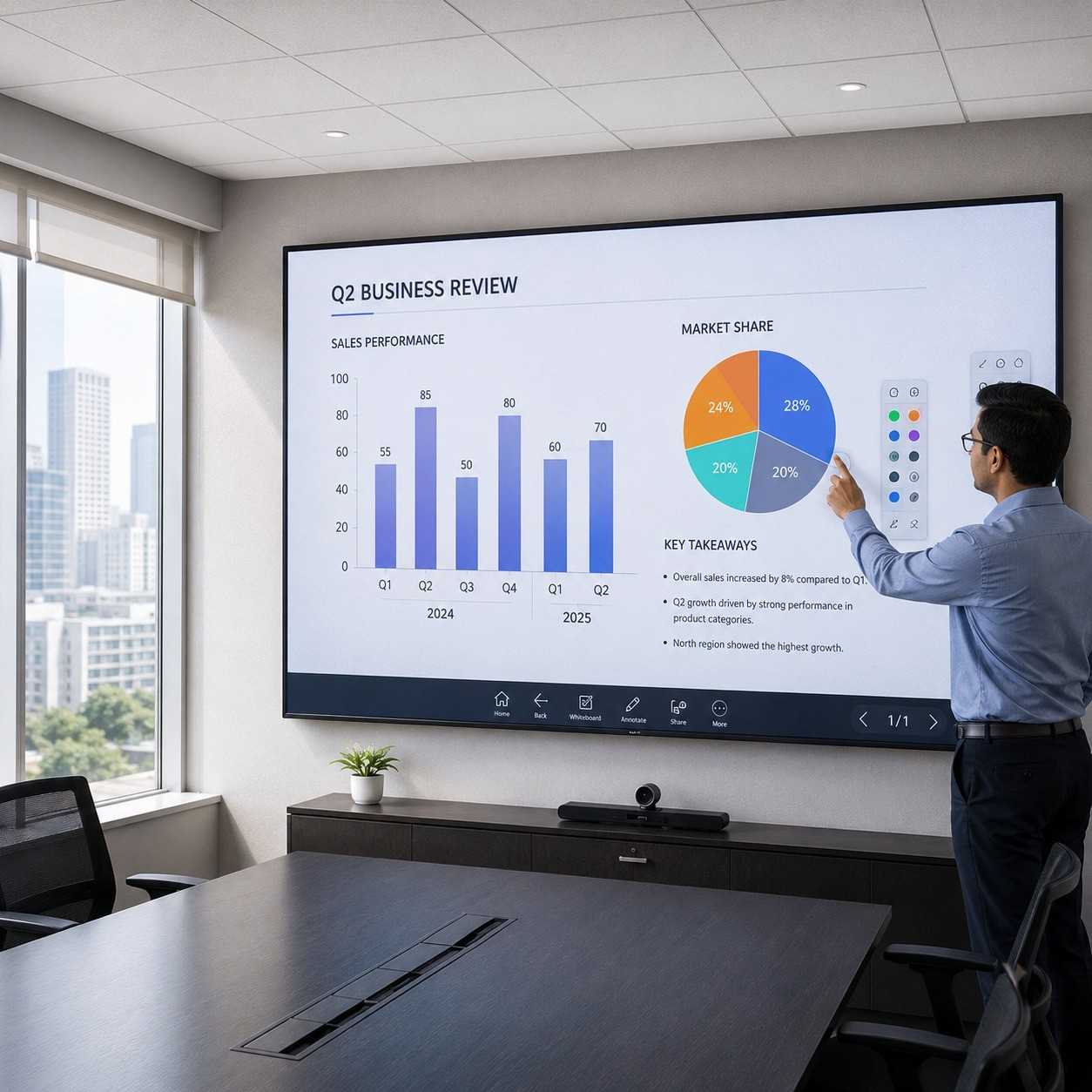
Brightness and lighting.
LED walls hold their image quality under normal office lighting. Projectors need a dim room to look sharp, which isn’t realistic for a meeting where people are also taking notes or reading documents.
Consistency over time.
Projector bulbs dim and eventually need to be replaced. LED modules are rated for tens of thousands of hours of operation with far more stable output across their lifespan.
Content flexibility.
A boardroom LED wall handles dense spreadsheets, architectural drawings, video calls, and branded presentations equally well; fine text stays legible in a way it often doesn’t on a projected image.
No visible seams.
Multi-screen LCD setups show bezels between panels; a properly installed LED wall doesn’t, which matters when a single chart or map needs to span the full display.
What’s Actually Driving the Decision Internally?
The unique part of this shift isn’t the technology itself; it’s who’s asking for it. In most companies, this upgrade rarely starts with the IT or AV team. It’s usually driven by whoever runs client-facing meetings, sales leadership, the executive office, or facilities managers responding to repeated complaints about a screen nobody can read from the back of the room. The business case tends to build around the same handful of moments: a client presentation that looked dim and unprofessional, a hybrid call where remote participants couldn’t see shared content clearly, or a data review where numbers on a spreadsheet were simply too small to read. Once that friction is named out loud, the projector-versus-LED conversation usually resolves itself quickly.
Is It the Right Fit for Every Boardroom?
Not automatically. A boardroom that’s rarely used for detailed content or client presentations may not need the investment. But for rooms used regularly for:
- Client-facing presentations
- Financial or data-heavy reviews
- Hybrid video conferencing
- Architectural, engineering, or design walkthroughs
…the shift to an indoor LED video wall tends to pay for itself in fewer meeting delays, better legibility, and a more consistent experience for anyone in the room.
The Cost Picture Over Time
Sticker price is where projectors still win, but that’s only half the picture:
- Upfront cost: Projectors are usually cheaper to install initially; LED video walls carry a higher day-one investment.
- Bulb and part replacement: Projector bulbs degrade steadily and need periodic replacement, an ongoing cost that never goes away. LED modules don’t have an equivalent consumable part.
- Operating lifespan: LED modules are commonly rated for tens of thousands of hours, often well beyond a decade of regular use compared to a projector bulb’s much shorter working life.
- Downtime and servicing: Fewer replaceable wear parts generally means less scheduled maintenance and fewer meetings disrupted by a service call.
The upfront gap is real, but it narrows considerably once bulb replacements and servicing are added up over several years, which is why many companies treat this as a long-term facilities decision rather than a one-time purchase comparison.
Considering an Upgrade for Your Boardroom?
Every boardroom has different dimensions, lighting, and use patterns, and the right display setup depends on getting those details right before installation. Vision Display works with businesses to assess the room and recommend a display built for how the space is actually used. Get in touch with our team to discuss an indoor LED video wall for your meeting spaces.