
Most people assume buying an LED screen is a single transaction: pick a size, place an order, wait for delivery. In reality, a good LED installation comes down to a dozen smaller decisions made correctly, from site assessment to content playback settings, long before the screen is ever switched on. This is exactly why “turnkey” has become such an important word in this industry, and why it’s often misunderstood.
A true turnkey LED screen solution means one team is accountable for the entire journey, not just the hardware. Here’s what that actually looks like in practice.
Why Buying “Just the Screen” Often Backfires
Buyers often source an LED panel from one vendor, hire a separate installer, and figure out mounting and content separately. On paper, this can look cheaper. In practice, it often creates gaps; nobody takes responsibility when brightness looks wrong for the room, or when the mounting structure wasn’t designed for the site’s actual wall conditions.
A turnkey approach removes these gaps by keeping consultation, manufacturing, installation, and support under one roof.
The Turnkey Process, Step by Step
A properly managed indoor or outdoor LED display project generally moves through a few clear stages:
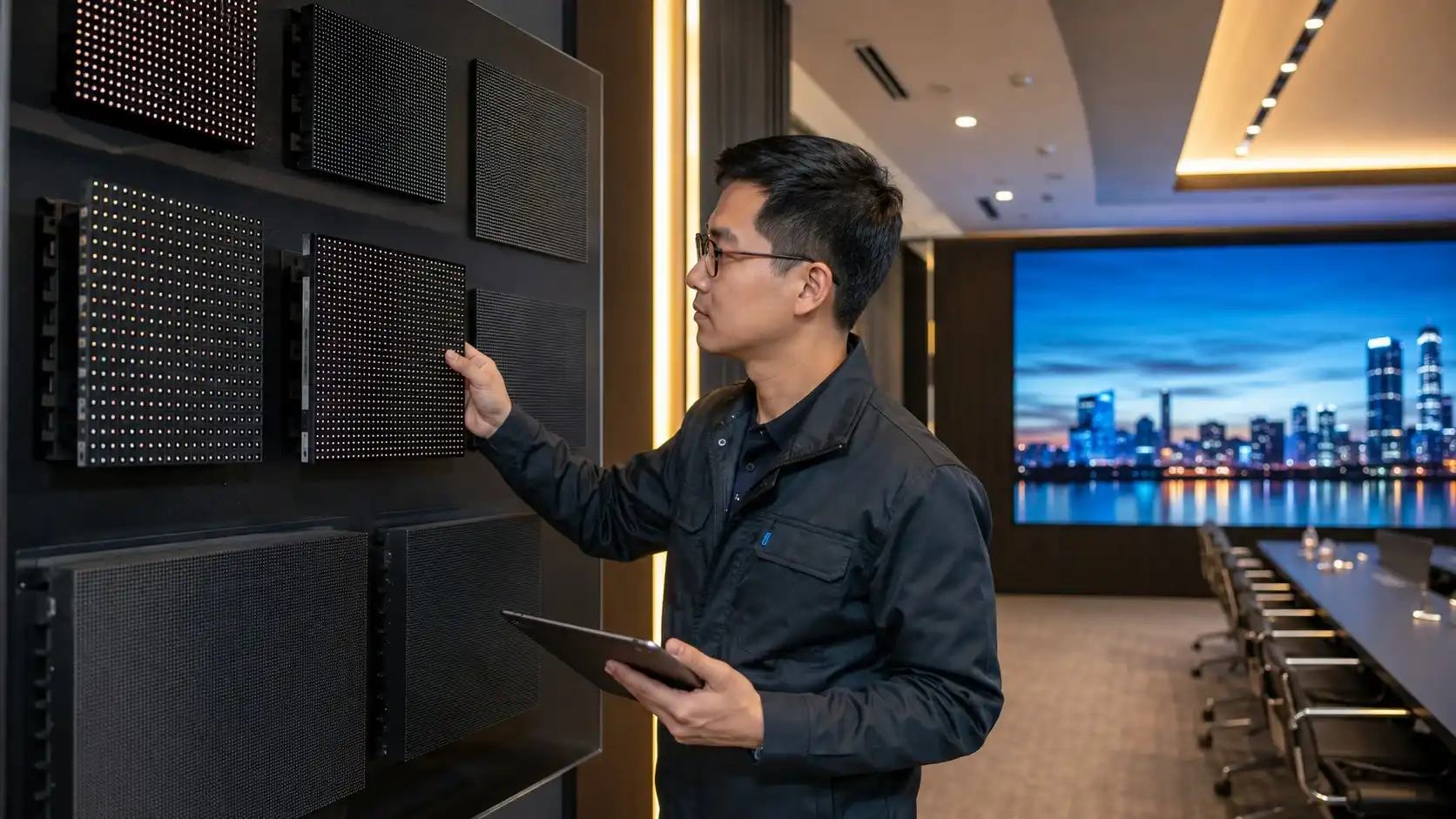
- Site consultation – understanding the space, viewing distances, lighting conditions, and how the screen will actually be used
- Technical planning – selecting the right pixel pitch, brightness level, and screen dimensions based on that site data, not a generic template
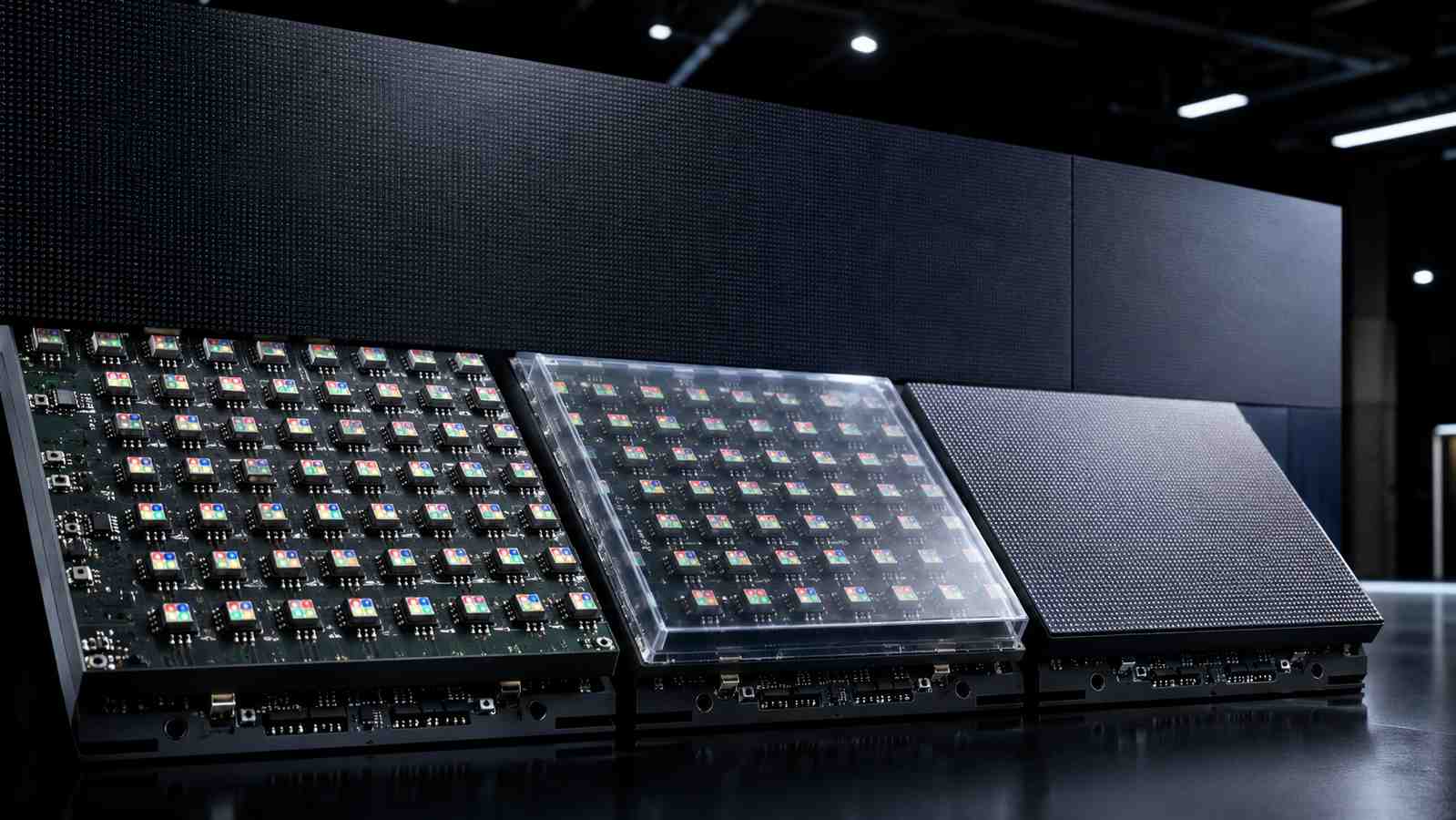
- Manufacturing and quality testing – building and testing modules together as a matched set before they ever leave the factory
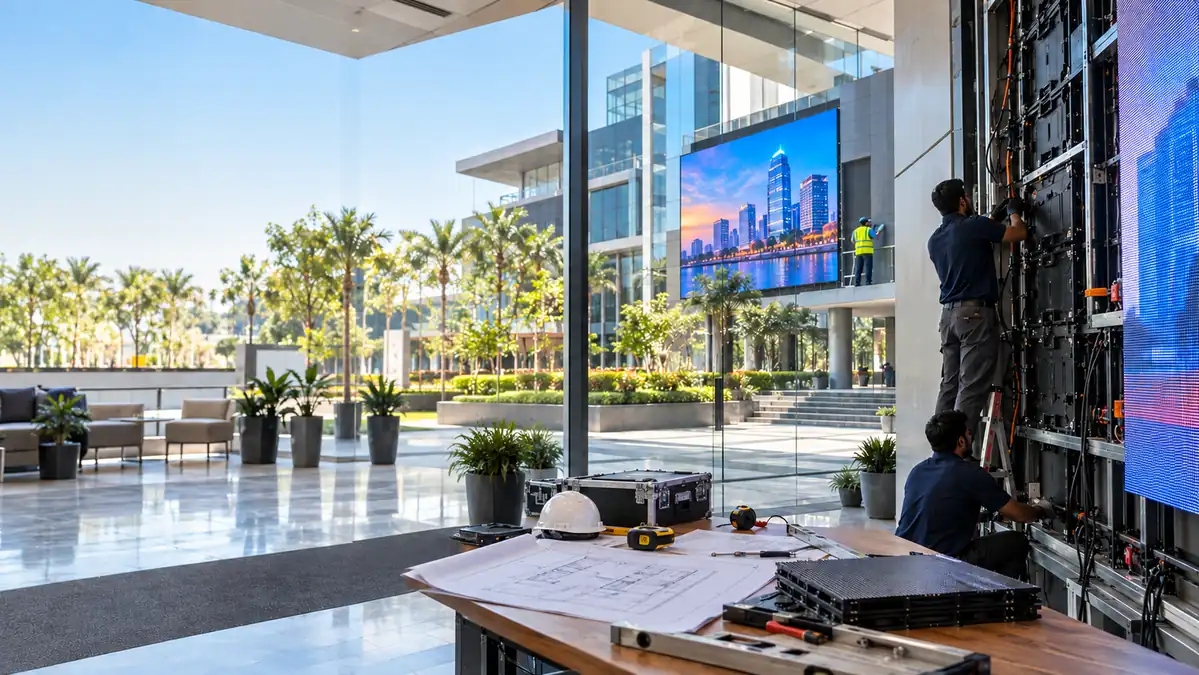
- Installation and structural setup – mounting, wiring, and calibration handled by a team that understands both the hardware and the space it’s going into
- Post-installation support – ongoing maintenance, troubleshooting, and module servicing after the screen goes live
Skipping any one of these stages is usually where problems creep in later: a screen too bright for an indoor lobby, or a mounting structure not rated for outdoor wind load.
The Part That’s Easy to Overlook: Indoor and Outdoor Aren’t the Same Project
Here’s something that often gets underestimated: indoor and outdoor LED projects aren’t just the same process with weatherproofing added on top. They’re planned differently from the very first consultation.
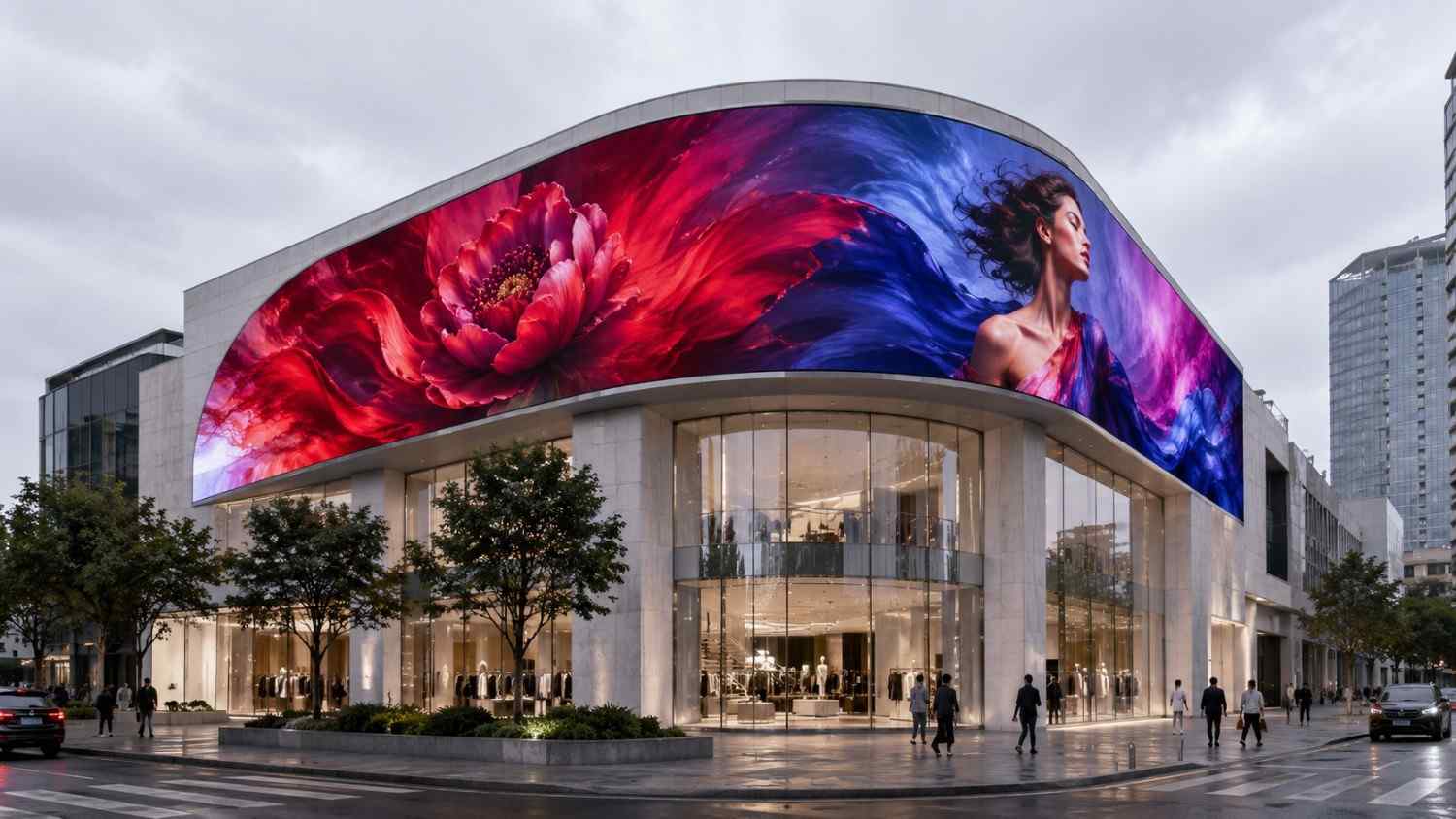
Indoor projects are usually built around aesthetics and viewing comfort: softer brightness levels, finer pixel pitches for close viewing, and mounting that blends into interior design. Outdoor projects are built around durability and visibility in daylight, much higher brightness, weather sealing, and structural mounting that can handle wind, heat, and monsoon conditions over years, not months. A team experienced in only one often struggles with the other. Handling both under a genuinely turnkey model means the same rigor gets applied whether the screen faces a boardroom or a busy street.
Case Study: A School Gym vs. A School Gate
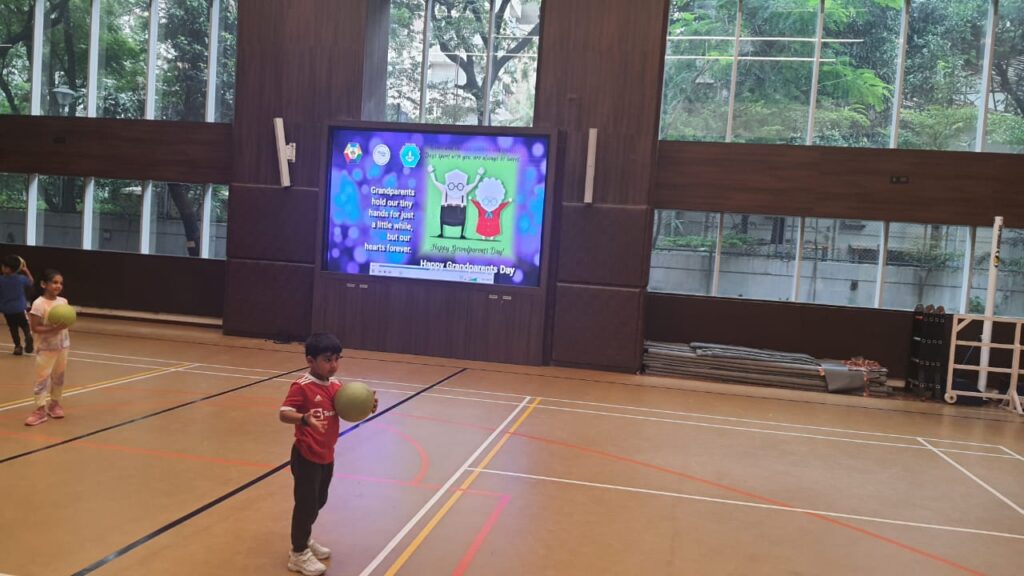
Vision Display’s work reflects exactly this range. Indoors, the installation for Jamnabai Narsee School in Mumbai used a fine-pitch P2 display, roughly 10 x 6 feet, designed for sharp clarity in an active sports environment.
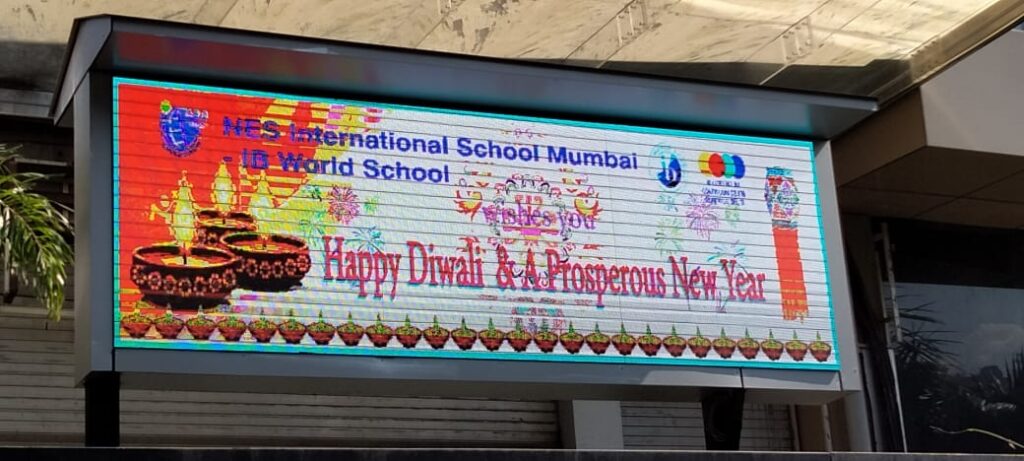
Outdoors, the setup for NES International School used a P2.5 high-impact outdoor display built to stay legible under open-sky lighting conditions throughout the day.
Same company, same process discipline, but two completely different technical approaches, because the environments demanded it. That’s the practical difference a turnkey provider brings: knowing which decisions change based on where the screen will actually live.
Who Benefits Most from a Turnkey Approach
This model tends to matter most for:
- Corporate offices and institutions installing screens for the first time
- Malls and retail spaces needing both indoor displays and outdoor advertising screens
- Schools and colleges managing multiple installations across a campus
- Event and rental companies working on tight deadlines with no room for coordination gaps
For all of these, having one accountable team, rather than juggling three vendors, usually means fewer surprises and a smoother installation timeline.
Planning an Indoor or Outdoor LED Installation?
Whether it’s a single indoor display or a multi-site outdoor rollout, having one team manage consultation, manufacturing, installation, and support tends to save both time and headaches later. Vision Display has been designing and installing indoor and outdoor LED screens across India for close to three decades, handling everything from initial site assessment to post-installation maintenance.
If you’re planning a new LED display project, reach out to Vision Display’s team to discuss your space, requirements, and timeline.